
Lance Neita | A manifesto that lived up to its word
Published:Monday | June 30, 2025 | 12:09 AM
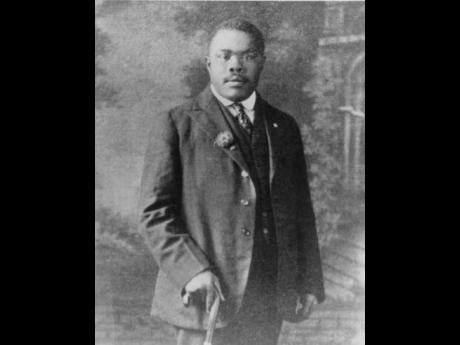


The 14th Marcus Garvey Memorial Lecture staged in the National Hero’s hometown of St. Ann’s Bay on June 6 may have fallen on deaf ears had it not been for the brilliant dissertation delivered by university professor Alvin Wint.
Deaf ears since despite the series of annual lectures celebrating the life and legacy of Marcus Mosiah Garvey and planned in recognition of the anniversary of his death, there seems to be a deafening silence in the forest at a time when Jamaica should be paying more fulsome tribute and appreciation to the memory of a man who stands on the world’s pedestal as an international hero. Bouquets at the grave notwithstanding.
And this in spite of Garvey’s name continuing to make headlines around the world with the news of his pardon by former US President Joe Biden on January 19 this year, and the passing of US Congressman Charles Rangel on May 26.
Rangel’s legacy is inexorably linked to the untiring efforts of himself and Congresswoman Yvette Clarke (of Jamaican origin) in pursuit of a congressional resolution exonerating Garvey from his 1923 conviction on trumped-up fraud charges.
Rangel was no stranger to Jamaica and, indeed, was a guest speaker at several public functions on the island, including the St Ann Homecoming and Heritage Foundation’s Award Banquet. Appropriately, a minute’s silence was observed in his honour at the 14th Garvey Lecture.
The annual lecture is organised by the St. Ann Homecoming and Heritage Foundation in collaboration with the Jamaica Library Service and Discovery Bauxite Partners.
The 2025 edition was well attended with an audience headed by former Governor General Sir Kenneth Hall and Lady Hall, St. Ann Custos Joseph Issa, and former custodes Norma Walters and Radcliffe Walters.
Professor Wint based his lecture presentation on Garvey’s party manifesto of 1929 which included universal adult suffrage, a minimum wage, land reform, the creation of a Jamaican university, secondary education in every parish, island-wide electricity, and a national library network.
AMAZING
He classed the manifesto as ‘amazing’, pointing out that it was framed at a time when there was a lack of interest in any form of social or educational reform for the black population which made up the so-called ‘underclass’, nor to consider expanding voting rights beyond the reach of the capitalist elite that controlled the economy and the society.
Taking on what he called “the key elements of the manifesto that are important for small countries to become successful”, he argued that Jamaica has achieved success in political stability, infrastructure and business development, opened the doors for education for all levels of the society, and has made significant and world-rated advances in macroeconomic stability.
While leaving it up to his audience to consider whether Garvey would have been pleased with these advances, he suggested that many of the national hero’s recommendations have been met, highlighting for example the university network across Jamaica, every parish with at least one high school, a minimum wage, a national electric grid, and a national library system.
While the focus was on Garvey, Dr. Wint kept the audience spellbound with the clarity of his presentation and his thorough research which pointed up the historical and critical values espoused by Garvey, underpinned by a vision for what Marcus thought was necessary for Jamaica’s future development.
The ultimate tribute to this son of Jamaica comes perhaps from Edward Seaga who described his legacy as one that “carried a message that helped to shape and structure the whole character of the people of his own country, among millions of other people throughout the world”.
COMPLETE EXONERATION
The mission now remains to seek complete exoneration for our National Hero. Will this latest appeal fall on deaf ears, again? The US Department of Justice has a very snobbish, packaged answer to all these appeals. “It is the general policy of the Department of Justice that requests for posthumous pardons for federal offences not be processed for adjudication,” they say. And then, with nose held high in the air, “The policy is grounded in the belief that time for officials involved in the clemency process is better spent on pardon and commutation requests of living persons.”
Reminds me of a similar response from local university circles to the St. Ann Homecoming and Heritage Foundation’s suggestion that an honorary doctorate be granted to Garvey.
It looks to me that 85 years after his death Garvey is still considered an ‘undesirable’ in certain historical, social and literary milieus not only in the United States, but in Jamaica here as well. He was certainly not popular with the establishment of both countries during his activist career, and this has filtered down into a sort of curtain of silence over his contribution to the advancement of coloured peoples, and the importance of his 1929 manifesto to our history. “The atmosphere in Washington was not conducive to getting it done through Congress,” said Congresswoman Clarke, and she was correct.
Well, let them stay there. As Millard Johnson, that fiery leader of the Garvey-based People’s Political Party that campaigned as a third party in the 1962 election said when he castigated the People’s National Party for what he called wasting money on refurbishing Vale Royal as a future home for prime ministers, “Garvey duppy a go tek dem!”
If I were to give any advice to the US Congress on the matter of his complete exoneration, it would be to let it happen. Garvey was never a quiet man, and I don’t know if his duppy is willing to take any further slap in the face lying down.
Lance Neita is a political satirist and public relations professional. Feedback to the Gleaner or to lanceneita@hotmail.com