
$80m payday for fraudster
Published:Friday | March 20, 2026 | 12:08 AMLivern Barrett/Senior Staff Reporter
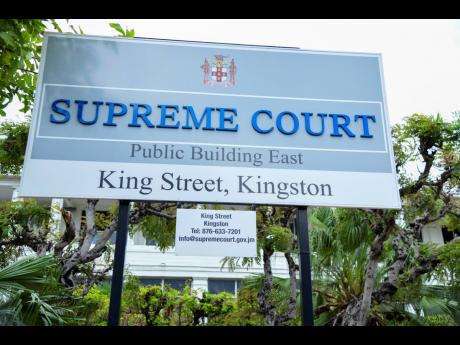
The Government has been ordered to pay almost $80 million to a man with dozens of fraud-related convictions after he languished in prison for six years and 11 months or 2,504 days in excess of his sentence mainly because of an administrative error by prison authorities.
The Supreme Court yesterday ordered that Ray Morgan be paid $60 million or an average $23,962 per day in compensatory damages, $10 million in vindicatory damages, and $9 million in special damages, ending a lawsuit he filed against the State.
The $9-million award for special damage is to cover legal costs he incurred to vindicate his constitutional rights.
Morgan has a lengthy criminal history dating back 33 years prior to 2011, including 72 previous convictions for offences such as fraud, larceny, and forgery. In 2022, he pleaded guilty to defrauding Jamaican international reggae singer Marcia Griffiths of approximately $4.8 million.
Justice Sonya Wint-Blair, who presided over a lawsuit filed by Morgan for breaches of his constitutional rights, noted that his excessive detention resulted from a failure of the State’s appeal mechanism.
She said the $10 million awarded for vindicatory damages was not meant to be punitive but must reflect the gravity of the breach and deter a recurrence.
“The unconstitutional detention in the present case is 2,504 days. That period is extraordinary. It plainly calls for a substantial award,” Wint-Blair wrote in her 16-page decision.
Morgan was convicted on February 7, 2011, before a then resident magistrate and sentenced the same day to consecutive prison terms totalling 12 years, according to a court transcript of his criminal case.
He immediately gave verbal notice of appeal against both the conviction and sentence.
The Judicature (Resident Magistrate) Act stipulates that an appeal must be submitted to a clerk of court within 21 days after the date of judgment.
NOT FILED CORRECTLY
However, the court transcript revealed that Morgan’s grounds for appeal against his sentence were not submitted to the clerk of court who handled his case though he did “everything reasonably possible” to ensure that.
Instead, the grounds of appeal were sent by prison authorities to the Registrar of the Court of Appeal, Jamaica’s second highest court.
“Accordingly, they were not filed with the clerk of court with the consequence ... that the appellant was deemed to have abandoned his appeal against sentence,” the transcript read.
Morgan was first informed of the administrative error six years later in 2017 but was not told that he was deemed to have abandoned the appeal.
By the time the Court of Appeal took up the case on July 7, 2021, he had already completed the consecutive sentence imposed by the lower court.
Fourteen days later, the Court of Appeal gave its decision, affirming that Morgan was deemed to have abandoned his legal challenge because the grounds were not filed with the clerk of court and decided against exercising the discretion allowed in law to still hear the case.
It said hearing the appeal would be “an academic exercise” since Morgan had already served the sentence and that given the passage of time, it would not be in the interest of justice to try and dig up the records from his trial.
However, following a legal challenge by Morgan’s attorneys, Jamaica’s highest court, the Judicial Committee of the Privy Council, based in the United Kingdom, found that “a serious miscarriage of justice had occurred in all the circumstances” and sent the case back to the Court of Appeal for a hearing.
The Court of Appeal subsequently ruled that the then magistrate judge who handled Morgan’s case erred in imposing consecutive sentences totalling 12 years and slashed it to four years and six months.
The ruling meant that Morgan spent 6.8 years or 2,504 days “excess imprisonment”, Wint-Blair noted in her written decision.
She noted, too, that the Attorney General’s Department, the principal legal adviser to the Government, did not challenge the breach of his right to liberty.
“I agree that there can be no challenge to that infringement as it is plain that the machinery of appellate review malfunctioned,” the judge said.