
The women who held the west together
WOWJa recognises seven who led relief efforts after Hurricane Melissa
Published:Wednesday | April 1, 2026 | 12:07 AMJanet Silvera/Gleaner Writer
WESTERN BUREAU:
Pastor Mary Wildish turned her church into a war room. Tamika Williams opened her home as a lifeline for battered communities. And five months’ pregnant Tiffany Grant introduced ‘Sunday dinner’ to hurricane victims determined to hold on to their dignity.
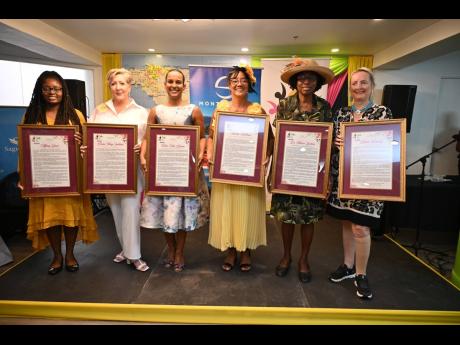
They were among seven honorees from western Jamaica recognised on Sunday as Jamaican Women of Resilience by the Women of Western Jamaica (WOWJa) during a brunch hosted by S Hotel Montego Bay and Sagicor Group.
The recognition came five months after Hurricane Melissa tore through the region, leaving thousands displaced and forcing communities to rely, in many cases, on their own networks in the critical early days.
What emerged in that vacuum was not organised response but instinct.
“Many of you didn’t just hear about the damage on the news. You were the damage. You cleaned it up. You cried through it. And then you got up the next morning and started again,” said hotel executive Shernette Crichton, addressing the gathering.
Wildish’s ‘war room’ at Trumpet Call Ministries became one of the most organised response efforts in western Jamaica, mobilising more than 130 churches and coordinating aid across multiple parishes.
Williams, in Camrose, St James, responded differently but no less powerfully.
After losing nearly four decades of work at Ahhh … Ras Natango Gallery and Garden, she used what remained, her home, as a collection and distribution centre, ensuring that food, clothing, and supplies reached those most in need.
Then she turned to healing.
From storm debris, she built a Christmas tree from uprooted bromeliads, creating a space where children could gather, speak, and begin processing the trauma left behind.
For Grant, resilience took the form of restoration.
Through her ‘Sunday grocery bags’, she recreated something familiar: a proper meal, at a time when normal life had been stripped away.
HELPING UNDERSERVED COMMUNITIES
Her efforts reached deep into underserved communities, including Negril’s West End and remote sections of Westmoreland, where she delivered hundreds of meals and grocery packages.
She also extended her work into St Elizabeth, helping to repair damaged roofs even as her pregnancy progressed.
The work of the other honorees reflected the widening layers of recovery.
At Sea Garden Beach Resort, Tricia-Ann Bicarie transformed her property into a hub for relief operations, partnering with international organisation Project Dynamo to distribute aid across several parishes.
From overseas, immigration specialist Nordia Barrett-Lewis built a structured system of support, directing resources through trusted networks, supplying construction materials, laptops for displaced students, and even basic personal items often overlooked in disaster response.
Her approach was guided by a simple belief: that waiting on others to act only delays recovery.
In Westmoreland, Dr Marcia Graham was managing a crisis within a crisis.
As medical officer for health, she oversaw a damaged public-health system, coordinating care despite limited access, broken infrastructure, and displaced communities.
But her response extended beyond her official role.
She opened her church to shelter residents and her home as a point of support while healthcare workers, many affected themselves, continued to serve, some sleeping at facilities to maintain operations.
Hanover Charities, under the leadership of Katrin Casserly, mounted one of the most extensive relief efforts in the region.
Even while recovering overseas from major surgery, Casserly coordinated international support, oversaw the shipment of aid, and helped distribute food, water, and supplies to thousands.
The organisation also played a key role in repairing homes and stabilising families in the months following the disaster.
Though their approaches differed, from grass-roots responses to structured coordination, the seven women shared a common instinct: to act.
At the brunch, Crichton framed that instinct as the defining measure of resilience.
“Turning a setback into strength does not mean the pain isn’t real,” she said. “It means the storm does not get to decide how your story ends.”
For the women honoured on Sunday, that decision had already been made. Long before they were called to the stage.