
The Classics
Dying Christmas traditions
Published:Friday | December 24, 2021 | 6:21 AMA Digital Integration & Marketing production
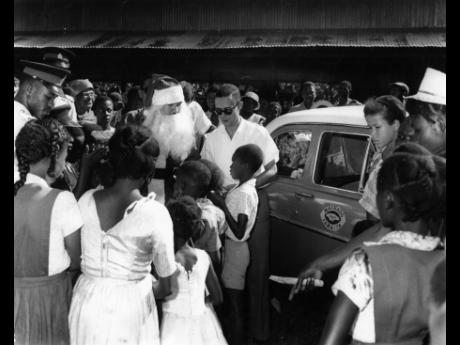


Advances in technology, as well as the change in the way of life of generations, have contributed to the death of some of Jamaica's Christmas traditions. The season is now marked by commercialisation.
Published December 10, 2001
Christmas a come
By Rebecca Tortello: Contributor
Today, Christmas in Jamaica, as in many countries around the world, has become commercialised. Carols are heard from the end of November, decorations appear from the first of December in stores and homes, and Santa can be visited in many different stores. In decades past, Christmas time included a number of different types of celebrations marked by distinctive sights, sounds and smells. There was the tradition of the Grand Market, the much-heralded arrival of Santa Claus in the Downtown Kingston shopping district and the dramatic performances of the Jonkonnu bands. All three still exist but to significantly lesser degrees and none are greeted with the awe and expectation of days gone by.
The Grand Market
Grand Market (or Gran’ Market) is a community fair characterised by food, street dancing, crafts and music. It began during the days of slavery when slaves celebrated their few days of freedom, (Christmas Day, Boxing Day and New Year’s Day) in the Town Square, Grand Market is traditionally held just before Christmas. In the past, the weekend before Christmas and particularly on Christmas Eve and Christmas Day, markets all over the island were awash with vendors selling small toys, firecrackers, balloons and sweets of all kinds - pinda (an African word for peanut) cakes, grater cakes and peppermint sticks. Oranges and even American apples were distinctive features of the Grand Markets. Sorrel, chocolate tea and coffee flowed, as did the Christmas carols and a merry banter between vendors and customers. On Christmas Day, some markets were decorated with streamers, large accordion-style bells, and balloons. Many were decked out in fancy clothes, including bright hats purchased upon entering the Grand Market. Everyone came to town for Grand Market and the celebrations lasted throughout the day and well into the night.
Santa visits Downtown
Like today, the stores and streets downtown were heavily decorated and a Christmas tree could be found in the area now known as St William Grant Park. Thousands awaited Santa’s arrival on balconies and along crowded sidewalks. The Santa Claus Parade was a much-anticipated event. Streets were closed to traffic to clear the way for Santa’s sleigh ride down King Street onto Harbour Street and Times Store, his final destination. Vendors lined the streets with boxes full of lollipops and biscuits. Marching bands, troops of boy scouts and girl guides, people holding effigies of Norman Manley and Alexander Bustamante, and floats carrying various beauty queens preceded Old Saint Nick. The 'Jolly Man in Red’ was ceremoniously greeted at the door of Times Store by its owners and the mayor of Kingston.
One by one, the hundreds of children waiting in long lines to tell Santa their Christmas wishes made their way onto his comfortable lap. Santa stayed in Times Store for almost three weeks. Of course, today, Times Store is no more.
Jonkonnu
The cry ’Jonkunnu a come!’ meant excitement was near. As soon as the sound of the bands could be heard, people poured out of their houses lining the streets to watch the dancing masqueraders in their larger-than-life costumes. Children of all ages, and even some adults, would often run away screaming, frightened by the more elaborate costumes. Occasionally, some of the individual characters like the Devil, might jab at them with his fork, escalating the fear factor.
Up to the 1960s, masked Jonkonnu bands could be seen around the island, although their presence was particularly strong in the Two Miles area. They tended to put in more appearances uptown than downtown, dancing and entertaining crowds, before collecting money.
Jonkonnu (also spelled John Canoe, John Konno, Johnny Canoe, Jonkunnu and John Canou) is an example of creolisation in action, or, what Rex Nettleford calls, the blending of the rhythm of Africa with the melody of Europe. Like Grand Market, Jonkonnu can be traced back to the 'free’ time given to slaves over the Christmas. Jonkonnu performances occurred between Christmas and New Year as the slaves celebrated their freedom with dances and festivals. Some say Jonkonnu was a West African celebration in honour of a revered chief. Others say Jonkunnu originated in West African secret societies and still, others point to the European tradition of masking.
However it began, Jonkonnu melted the tradition of masquerade from Africa with those of European masquerade and British mumming plays. Excerpts from Shakespearean monologues were often included. The costumes also reflected European influences incorporating the attire of kings and queens amongst the characters.
Jonkonnu characters
The traditional set of Jonkonnu characters included the horned 'Cow Head', 'Policeman', 'Horse Head', 'Wild Indian', 'Devil', 'Belly-woman', 'Pitchy-Patchy' and sometimes a 'Bride and House Head', who carried an image of a great house on his head. The costumes varied according to the different areas - for example, Fancy dress bands were said to come more from St Elizabeth, Westmoreland and Hanover. Yet all were bright, elaborate and colourful. Mirrors and tinsel generally added shine to costumes. Pitchy-Patchy, in particular, was a striking sight - his costume made up of strips of brightly coloured cloth. Each character had a special role and sometimes a special dance to perform. For example, Belly-woman’s - often a man dressed up like a pregnant lady - always created laughter by exaggerating the belly in time with the music. Characters often interacted with one another and the music of the drums and fife caused many an onlooker to dance along with the band.
Although Jamaica is credited with the longest-running tradition of Jonkonnu, today, these mysterious bands with their gigantic costumes appear more as entertainment at cultural events rather than at random along our streets. Despite attempts to revive these customs, so much is being lost. Perhaps it is simply that today, with television, movies, Nintendo, and other leisure options, people are less receptive to this kind of street entertainment. Perhaps it is due to the interpretation of Jonkonnu’s origins as entertainment for and by the slaves. As such, these activities may have been forsaken by those who would rather not relate to that period of history and the people who lived during that time. Also, today the cost of putting together a Jonkonnu band is also prohibitive and sponsors are not easy to come by.
For feedback: contact the Editorial Department at onlinefeedback@gleanerjm.com.