
Our Jamaica
Looking Glass Chronicles - An Editorial Flashback
Published:Tuesday | June 4, 2024 | 8:22 AM
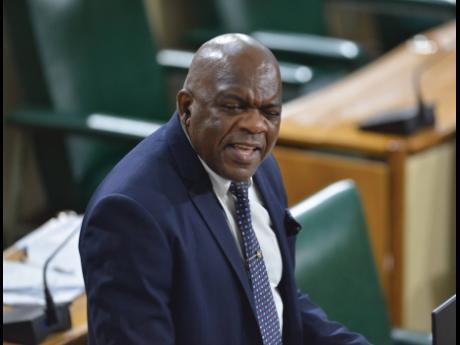
Celebrating achievements to normalise accessibility
Despite their visual impairments, both Professor Floyd Morris and Nigy Boy (Nigel Hector) share compelling narratives of perseverance, underscored by their education at The Salvation Army School for the Blind and Visually Impaired. Nigy Boy, who overcame significant odds, now holds a bachelor's degree from Stony Brook University and aspires to a career in law while excelling in dancehall music. Meanwhile, Professor Morris, despite losing his sight in his teens, rose to prominence, obtaining a PhD and leading the UWI's Centre for Disabilities Studies. These stories underscore the critical role institutions like The Salvation Army School play in supporting individuals with disabilities, a group that remains underrepresented in official statistics, demanding urgent attention from authorities
Rights of the disabled
Jamaica Gleaner/3 Jun 2024
AS WAS the case when this newspaper celebrated dancehall musician Nigy Boy’s recent graduation with a bachelor’s degree in political science and history from New York’s Stony Brook University, we laud Floyd Morris’ appointment as professor of disabilities studies not only because he is blind and, in the circumstance, his achievement unique. The Gleaner marks their achievements because we should not have to mark them.
Put another way, by highlighting the accomplishments of people like Professor Morris and Nigy Boy (Nigel Hector), and in telling Celine Lobban’s story a year and a half ago, we hope, in a sense, to normalise their attainments. Or at least coax policymakers, and the society at large, to make it less difficult for people with disabilities to actualise their talents.
SEVERAL THINGS IN COMMON
Professor Morris and Nigy Boy have several things in common apart from their blindness. They both have compelling back stories and possess a driving will to succeed. And they had the Salvation Army School for the Blind and Visually Impaired.
Nigy Boy, 23, spent his early life in Flankers, St James. He was a premature baby. He tells that he was given up for dead and was about to be carted to the morgue, when he cried. He spent several months in an incubator.
His, Nigy Boy says, was a fairly normal early childhood, except for schooling. In the absence of specialised training and learning aids for blind children, his teachers improvised. Happily, he transitioned to the Salvation Army special school where he learnt Braille and other useful coping skills, before returning to the formal school system. He helped steer teachers to his learning needs.
Nigy Boy eventually emigrated to the United States, gained his Stony Brook degree last month and harbours ambitions of becoming a lawyer. He is also enjoying a spiralling career as a dancehall performer.
Floyd Morris is 55. He holds a PhD; he is the director of the UWI’s Centre for Disabilities Studies; and he serves in the Jamaican Senate, of which he has been the president. Glaucoma left him blind in his teens. But before total blindness, he left high school with little by way of academic achievement, but not without intellect.
Then he and the Salvation Army School for the Blind and Visually Impaired found each other – to Professor Morris’ benefit and academic advancement.
These stories are significant on several fronts. The Salvation Army School for the Blind and Visually Impaired serves as a metaphor for the several institutions that work with limited resources to support Jamaicans with disabilities.
There is no definitive data on the number of people in Jamaica with disabilities. The most recent estimates, however, put the figure at around 200,000, or about 3.6 per cent of the population. That is substantially lower than the global estimate of 15 per cent of countries’ populations with disabilities. Additionally, the number of people formally registered in Jamaica as suffering a disability is only 20 per cent over the estimated overall amount.
The global benchmark suggests that there might be significant undercounting of the disability problem in Jamaica. That is a matter with which the authorities, including the National Council for Persons with Disabilities, must urgently come to grips.
GETTING NUMBERS RIGHT
Getting the numbers right is important for there to be the formulation of credible policies that ensure people with disabilities are afforded the rights and services due to them as citizens of Jamaica. This includes the right to a full education, such as Professor Morris and Nigy Boy (who are among the 24 per cent of the people with disabilities who are either blind or visually impaired) eventually received.
As we observed previously, one survey in the first decade of the 21st century showed that Jamaican children (ages five to 17) with disabilities were five times – 27 per cent versus five per cent – more likely to not to attend school than those without disabilities. The same analysis, using 2011 census data, indicated that while more than six in 10 (62.5 per cent) people without disabilities completed high school, only one in 10 with a disability did so. The highest proportion finished their education at primary/elementary school.
Indeed, the analysis by UNESCO quoted a 2016 report by the Planning Institute of Jamaica on the poor educational outcomes and low job prospects of people with disabilities: “Less than 5.6 per cent of those who graduated within the past five years have continued to tertiary institutions (the majority overseas), and approximately 20 per cent or less have gained part-time/full-time employment.”
It also quoted a Jamaica Association for the Deaf observation that
“75% of graduates at the secondary level do not attain marketable skills by school-leaving age”.
The situation has improved over the past decade. A Disabilities Act that codifies the rights of peoples with disabilities has been promulgated. But there is still much work to do.
Mainstream schools still struggle to accommodate students with disabilities. Ms Lobban, a deaf student who graduated from the University of Technology, Jamaica in 2022, had to hire her own sign language translator for her lectures. The Salvation Army School for the Blind and Visually Impaired, despite recent gifts from private foundations, remains short of Braille writing machines.
The school can accommodate only 120 students. What if Floyd Morris or Nigy Boy were the 121st?
The opinions on this page, except for The Editorial, do not necessarily reflect the opinions of The Gleaner.
For feedback: contact the Editorial Department at onlinefeedback@gleanerjm.com.