
Sean Major-Campbell | Fiducia Supplicans – an act of grace
Published:Sunday | January 21, 2024 | 12:03 AM

THE DICASTERY for the Doctrine of the Faith, a council or court of the Roman Catholic Church, recently produced what it called a “Declaration” called “Fiducia Supplicans” (supplicating trust) on the pastoral meaning of blessings. Ever since that declaration, a tremendous amount of time has been spent trying to explain what was not said versus the enlightened position of the document.
Many people have impatiently rushed to conclusions without taking any time to comprehend that the blessing of people in irregular contexts or same-sex couples is simply a recognition that all peoples are potential recipients of blessings regardless of their station in life. When I did a weekly prison ministry, I always pronounced a blessing on individuals and groups without any interest in their charge, crime, or sentence.
An example of what the Roman Catholic Church calls an irregular situation would be a common-law union. In Jamaica, common-law unions have always been the most prevalent form of family context. The vast majority of our clergy would, therefore, quite likely come from these unions. The same is true of church membership. The Church is recognising that those who do not practise the traditional affirmation of marriage as taught within tradition are no less entitled to seek God’s blessing and to receive same within the context of pastoral ministry.
Blessing a couple in a common-law union is not a statement on the nature of the union. Suffice it to say that in my view, a common-law union is no less holy than a formal union marked by white dress, ring, and marriage certificate. However, the point here is that we ought to be true to what Fiducia Supplicans is saying and not saying.
In 2020, Pope Francis, in Catechesis on Prayer – 17, The blessing, notes, “Many mothers queue up to see their imprisoned child: they do not stop loving their child and they know that the people passing by on the bus are thinking: ‘Ah, that is a prisoner’s mother’. Yet they are not embarrassed about this; or better yet, they are embarrassed but they go ahead because their child is more important than their embarrassment. Thus we are more important to God than all of the sins that we can commit because he is a father, He is a mother, He is pure love, He has blessed us forever. And Hewill never stop blessing us.”
It is interesting to see how we can be in church and reading or studying the Bible for many years and miss some profound truths. Pope Francis also observed in Catechesis on Prayer, “God’s great blessing is Jesus Christ; His Son is God’s greatest gift. He is a blessing for all of humanity. He is the blessing that saved us all. He is the eternal Word with which the Father blessed us “while we were yet sinners” (Rom 5:8), Saint Paul says, the Word made flesh and offered for us on the cross.” This can be daunting for those who have always spoken from positions of privilege and perches of self-righteousness and certainty of being more special to God than “those sinners” over there.
The Roman Catholic doctrine on marriage and its position on sexual relations are quite clear and readily available for all to see and read. This may even be accessed online. Why then would some people so quickly rush to assumptions, misguided presentations, and lies? Those of us who are not members of the Roman Catholic tradition still have a duty to seek and represent truth.
Blessing people in irregular situations is not the same as blessing that situation. Blessing people in same-sex unions is not the same as blessing that union. The Church has not changed its doctrinal position on marriage or heterosexual unions. Instead, it has amplified a deeper pastoral understanding of what blessing is and its availability to everyone.
In the wider church community, we may make a positive difference by praying for Pope Francis, who leads at the Holy See of St Peter. Pray that we may all be known by our love for each other. Pray for God’s will of love and mercy in whatever we say or do.
I close with the four-fold Franciscan prayer which is a devotional discipline derived from the teachings of Francis of Assisi and Clare of Assisi. The prayer is divided into four sequences: ‘Gazing, considering, contemplating, and imitating.’
May God bless you with discomfort,
At easy answers, half-truths,
And superficial relationships
So that you may live
Deep within your heart.
May God bless you with anger
At injustice, oppression,
And exploitation of people
So that you may work for
Justice, freedom, and peace.
May God bless you with tears,
To shed for those who suffer pain,
Rejection, hunger, and war,
So that you may reach out your hand
To comfort them and
To turn their pain to joy
And may God bless you
With enough foolishness
To believe that you can
Make a difference in the world
So that you can do
What others claim cannot be done
To bring justice and kindness
To all our children and the poor.
Amen.
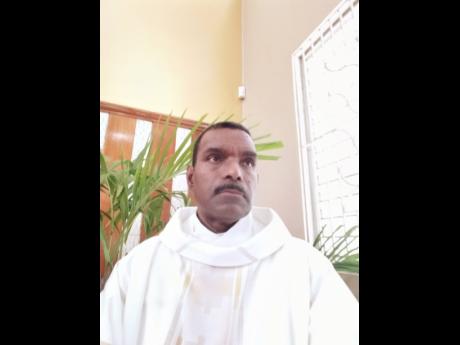
Fr Sean Major-Campbell is an Anglican priest and advocate for human dignity and human rights. Send feedback to seanmajorcampbell@yahoo.com or columns@gleanerjm.com