
Japan demanding more eco-friendly Jamaica coffee
Published:Friday | July 2, 2010 | 12:00 AM
Avia Collinder, Business Writer
Jamaica and Japan are collaborating on a new programme for eco-friendly coffee production aimed at attacking pests now bedevilling crops chiefly marketed to the Asian country.
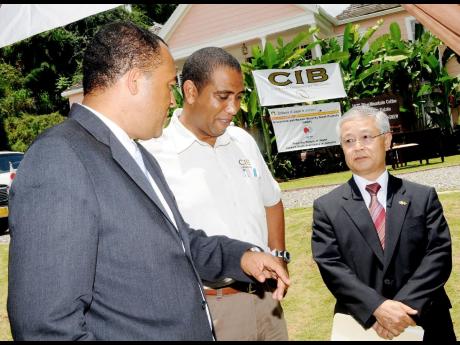
The Coffee Industry Board (CIB) is working with a US$82,000 ($7m) grant, from the Grassroots Human Security Grants Project of the Japanese Embassy, to teach 150 farmers new cultivation methods.
Once the new methods take hold, the CIB will introduce, in a few years, a 'pay-for-quality' programme, which will pay a higher price to coffee dealers who produce the best quality beans, Christopher Gentles, director general of the CIB, said Tuesday.
Japan, he said, is getting tougher on food safety regulations, driven by a push towards more healthy lifestyles.
"The consumers of luxury products such as coffee are insisting that their coffee is free from pesticide residues. This is particularly critical in Japan," Gentles told the Financial Gleaner.
Japan is the strongest market for Jamaican coffee, purchasing an average of 85 per cent of Jamaican coffee for the last 10 years.
But that market is now in retreat, forcing Jamaica to seek out new buyers of the most expensive coffee in the world.
"In fact, the Japanese market demanded 40 per cent less coffee this year than the year before and previous years," said Agriculture Minister Christopher Tufton at the signing of the new agreement.
"In addition to that, they indicated that they were unable to provide the kind of prefinancing that they would normally provide. It threw the market into a tailspin," Tufton said.
Jamaica hopes to diversify its markets to include Korea and the United States, with plans to be less dependent on Japan, in three to five years.
The CIB and Ministry of Agriculture and Fisheries will introduce through the pest control project - for which the agreement was signed between the Japanese and the Jamaican government on June 17 - the "Beauveria bassiana", an entamopthogen which is said to occur naturally on coffee fruits in Jamaica.
"The programme will include the purchase of equipment to facilitate the development and dissemination of a parasitic fungus that will attack the adult coffee berry borer," said Gentles on Tuesday.
Training will also highlight locally made 'rustic' traps as two critical components of the integrated coffee berry borer management system operated locally.
The project will also distribute neem, timber and coffee seedlings in an attempt to improve the plant population density of farms.
Earlier this year, the CIB assisted in brokering a special promotions programme between the Japanese Coffee Importers and the Jamaica Coffee Exporters' Association (JCEA) which will see US$0.10/kg being dedicated by JCEA members to recrafting the image of Jamaica Blue Mountain Coffee in that market.
The fund will be matched by Japanese importers of coffee, to create a fund of approximately US$160,000 per annum, dedicated to marketing.
Jamaica continues to struggle with lower yields from coffee, driving down revenue for farmers - both as a consequence of storm damages in the past and limited capital for farmers to replant.
At March 2010, the High Mountain region had produced 58,215 boxes of cherry coffee, and the Blue Mountain 241,820 boxes.
The CIB estimates that another 25,000 boxes will be produced between April 1 and July 31, which marks the end of the crop year.
The estimated value of processed coffee to be sold this year is conservatively US$23.7 million to US$25 million, Gentles said back in May.
The director admitted as well that the reduced volumes would have been good for the recession-impacted market conditions, implying that the low supply would result in higher prices for dealers.