
The power of intervention
Published:Tuesday | November 30, 2010 | 12:00 AM
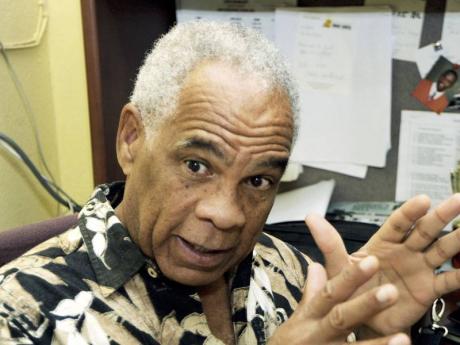

Robert Lalah, Assistant Editor - Features
Ten years ago, a plan was hatched in South St Andrew. The aim - turn around the poor literacy levels of hundreds of students in the constituency.
"The literacy level of the students at the time was really very low. For various reasons, the students weren't grasping reading skills," said Joan Spencer-Ernandez, a former director at the Jamaica Association for Children with Learning Disabilities.
Something had to be done, and quickly, if there was going to be hope for the students. So, Spencer-Ernandez came up with a plan of action.
"We needed to have an intervention. We had to go in, find what the issues were, and implement measures to address them," she said.
She approached member of parliament (MP) for the area, Dr Omar Davies, for help with funding.
"He was a little sceptical at first," said Spencer-Ernandez. "He's known for helping students in his constituency, especially in education matters, but I guess he has seen many of these programmes start and then fizzle out, so he wasn't eager at first."
But Davies eventually came around, and with the use of monies from what is now known as the Constituency Development Fund, as well as private donations, an immediate intervention was started.
Extensive programme
It was an extensive programme that focused on five primary schools. Students from grades one to six were targeted.
"It involved training the teachers, monitoring, providing material and motivation," said Spencer-Ernandez. In total, about 3,000 students were involved.
"We started by doing testing to determine what was needed. Then, we started a programme of differential instruction," she said.
That meant that the students were put into small groups, determined by their specific needs. This made it easier to implement tailor-made teaching strategies.
"We also set up libraries at the schools. Most of them didn't have these before, and we wanted the students to have access to books of all kinds," Spencer-Ernandez said.
The students were also encouraged to take the books home and to read in their spare time.
The results were almost immediate, and they have been getting better each year.
"When the programme was launched, we had about 20 students from the constituency being placed in traditional high schools each year. By year two, that number jumped to 47, and by year three, it climbed to more than 100," Spencer-Ernandez said.
"At Iris Gelly Primary, more than 70 per cent of students were deemed to be 'at risk' when the programme first started. By year three, that number fell to 16 per cent."
And so the programme has grown with students at the primary level continuing to benefit.
"We also decided to track the first set of students who were in the programme, to see how they did throughout high school," explained Davies.
In touch
So for five years of high school, the MP's team stayed in touch with the students as they moved through grades.
"Wherever there was a need, we would help them out with lunch money or with books. We didn't want the lack of resources to interfere with their development," said Davies.
When the time for the Caribbean Secondary Education Certificate exams came around, the results were again astonishing.
"More than 100 students got five or more passes. The boys actually outperformed the girls," said Spencer-Ernandez.
Of these students, who when first identified couldn't read, a record 57 went on to sixth form. About 50 of them then went on to enrol at a tertiary institution.
"Three went abroad to study. The rest are at UWI, UTech and other local colleges," said Spencer-Ernandez.
The success of this experiment has led to the launch of others. There's now an adult-literacy programme, as well as a basic-school intervention project operating out of Davies' constituency.
"The success of these students just demonstrates what can be done with the right kind of intervention," said Davies.
"These are students who would have perhaps not made it without this intervention. Now, they are on the track for great things."