
The Jamaican 'family' explored
Published:Sunday | December 12, 2010 | 12:00 AM
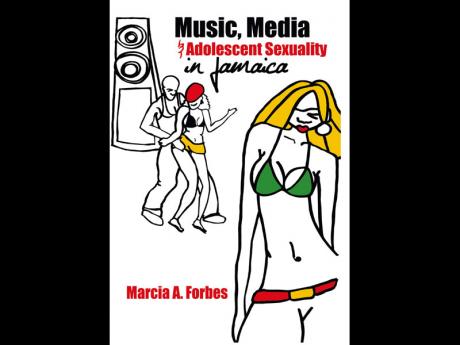

Today, we begin a four-part series of excerpts from Marcia Forbes' Music, Media & Adolescent Sexuality in Jamaica. The book is available islandwide. See part two next Sunday.
Notably, media influence does not exist in a vacuum. It is highly dependent on numerous intersecting variables, including the socio-economic conditions and the culture of a people. By drawing attention to some key aspects of Jamaican life, the reader will be better able to understand the context within which media operates in this island and the social milieu within which Jamaican adolescents watch music videos.
Some will argue that the seeds for persistent poverty and deep distrust in Jamaica were sown from as far back as the days of slavery when family life was fractured and social conditions bred suspicions, discontent and even rebellion. Maroon colonies comprised of runaway slaves were a source of annoyance to English settlers and were eventually accommodated by way of a series of treaties. Sugar-plantation owners in Jamaica largely had absentee status, preferring to appoint overseers to manage their estate while they resided back home in England - unlike Barbados, for example, where plantation owners resided on the island. These early days laid the foundation for some of the ways in which Jamaica has evolved in terms of social capital, sexual relations and culture in general (Beckles, 1989 & 2004).
There is no doubt that social conditions influence lived realities. The reasons boys and girls give for watching music videos, how they interpret what they see and the opinions they hold are best understood within the context of their life experiences. It is, therefore, useful to briefly explore certain key agents of socialisation namely, family, church and school, as they present in Jamaica, before looking specifically at the life of adolescents in this island.
Family
The nuclear family does not represent the norm in Jamaica and, whether or not a child lives with his/her biological parents, is somewhat related to the socio-economic status of the parents. "Better-off families in Jamaica have tended to be nuclear with a mean of just over four for household size" (Gayle et al. 2004). Those born to the middle or upper class are more likely to live with their birth parents. Among children 14 years and under, 41 per cent live with their mother only, 35 per cent live with both mother and father, while 19 per cent live with neither mother nor father (Blank, 2002: 50). The remaining five per cent live with their father only. Clearly then, in Jamaica, 'family' takes many forms with pluralism (multiple partnerships over a period of time), flexibility and informality as some of the hallmarks. Fostering and child-shifting are fairly common and more prevalent with migration where one or both parents travel overseas to make a better life for the family. Children are left in Jamaica with family members, friends or even strangers. Very often, it takes years before conditions abroad are deemed suitable for them to be able to join their parent(s). Throughout their lifetime, therefore, many Jamaican children and adolescents are exposed to serial residence and a variety of family structures.
Many Jamaican adolescents, boys and girls, are subjected to a life of poverty and misery. Since so many of the images in music videos are sexual, adolescents who see their bodies as their primary capital may be enticed into transactional sex with exposure to the inherent risks involved.
The family's social status directly impacts the quality of life of its members. One may even be tempted to question the relevance of the life stage of adolescence for some from very poor homes in Jamaica, particularly inner-city and ghetto communities. In many instances, these adolescents may not be allowed the privilege of a transition from childhood to adulthood. In one local television programme aired on CVM TV, inner-city children between six and 15 years of age demonstrated the various sounds made by different types of guns. Community violence was the route via which they received this 'education'. Poverty in Jamaica exposes children and teenagers to situations which even adults may have difficulty comprehending and dealing with. Those who live on the streets, who ply their wares (including their bodies) to make a living, as well as those from homes and or communities where abuse (physical, psychological and sexual) occurs regularly, are most at risk. They are forced to devise survival strategies which rob them of their innocence and the joys of childhood and adolescence.