
Mavis Bank Coffee deal faces 'complications'
Published:Wednesday | June 15, 2011 | 12:00 AM
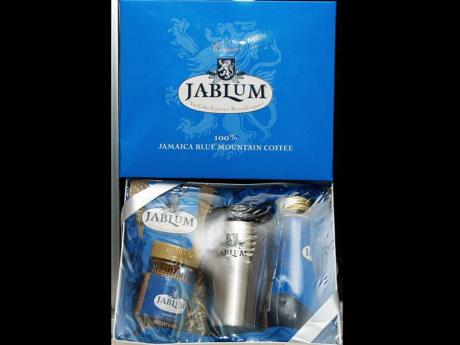
The food and shipping conglomerate Jamaica Producers Group admitted Tuesday that "complicated" coffee factors have prolonged negotiations for the acquisition of Mavis Bank Coffee Factory (MBCF), the island's largest processor of Blue Mountain coffee.
Jeffrey Hall, managing director at JP, said the complications include the age of the company at 88 years, heavy government regulation by the Coffee Industry Board and its iconic brands, including Jablum, but refused to clarify the sticking points.
"These three factors make the transaction somewhat complicated," he continued, "but it was expected by all parties involved."
Hall denied that negotiations were off, but declined comment on the expected timeline to close the deal.
"It is inaccurate to state that the negotiations have stalled or hit a snag," said Hall. "The internal time frame for negotiation is still being met. Third, he declined to explain the problematic nature of each factor."
JP and the Facey family-controlled property conglomerate Pan Jamaican Investment Trust have partnered on a bid for the 70 per cent of Mavis Bank held by state-owned Development Bank of Jamaica (DBJ).
DBJ did not respond to queries up to press time, while calls to managing director and CEO of MBCF, Senator Norman Grant, went to voicemail.
"I can say that ... shareholder ... interest is being protected by these negotiations," Hall told Wednesday Business without elaborating. "The parties continue to negotiate [despite] the complications." Both JP and Pan Jam are publicly traded companies.
The history of Mavis Bank is intertwined with the failed Jablum Limited. The complexities in the ownership structure are being unravelled by the parties, according to sources, but Hall denied that clarity of the ownership structure was at issue in the talks.
In April, managing director at DBJ, Milverton Reynolds, officially announced that JP and Pan Jamaican were selected as the preferred bidders for the purchase of MBCF. The two companies submitted a joint bid. Cabinet subsequently approved the DBJ's recommendation.
JP, now most known for producing snacks, is in growth mode and has been liquidating equity investments to pump into its operations. The company diversified into mining two years ago, and now plans to enter the coffee market.
projects IN THE WORKS
At the company's annual general meeting last Friday, Hall said the company was working on several projects and that Mavis Bank was among those that were advanced.
"Some are active late-stage negotiations, like Mavis Bank, and some are very early stages, others are parallel capital projects, like the fresh micro pulp project ... "
MBCF, located on 12 acres of land in the Blue Mountains, was started in 1923 by Victor C. Munn, an English planter and processor. The factory receives coffee beans from thousands of farmers in the Blue Mountains.
Currently, the DBJ holds 70 per cent of the Mavis Bank coffee operation, with Keble Munn and family owning the remainder. The majority share fell into Government's hands in 2004 when the National Investment Bank of Jamaica acquired the stakeholding as part of a restructuring of debts owed by the company. NIBJ was merged with DBJ about three years later.
The GOJ wants the new investors to undertake the financing, development, operation, and management of the business, and pay for its interest in the company.
Close to one million pounds of beans are exported in barrels and bags under the MBCF trademark in the green bean form, with the remainder roasted and packed in vacuum bags under the Jablum brand.
The Jampro investment guide indicates that revenue over the last few years ranged between US$8 million and US$11.6 million per annum. However, sales have been affected by falling demand in primary market, Japan. However, the company has been growing its market in the United States.
The company has a green bean agency agreement signed with the Munn family-controlled Blue Mountain Coffee Inc.
Jamaica's coffee exports have fallen from about US$30 million per annum to US$17 million at last estimate. Japan remains the chief buyer, consuming 85 per cent of the premium coffee.