
Avoiding euro ruin and global recession
Published:Friday | September 30, 2011 | 12:00 AM
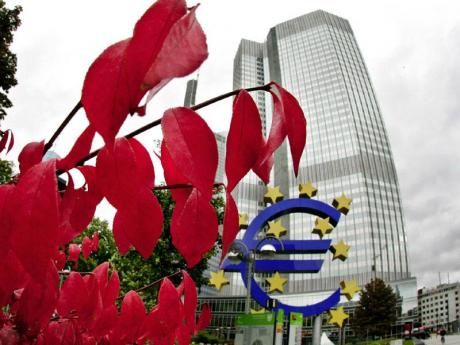
Optimally, contemplation of certain kinds of issues in financial affairs is secret. Negotiators may hammer out complex details, float or fly kites and shoot down bargains behind closed doors, without anyone losing face amidst crippling public comment.
Today's unique and special 'word-of-mouth', virally prone communications systems make these attempts at confidentiality even more important. But there comes a time when secrecy is moot, indeed counterproductive.
The Greek debt problem is not a secret. So although negotiations take place behind closed doors, the outcome must be made public immediately upon completion - as the men/women of the moment leave the room.
Indeed, the more public the commitments of the European Union's top economies and the G20 grouping to stabilise the euro and nudge nervous investors, fund managers, and let's mention them - speculators - towards the view that those responsible for policy and its implementation are ready to move decisively, the quicker will recession fears begin to recede.
This, however, requires that leaders achieve a common understanding, muster political will, and, preferably, enjoy the political capital and/or the backing of their people to take the bold steps necessary. These conditions have to be in place together - apparently, they aren't.
The United States 2008 fix of Wall Street was, if anything, a band-aid. All attempts at a fundamental fix were stymied.
Rating agencies, whose misleading pronouncements cost many their life's savings, continue business as usual without so much as an apology. CEOs and brokers kept their multimillion-dollar compensation payments, even though much of it derived from unearned profits that subsequently evaporated.
AIG was forced to settle its obligations to Goldman Sachs at 100 cents in the dollar. Toxic results of so-called financial innovation have barely been put to pasture.
Banks that benefited from taxpayer bailout money, insist on foreclosure for millions of families some of whose breadwinners have lost jobs. This is the condition in 2011 US, exactly three years after the September 2008 scare.
Double-dip recession
The Tea Party movement seems to have pushed Republicans way over to the right; tax cuts become more deeply entrenched as an article of faith, and spending to renew infrastructure and create jobs become the devil's idea. These are not the parameters upon and within which US economic recovery can be based. Thus, we face double-dip recession.
All this is merely the backdrop against which the Greek debt problem unfolds. There is no denying that default is the likely outcome. As I write, this may well be the case.
Regardless, the issue that seems to confuse many, is why the financial systems of Europe should exhibit fragility under threat of a Greek default. How, since the euro is common currency, can one speak of financial systems [plural] of Europe?
Well, for instance, big French banks, allegedly, hold Greek bonds on their books at face value. Default must strip value from these assets.
Already a Financial Times headline reads: "Siemens shelters cash at ECB". Siemens is not a currency speculator merely a big company with worldwide reach. The Financial Times reports that a "person with direct knowledge of the matter", is its source of the story that Siemens withdrew cash in excess of half a billion euros from a French bank. The source claims Siemens moved deposits of between €4b and €6b from European banks, placing the proceeds with the European Central Bank. Only a few companies are able to do this, yet the movement is on.
Add to this the prospect of a write-down of Greek and other sovereign debt, and some European banks shall, inevitably, need to be recapitalised. Currency speculation and adverse exchange-rate movements further complicate the picture.
These shall have impacts on trade and the activities emerging markets have come to depend on. With little time left to agree a fix acceptable to all, the turmoil in financial markets make double-dip recession an alarming probability.