
Linton Neil grows stevia, the 'sugarleaf' plant
Published:Saturday | November 19, 2011 | 12:00 AM
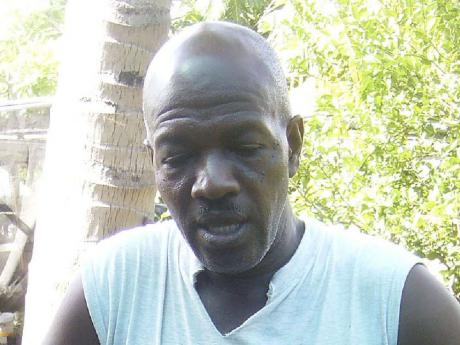

Paul H. Williams, Gleaner Writer
HORIZON PARK, ST Catherine:
EARLIER THIS year, when Linton Neil of Horizon Park, St Catherine, told me about the 'sugar plant', stevia, I thought it was a big tree, and that the leaves were processed to make sugar. I later found out, through research, that it was not a big tree, that the leaves of this shrub actually taste sweet, and that they can, in fact, be processed to make sugar.
My online search also found that "stevia is a genus of about 240 species of herbs and shrubs in the sunflower family, native to subtropical and tropical regions from western North America to South America. The species, stevia rebaudiana, commonly known as 'sweetleaf', 'sweet leaf', 'sugarleaf', or simply stevia, is widely grown for its sweet leaves".
My interest was piqued, and so I decided to pay Neil a visit, which I did recently. When I tasted a leaf, it confirmed another part of the information that says, "As a sweetener and sugar substitute, stevia's taste has a slower onset and longer duration than that of sugar, although some of its extracts may have a bitter or licorice-like aftertaste at high concentrations."
Sweet taste
The sugary taste did not explode in my mouth right away, but as the interview progressed, it became stronger and stronger. Quite fascinated I was! The leaves of the plant are said to have 30-45 times the sweetness of table sugar, and can be eaten as is, as well as put into teas and foods. The liquid and purified extracts are used as sweeteners. This domestic use is said to originate in South America, and has an extensive history of medicinal use, particularly in Paraguay and Brazil, but it wasn't until 1931 that two French chemists isolated the glycosides that give stevia its sweet taste.
The plant produces seeds, but only a small percentage of them germinate. It is said that planting cloned stevia is a more effective method of reproduction. Linton Neil's preferred way of propagating the shrub is by cutting the stems and setting them in water. After roots have sprouted, he would transfer them to pots. He now has several pots from the original stem he got from a friend, who got it from an aunt in Canada.
Over the years, controversies have surrounded the safety of stevia, or the lack thereof. It is banned or regulated in some countries, yet millions of Japanese have been using it for decades with no reported harmful effects. In the early 1970s, Japan began cultivating stevia as an alternative to artificial sweeteners. Steviol glycosides were first commercialised as a sweetener in 1971 by the Japanese firm Morita Kagaku Kogyo Co Ltd, a leading stevia extract producer in Japan.
In a few other countries, stevia has been available as a sweetener for many years. Also, the leaves have been used for centuries in South America as a treatment for diabetes mellitus type 2. Because stevia has a minimal effect on blood glucose, it is attractive as a natural sweetener to diabetics, and is used by people on carbohydrate-controlled diet. A 2011 review study concluded that stevia sweeteners were likely to benefit diabetic patients. Studies have shown stevia to have a revitalising effect on the B-cells of the pancreas, and possibly even to promote additional insulin production, helping to reverse diabetes and metabolic syndrome.
Neil said he has boiled the stevia leaves with other herbs such as mint and fever grass to make teas. By so doing, he didn't have to add table sugar. He said he has also made sugar from the leaves, which were first researched by Spanish botanist and physician Petrus Jacobus.
WHO's evaluation of stevia
In 2006, the World Health Organization (WHO) performed a thorough evaluation of experimental studies of stevioside and steviols, derivatives of stevia, conducted on animals and humans, and concluded, among other things, that there was no evidence of cancer activity, and that "stevioside has shown some evidence of pharmacological effects in patients with hypertension or with diabetes mellitus type 2", but WHO concluded further study was required to determine proper dosage.
Yet, back in 1991, the United States Food and Drug Administration (FDA) labelled stevia an "unsafe food additive" and restricted its import. The FDA maintained that the "toxicological information on stevia is inadequate to demonstrate its safety". The controversial ruling remained in force until the Dietary Supplement Health and Education Act forced the FDA in 1995 to review its position on stevia to allow it as a dietary supplement, although not as a food additive. This is regarded in many quarters as contradictory.