
Advisory column: investment- Can I lose my capital in a mutual fund or unit trust?
Published:Sunday | November 20, 2011 | 12:00 AM
Oran Hall, Contributor
QUESTION:
QUESTION:
I am 34 years old and a single mother of two. I would like to do some investment in Jamaica, so I called the Financial Services Commission and asked for a couple of financial brokers' names who are legitimate, and they did.
I called a specific firm and was talking to a financial adviser explaining to him that I would like to invest in a fixed-income mutual fund but, as he was explaining to me about the funds, the part that got me was when he said that fluctuation can affect the funds, and that I could end up losing my capital.
That's something to think about. I thought when I invest with a company, they would invest my money the best way possible to avoid loss. Is that the case or maybe I am wrong? My objective is to increase my capital and to improve my net worth. What would be your advice?
- Keadeen
PFA:
You acted wisely when you consulted the Financial Services Commission to get the names of legitimate investment dealers and you are acting wisely by asking for third-party confirmation of the advice given to you. Nothing is wrong with testing the quality of the advice you receive.
I should let you know that there are no Jamaican mutual funds; some Jamaican investment dealers do market mutual funds but they are foreign-based. There is, for example, a reasonably wide range of Canadian and US mutual funds on the Jamaican market.
There are, however, several Jamaican unit trusts which offer a range of investment products. There is not much difference between a mutual fund and a unit trust. They operate on a similar principle: they sell shares and units, respectively, pool the proceeds, and invest them for the benefit of investors. The primary difference is that a mutual fund is an investment company and a unit trust is an investment trust.
Mutual funds and unit trusts create investment portfolios or funds through which they make their investments and which are defined by the type of securities in which they invest or by their investment objectives. This is why some funds are described as fixed-income funds or as equity funds or why some are described as income funds and others as growth funds.
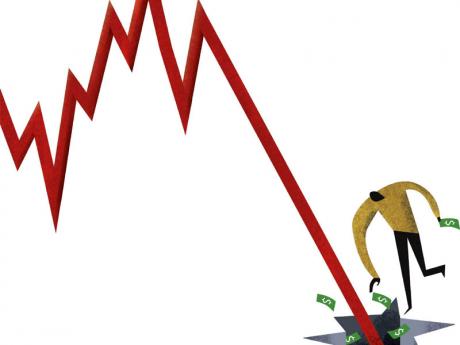
The fund you invest in should be determined by your investment objective as well as by your risk tolerance. The extent to which the value of a fund fluctuates is a function of the instruments in which it invests. If a fund invests primarily in ordinary stock, it is reasonable to expect the value of your investment to increase sometimes and decrease at other times. This is so because the value of stocks tends to fluctuate.
This is also true of funds that invest in both stock and fixed-income securities or in stock, fixed-income securities, and real estate. Because of the presence of bonds in these funds, fluctuation in value is generally not as pronounced as that of funds that invest overwhelmingly in stocks.
In the case of fixed-income funds, the value of units in unit trusts and shares in mutual funds do not generally decline. The interest earned is not generally distributed but is reinvested thus increasing the value of the fund although management fees and other expenses are charged against it. Sharp increases in the level of interest rates cause the value of existing fixed-income securities to decline, so this may hurt fund performance. Fund valuations, using current prices, are done regularly.
Fund managers do have a responsibility to manage the funds under their charge to generate the best returns while protecting the value of the investment. But markets intrinsically fluctuate, so the value of investments also tends to fluctuate. Pooled investments such as unit trusts and mutual funds are particularly attractive because they invest in a wide range of securities and thus reduce the risk of loss or lower-than-expected returns.
Although there is some risk, if you invest in a fixed- income unit trust or mutual fund, you should not make a loss and certainly you will not lose all of your capital.
Oran A. Hall, a member of the Caribbean Financial Planning Association and principal author of 'The Handbook of Personal Financial Planning', offers free counsel and advice on personal financial planning. Email: finviser.jm@gmail.com.