
Greece awaits bailout decision but issues remain
Published:Tuesday | February 21, 2012 | 12:00 AM
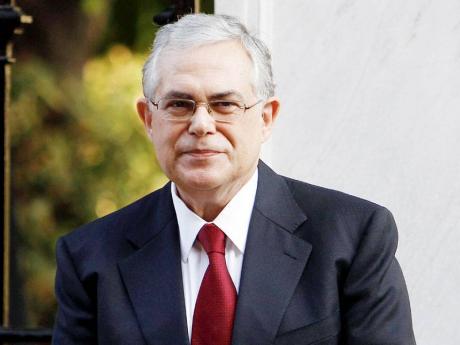
Eurozone governments worked into the night on Monday hoping to agree on a long-awaited rescue package for Greece, saving it from a potentially calamitous bankruptcy next month, but several key points of division remained, senior officials said.
Finance ministers meeting in Brussels were still wrangling over how to further reduce Greece's debt load and impose even tighter control over the country's spending, and negotiations were expected to stretch late into the night. Rich countries like Germany and the Netherlands and the International Monetary Fund (IMF) want to be sure that Athens can eventually survive without aid.
But after months of delays, time for Greece is running out. The country needs to secure the €130-billion (US$170-billion) bailout so it can move ahead with a related €100-billion (US$130-billion) debt relief deal with private investors. That deal needs to be in place quickly if Athens is to avoid a disorderly default on a bond repayment on March 20.
"I am of the opinion that today we have to deliver, because we don't have any more time," Jean-Claude Juncker, the prime minister of Luxembourg who also chairs the meetings of eurozone finance ministers, said as he arrived in Brussels.
An uncontrolled bankruptcy would likely force Greece to leave the 17-country currency union and return to its old currency, the drachma, further shaking its already beaten economy and creating uncertainty across Europe.
Heading into the meeting, ministers were optimistic that a deal could be reached.
"We now have all of the elements to achieve an agreement," said French Finance Minister François Baroin. "Greece knows what it has to do, and we'll watch over it continually. We also know what we have to do."
But the finance ministers were also preparing for negotiations on several fronts, trying to move Greece's other creditors to increase their commitments. Greek Prime Minister Lucas Papademos rushed to Brussels to back up his finance chief, Evangelos Venizelos, in talks with the IMF, the European Central Bank (ECB) and representatives of private holders of Greek debt.
The goal is to bring Greece's debt down to around 120 per cent of gross domestic product by 2020 - the maximum the IMF sees as sustainable. At the moment, the country's debt load stands at more than 160 per cent.
Last week, a new report prepared by the European Commission, the ECB and the IMF concluded that the new bailout, Greek spending cuts, and a planned €100-billion debt relief from private investors would still leave Greece's debt at almost 129 per cent of economic output by the end of the decade.
Ministers were exploring several options to close that gap, but as talks dragged on Monday, no final solution appeared imminent.
The Greek parliament has faced down violent protests to approve austerity measures demanded by the eurozone. Its main political leaders have committed in writing to uphold the bailout terms even after general elections in April. And yesterday, the government in Athens was expected to introduce in Parliament another two pieces of emergency legislation, including wage and pension cuts.
- AP