
Forces in flux
Published:Sunday | March 4, 2012 | 12:00 AM

Walter T. Molano, GUEST COLUMNIST
There are three disparate themes shaking the planet with origins that are more common than most people think.
The problems in Europe, the Arab Spring and the primacy of social networking are the three subjects that dominate today's headlines.
At first glance, all three seem to be totally different. The problems in Europe are economic. The Arab Spring is political in nature, and the ascendency of social networking is financial - given the astronomical IPO valuation for Facebook.
Yet, they all share a similar thread, which is the failure of the modern state as a monolithic entity. Although states and empires are as old as human society, the emergence of the modern state came at the end of the Thirty Years War when Europe initially came to blows over issues of religion.
However, as is usually the case, money and power were the true drivers of the conflict.
Up to the start of the Reformation, Europe was divided into a vast network of small principalities. The Catholic Church used its huge land holdings as an economic hammer to exert its influence over domestic issues.
However, as the Protestant states broke away from Rome, the governing princes were able to appropriate Church lands thus creating for themselves huge windfalls.
This massive redistribution of wealth and power led to the rise of the modern nation state, which was based on a sovereign's control of territory and the exclusion of external agents from internal matters.
This concept was embodied in the Treaty of Westphalia in 1648. Glad at the chance of territorial expansion and finally rid of the Church, it was embraced by sovereigns regardless of religious orientation.
Indeed, it kindled a new spirit of religious tolerance and multi-ethnicity. The modern state rose out of the ashes of the Thirty Years War, leading to the emergence of monolithic entities, such as France, Germany and Italy.
It set the precedent for the consolidation of Russia and the United States, despite great differences in underlying nationalities.
social divisions
However, deep social divisions still simmered below the surface.
For the next 350 years, governments tried to create a concept of common nationality to foster loyalty and compliance. Most of the time, the measures were successful - particularly during times of war and conflict.
Yet, technological changes and the emergence of social networking are allowing people to reconnect with their basic roots.
Humans are tribal in nature, connected by common values, appearances, linguistic dialects and even cuisine.
The power and fury of these differences are occasionally unleashed in bloody social explosions, such as the dissolution of Yugoslavia, the massacres of Rwanda and the American Civil War.
New social themes, such as the Arab Spring and the Tea Party movement, are allowing people to eschew the state and reorganise according to social similarities.
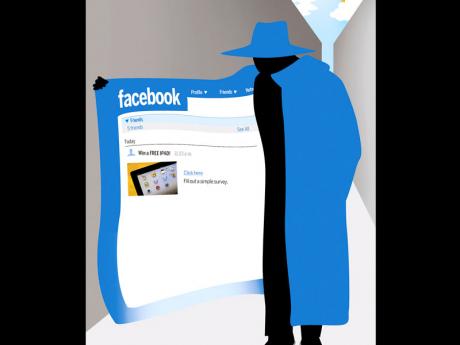
Given the immense power of social networking vehicles, such as Facebook, to stitch these forces together, it is no wonder the market is assigning such stratospheric valuations.
Therefore, the concept of the Westphalian state is at risk.
The arbitrary demarcation of territory to maximise sovereign power and wealth was one of the reasons why most of the world was at war for the last three centuries.
During the last 50 years, Europe tried to placate the underlying social tensions through lavish welfare programmes. However, it can no longer do so.
European governments are so indebted that they are approaching insolvency. Moreover, by encouraging the concept of a common continental union, it only created an environment by which old ethnic and tribal groupings could regroup and re-emerge. This is why you find a proliferation of Catalan and Basque flags on both sides of the Pyrenees.
The European crisis is a reflection of the deep social divisions that define the continent. Some financial commentators describe it as the schism of Catholics versus Protestants or Latins versus Saxons.
The truth is that Europe was always comprised of two very different ethnic groups divided by the Alps, and seasonally connected by a handful of mountain passes. These groups were further subdivided into an infinite array of Northern European and Mediterranean tribes that shared social bonds and allegiances.
The attempt to create monolithic states, with little regard to the people who inhabited the territory, left it with a basic flaw that has been exploited by the emergence of the new social-networking technology.
By seeking common bonds, people are reorganising themselves with a total disregard to the established rules, laws and boundaries.
Therefore, governments now face an existential dilemma. Do they allow people to continue this process, which will lead to the reconfiguration of the global balance of power, or do they reassert themselves to preserve the Westphalian rules.
Dr Walter T. Molano is a managing partner and the head of research at BCP Securities LLC. wmolano@bcpsecurities.com.