
'Walk and don't look back'
Published:Sunday | August 19, 2012 | 12:00 AM

Amitabh Sharma, Contributor
Drumbeats, guitar strings and strong vocals encapsulate history of Jamaica
This is a narrative of Jamaica told on a musical crescendo, no 'bungarung'. Just the words of Jah. 'Equal Rights: Reggae and Social Change' is seeking to transform the bare walls of the Jamaica Music Museum, stringing together notes of this truly Jamaican genre.
"Since reggae is Jamaican, we have used it to convey the message," said Herbie Miller, director/curator of the Jamaica Music Museum. "It is a journey highlighting socio-political and spiritual sensibility."
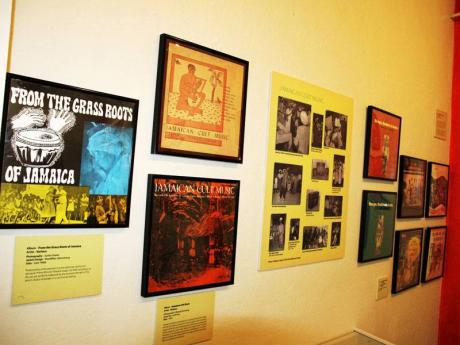
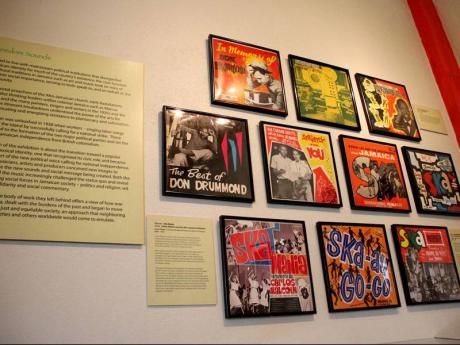
The edifice of the museum, housed in downtown Kingston, has been sprinkled with framed album covers and posters which chronicle a phase of the island's history.
The exhibition, Miller said, has been inspired by the late Peter Tosh's 1997 album titled Equal Rights and traces the phenomenal power that music has had over the Jamaican people since the 16th century.
"Cover art speaks visually, giving sight to the cultural information in the music. What we see are album covers and the music they enwrap."
The journey of the time capsule begins with the 'Cult' music covers - Bongo, Backra, Coolie - reminiscent of the colonial era, with black and white photos of the masters with the plantation workers. This then makes the transition to Mento, workers in clockwork precision beats coupled with metal hitting the stones as they sweated, pouring their hearts and souls out as they worked in the tropical sun.
From the retro photos, the musical voyage moves to caricatures, which is an amalgamation of stereotypical but creatively done artwork. "This is the time where the people are being seen from the white (man's) eyes - pouted lips, pearly white grin, seductress poses. It gives the message to come to Jamaica," said Miller.
The realm of the 'happy-go-lucky' Jamaica transitions to 'Ska', depicting plain and modern art, building the crescendo of social change as the legendary Bob Marley and the Wailers resonate 'Get Up, Stand Up', evolution of musicians on the frontline of social change.
At the walk-in gallery, the visitor is presented with memorabilia from different genres of Jamaica's musical history. The exhibits, which are spread across two rooms, have Miss Lou as a focal point, exemplifying the matriarch who paved the way for women in music, depicted by album covers of Rita Marley and Marcia Griffiths adorning the wall.
"We are looking to the arts as a primary source of history," Miller said. "And music marks one of those moments in history."
In a nutshell, 'Equal Rights: Reggae and Social Change' strives to highlight the richness, greatness, and the worldwide appeal of Jamaican music, peaking in all its glory spreading the message ... one love!
The Jamaica Music Museum, which is a division within the Institute of Jamaica, is the archive, research facility and exhibition space for reggae and other Jamaican musical forms. The museum showcases an array of formats from rare musical recordings and oral histories of reggae, Jamaican music greats and the lesser known figures to musical scores, photographs, films, research files, business records, personal correspondence and musical instruments that belonged to eminent Jamaican musicians.
'Equal Rights: Reggae and Social Change', which forms part of the Jamaica 50 celebrations, is being held at Waterlane Gallery and goes on until August 5, 2013. For more information, contact Institute of Jamaica, 10-16 East Street, Kingston, Phone: 922-0620.