
Antigua's potent mix of heritage
Published:Sunday | July 27, 2014 | 12:00 AM




Amitabh Sharma, Contributor
Most potent mixtures come in small packages, it is said, and this could be true for a piece of heritage that is tucked away in Antigua.
In Antigua and Barbuda, the visitor is invited to experience the 365 beaches, and, of course, the unofficial cricketing capital of the Caribbean.
The drive to Nelson's Dockyard is replete with the scenic beauty of this eastern Caribbean island, just before the break of
dawn, the smell of nature - foliage, dewdrops and the skies waking up to
welcome the new day.
The winding road leads to this
sheltered marina, the masts of yachts anchored rising from the distance,
Nelson's Dockyard is home to a range of structures, which house a
museum, restaurant and a bakery, which is perched up on a hillock,
accessed by stone path.
On the steps of Dockyard
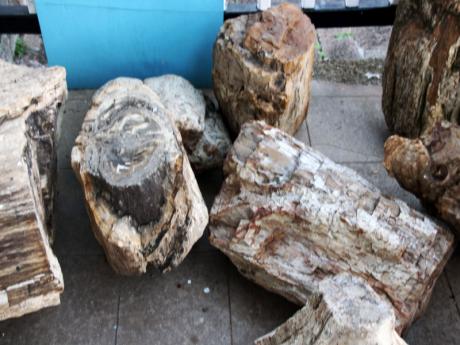
Museum, which was the naval officer's and clerk's house built in 1855,
are stacked fossilised wood - now hard as a rock - engraved with
reminiscences of a prehistoric era. This dockyard is dotted with stone
buildings, which were bathed in the first rays of the sun trickling down
from clear blue skies - a reminder that the time stood still at that
point of the day.
Built in the 18th century, this
dockyard - named after Horatio Nelson, who was stationed as senior
captain in 1784 - was the hub of activity. In its heyday, the dockyard
housed wooden storehouses, wharves, quarters for the commander-in-chief,
storerooms, and a kitchen. A stone wall was built around the
dockyard.
ADDITIONAL
STRUCTURES
Additional structures were added in this
strategic naval base for the British, to transform it into a
self-contained hamlet, before it was abandoned in
1889.
The wooden wharves and portions of the stone
wall still remain, conserved after restoration projects undertaken in
1951 by the Friends of English Harbour. The National Parks Authority now
manages the property.
Surrounded by mountains, this
space in the southernmost tip of Antigua, which rises to Shirley Heights
Military Complex, standing 490 feet above sea level, was once a signal
station.
The rays of the morning sun fall on the
flattened stony grounds, reflecting off the ruins of what used to be a
guardhouse, magazine and kitchen, officers' quarters, adjoining parade
grounds, a hospital, canteen, and a cemetery.
The
silence of the stone columns and walls echoes stories of a past which
made this place a strategic military base. It was named after Sir Thomas
Shirley, former governor of the Leeward Islands, who strengthened
Antigua's defences in 1781 to protect the island's sugar estates and the
dockyard.
The lookout, which is the highest point at
Shirley Heights, unfolded to a panoramic and stunning view of the
English Harbour as the sun rose above the horizon of the Atlantic Ocean.
The shadows dawned on the ground and the voices of civilisation waking
up resonated in the distance.
As one left on the
journey back, buildings in Shirley Heights seem to resonate words of
Albert Einstein: "The revolution introduced me to art, and, in turn, art
introduced me to the revolution!"
Perhaps also
personifying the revolution, not in the physical sense but of time, that
is the only constant and leaves timeless memorials to be
cherished.
Photos by Amitabh Sharma