
A goat's last cry
Published:Monday | October 18, 2010 | 12:00 AM

Philip Hamilton, Gleaner Writer
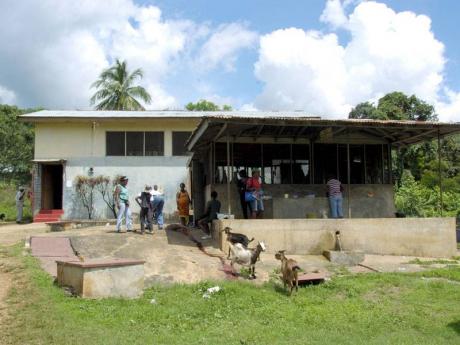
FOUR goats stood trembling outside the Porus abattoir in the brilliant sunshine, nervously awaiting their fate only minutes away in one of three slaughterhouses on the compound.
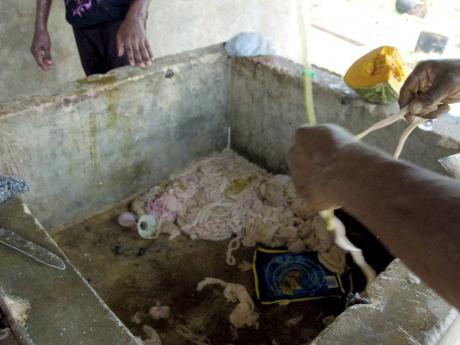
As the Gleaner team makes its way towards the largest building, we notice several women by huge tubs cleaning and washing entrails at one of the smaller buildings. We eventually learn that this is called the 'tripery' section.
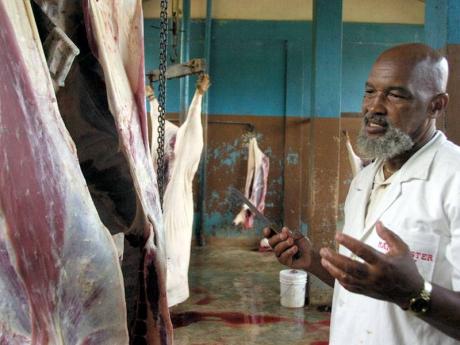
Peering inside the large slaughterhouse, we see the fresh carcasses of cows and pigs on hooks, awaiting the public-health inspector's stamp of approval before being carted off to the market.
Outside, a sign from the Manchester Health Department advises butchers that effective October 1, 2010, carcasses will be inspected between 8:30 a.m. and noon.
Anthony Nelson, a public-health inspector with 38 years' experience under his belt, greets us tentatively in his white coat, curious about our presence at the slaughterhouse. He relaxes as the Gleaner team speaks with him, becoming quite talkative.
"Manchester is a very good place for people. It can keep your stress levels down and is the place of choice for retirement," says Nelson, glancing at a serious-looking woman across the room from him.
The woman, Rose Smith, who is employed by the Manchester Parish Council, is collecting fees from the butchers for animals slaughtered that morning.
"You know cow tripe and goat tripe are part of the Jamaican dietary preference, and you've heard of manish water, which is becoming increasingly popular?" Nelson asks.
"It used to be popular among grass-roots people, but it's spreading right throughout all strata of society where manish water is becoming widely acceptable."
Not pigging in
As he speaks, we notice the carcass of a freshly slaughtered pig being prepared by a butcher's assistant, who pours boiling water over it before scraping it. Nelson tells us he doesn't eat pork for medical reasons.
"As a child, my grandmother in St Ann, who was an excellent cook, used to let us have healthy portions of pork on Sundays," he recounts. "From around nine years old, it didn't agree with me, as it gave me stomach problems when I had it, unlike other animal proteins I ate, so I stopped."
We ask Nelson about the goats we passed outside, which he confirms were brought in by owners for a late slaughter.
He responds: "We try to encourage them to keep the animals in a cool environment prior to slaughter, as it makes an animal less anxious, thus providing better meat."
The news team is interrupted by the sound of a goat bleating desperately as if its life depended on a last-minute reprieve. Then, silence.
We step outside towards one of the two smaller slaughterhouses where the goat was last heard, only to see the butchers in the final stages of preparing its carcass for inspection before being approved for consumption.