
Fraser wins millions in pension fight
Published:Wednesday | November 3, 2010 | 12:00 AM
Barbara Gayle, Court Reporter
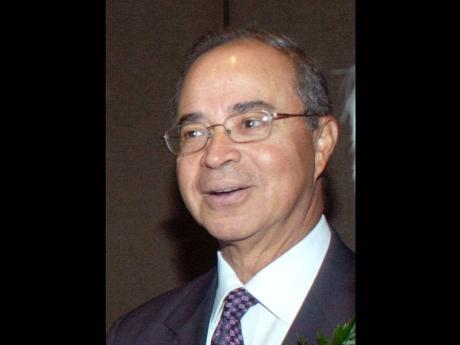
The trustees of the Island Life Insurance Company Limited pension fund, which was wound up five years ago, have been ordered by the Court of Appeal to pay J$6.8 million from the surplus to former president Michael Fraser.
Fraser was initially paid J$866,688 but he disagreed, saying the calculation did not incorporate all the funds he put into the pension plan, and that his entitlement was closer to J$6.8 million from the J$65 million surplus in the scheme at June 30, 2005.
His allocation of the surplus had ignored a J$14.722 million transfer of funds previously held at the then Life of Jamaica Limited (LOJ).
The trustees, Jacinth Kelly, Millicent Campbell, Claudia Davis, Courtney Miller and Ernel Lewis, filed a claim in the Supreme Court in 2006 seeking a declaration that Fraser was entitled only to the lower figure, estimated against contributions paid into the fund from his Island Life salary.
Fraser was employed to Island Life on February 1, 2000 and became a member of the pension plan a month later, on March 1.
Kelly said in court documents that contributions, at uniform percentage rates based on salary, were made to the fund by Island Life and its employees.
The contributions were deducted from salaries and invested by he trustees of the plan. Interest earned on the sums invested and any other gains and losses were allocated to each member's account in the fund, from which the members were then paid a benefit.
Three years after Fraser was hired to run Island Life, the company was merged with the former Life of Jamaica (now Sagicor Life Jamaica), after both were acquired by a Barbadian insurance operation that later rebranded as Sagicor Financial Corporation.
On February 28, 2003, some employees off Island Life were made redundant while others were transferred to Life of Jamaica (LOJ).
Duggan Consulting Limited, a firm of actuaries, was subsequently engaged to prepare a winding up valuation report to determine the level of surplus in the pension plan and the amount to be distributed to each beneficiary.
Island Life resolved on September 17, 2003 not to claim entitlement to any portion of the surplus. It was also agreed that the surplus would be distributed to each member, pensioner, deferred pensioner and other beneficiaries in proportion to the liabilities at February 28, 2003, the disconti-nuance date.
Kelly said the trustees learned, after deciding to discontinue the pension plan, that on or about October 17, 2000, Fraser's pension which he had with LOJ had been transferred to the Island Life scheme.
Kelly said the trustees were not aware of the transfer, the date it was effected, nor the means of transfer.
She reviewed the minutes of the meetings of the trustees for the relevant period but saw no record of them agreeing to the manner and terms of Fraser's pension being transferred, "much less agreeing" to the funds being transferred at all, she told the court.
Absence of a record
But the absence of a record, notwithstanding, Kelly admitted that Fraser's transferred funds, amounting to J$14.722 million, were invested in Island Life's Diversified Investment Fund as part of a United States denominated asset pool.
Aston Duggan, the managing director of Duggan Consulting, said he was instructed by the trustees to calculate Fraser's portion of the surplus based on the contributions made to the pension fund during the period of his membership. He applied a rate of 1.3334 per cent to arrive at the J$866,688.43.
But Duggan also testified that had he not been instructed to omit the J$14.7 million, Fraser's portion of the J$65 million surplus would have amounted to J$6.858 million.
Fraser in his affidavit said that at no time prior to the decision to wind up the pension plan did the trustees advise him that funds transferred by him from LOJ would not form part of the pension plan calculations.
"On the contrary, he produced documentary evidence indicating that he had been notified at the outset and regularly thereafter that the sum was part of the pension," wrote president of the appeal court Justice Seymour Panton, to unanimous agreement of Justices Hazel Harris and Norma McIntosh, in the appellate judgment.
The ruling reversed the decision of Supreme Court Justice Ingrid Mangatal who ruled in September 2008 that the trustees were within their rights to assert that the LOJ funds were not properly transferred to the Island Life pension plan, and that Fraser had failed to prove he was harmed as a consequence of that decision.
Justice Mangatal found that Fraser was not entitled to the larger sum he contended was due to him from the surplus.
Fraser's lawyers - Vincent Nelson QC and Christopher Kellman, instructed by Myers Fletcher and Gordon - argued on appeal that Mangatal erred in thinking that the former Island Life boss had to show that he would have earned greater returns on his money had he invested it otherwise.
Financial harm
The trustees, represented by attorneys Ransford Braham and Daniella Gentles, instructed by Livingston Alexander and Levy, argued that Fraser suffered no financial harm as he never contemplated any other benefit.
But the Court of Appeal justices ruled October 28 that "detriment" or harm had been shown by the mere fact that the trustees made use of Fraser's money, and then denied him the appropriate benefits due to him.
"I think it is really a question of the appellant being treated in a discriminatory way by the respondents (trustees)," said Panton.
"By seeking to treat the appellant in a manner that is different from how the other members of the plan are treated, the respondents would be managing the pension plan in a manner favouring the other members of the plan and discriminating against the appellant," he wrote.
"That is not the mandate of the trustees. All members of the plan are to be treated equally. It is no excuse to say that they fear legal action from the other members of the plan."
The court ruled that Fraser was entitled to a share of the surplus to the extent of his full contribution to the salaried pension plan which contributions commenced on March 1, 2000, including the transferred funds of J$14.7 million and include his contribution of $143,722,000. The court said Fraser was entitled to be paid $6,809,571, being his share of the surplus.
Legal costs were awarded in Fraser's favour to be paid out of the salaried staff pension plan.