
Poetic brilliance that speaks volumes
Published:Sunday | September 8, 2013 | 12:00 AM
Glenville Ashby, Contributor
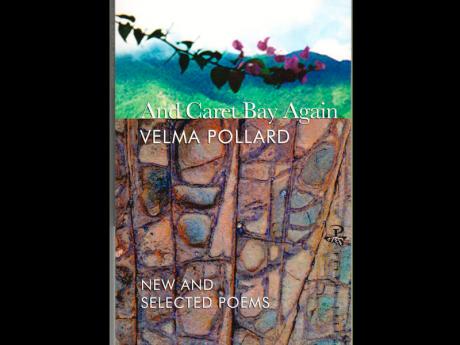
- Title: And Caret Bay Again
- Author: Velma Pollard
- Publisher: Peepal Tree Press Ltd
In this heartfelt poetic classic, Velma Pollard, always at the upper echelon of literary explosiveness, embarks on a reflective journey that traverses a wide array of emotions. She is revolutionary and imaginatively sensitive. She is a historian, activist, naturalist and prophet.
Above all, she is not retrained by island insularity. She is Caribbean. And she is also the world. Truly, her canvas is global and she proves at ease, with fluid sensibilities capped by an indomitable anchorage.
This is the range of And Caret Bay Again, a compilation of old and new offerings from the complex and creative mind of this acclaimed educator. Crown Point, her opening salvo disarms the diaspora with its nostalgic tone. It's an ode to the ancestors and their religiosity bequeathed to us. It conjures images of "back home" when faith was our bread and sustenance, literally.
And while the title National Heroes might seem pedestrian, its message is timeless. It encapsulates the greed and criminality of the oligarch, willing to bend natural law to murder the multitude for their ill-gotten gains and preservation.
British Museum and After is in the same vein, but more implacable even confrontational. Indignation reigns and inner turmoil abounds. A pilfered history, shattered civilisation, a mind and people rendered apart.
It is here that she pens, "Guardian of the Great Tradition, these volumes stood in sturdy black ... the silent whisper touch me not and passes me gently. I am cold and I am lonely. From the hollow of that sound from the screaming of that rape to the shelter of my nothing."
It's an indictment that can be likened to the more prosaic Heathrow in Retrospect.
In Sunday Thought (Fisherman's Cove), Pollard proves her ability to forcibly address existential issues surrounding nature without an iota of irascibility. Alas, nature's beauty belies the peril that stalks. "That smooth tree hides the litter of a thousand earths," she writes. "And the sea will wash our land, perhaps destruction with its blessed cleansing..."
Poignant writing
She metaphorises in Fly, meshing the vernacular with standard expression and cadence. Here, she assumes the wretchedness of the insect's life. It's symbolic, though. Who really is the fly, but us, unwittingly ensnared by the proverbial spider? This is Pollard at her vintage best. And the exemplar continues in Anansa.
In Belize Suite, she explores the passage of time and our mortality. And she does so with well-timed efficiency in Bird. In Screws Loose, she delves in to the tinderbox that is the mind and the ease with which it can be dismantled. It is psychoanalytical, haunting and instructive. If only we knew the challenge and adversity of dementia and our incapacity to grasp what was once real.
In Havana, she employs the esoteric aphorism: "Understand with your eyes and be enlightened." There is an unfathomable depth to that land, if only we knew, she opines.
And in Our Mother, she switches gears, exuding feminine strength, immutability and Augean vigour.
Remembering Washington DC is a mystical masterpiece. Pollard never wavers in her Deism. Peer into the soul of the suffering and you might just discover something eternal, unfettered and pure.
Fear and soteriology collide in Messiah. What discernment and trust are needed to welcome someone who claims to be the Saviour? It is evocatively powerful and prophetic. And the curtain falls in Benedictus. It is an orison of gratitude and magnanimity. Life, after all, is worth fighting for.
It is a conviction well presented in her masterpiece, And Caret Bay 1 & 2. Here, Pollard displays her keen appreciation for life in its purest form, unhampered by the wiles and plundering of humankind. Are we not the custodians of nature with its divinely bestowed kaleidoscope of beauty? "Stone cabbages full formed from rock faces burst endless underneath our feet ...". And later, "I stumble upon pure spring water gently rushing down grey crags caught in our cupped hands pressed to thirsty lips for inner healing ...".
Great continuation
Undoubtedly, Caret Bay Again showcases Pollard's pedagogical depth and poetic mastery. She puts on a clinic, no doubt. One is left, though, with the rhetorical enquiry: Does Pollard's work, circa 1980s trump her later oeuvre? Readers quickly discover that they all form a stirring gestalt of uncompromising truths.
Rating: Excellent
Send feedback to glenvilleashby.com or follow him on Twitter @glenvilleashby.