
Remembering Kapo
Published:Sunday | March 1, 2020 | 12:13 AM
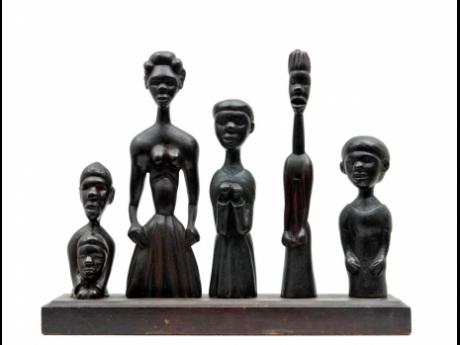
Mallica Reynolds, better known simply as ‘Kapo’, was the charismatic leader of the Zion Revivalist Church and the Patriarch Bishop of the St Michael Tabernacle. Reynolds was born on February 10, 1911, in Byndloss, a rural community in St Catherine, some 30 miles from Kingston. At age 16, he claimed to receive his first spiritual vision and started travelling the countryside preaching. In the early 1930s, he made his way to Kingston and settled in Trench Town, where he established his church.
In his biography, he describes his impetus to create artwork as nothing short of a divine revelation that came to him during a time of hardship. In the late 1940s, he began translating his visions and his imaginative transcriptions of biblical events to paintings. It is said that most of these works were lost when they were confiscated by the police as evidence of alleged obeah practice. By the 1950s, he had begun to carve first in stone and then in wood.
The subject matter of most of his work is devoted to his spiritual beliefs as well as the depiction of rituals in his church such as spirit possession, casting out of demons, baptism, and resurrection. In another vein, he is a ‘folk’ painter, painting the beauty of Jamaica, its orange groves, hillsides, and houses. He paused his painting practice for a while, producing, between 1950 and 1969 a remarkable sculptural output that was unmatched by most Caribbean carvers.
Cultural force
Kapo has been described as a cultural force who played an indelible role in the definition of Jamaican art, more so the so-called Intuitive or self-taught genre of the second half of the 20th century. By the time of his death in 1989, Kapo had gained recognition as one of the world’s leading Intuitives. Kapo owed his introduction to and subsequent ascent in art circles to prominent benefactors and supporters such as the young cultural researcher and politician Edward Seaga, who first brought him to public attention, and hotelier and Director of Tourism John Pringle.
Today, the work of Mallica ‘Kapo’ Reynolds can be found in many private and public collections around the world. Public collections of note include the Larry Wirth Collection and the John Pringle Collection at the National Gallery of Jamaica and the Stedelijk Museum collection in Amsterdam, The Netherlands. Over the course of his career, he received many honours and awards, some of which include Silver and the Gold Musgrave awards from the Institute of Jamaica, the Order of Distinction from the Government of Jamaica in 1977, a gold Medal from His Imperial Majesty, Emperor Haile Selassie, and a Gold Medal at the Jamaica Independence Festival Exhibition.
The sculpture featured is titled “All Women are Five Women”. made of cedar wood, it was completed in 1956. According to the National Gallery of Jamaica, the sculpture depicts five different aspects of the female personality. From left, the first depicts “Humility” – she washes, cooks, and cleans without grumbling. She embraces the head of a man. The second woman represents “Bossiness” which is characterised by clenched fists and a fuller body. She gives orders and does very little. The third portrays “Piety”. This sister continues to pray daily and is seen in an attitude of prayer. The fourth characterises “Vanity”. This sister dresses at all times, and is always going out for a good time. The last represents “Maternity” and represents a quiet woman who has a child and takes the advice of the others. According to the description of the sculpture, “together, they (the five different aspects of the female personality) make up a beautiful home”. This sculpture belongs to the Larry Wirth Collection of the National Gallery of Jamaica.
Information compiled by Sharifa Balfour, assistant curator, National Museum Jamaica, Institute of Jamaica