
Ethics handbook for Caribbean policymakers and leaders
Published:Sunday | January 31, 2021 | 8:52 AM


The University of the West Indies (UWI) COVID-19 Task Force works “to leverage the university’s knowledge and experts to assist the Caribbean in its readiness and response to the virus outbreak, mindful that the region’s best defence is a coordinated and collaborative approach”.
In so doing, the COVID-19 Task Force works in partnership with regional health agencies, disaster and emergency management agencies, trade bodies, national health and security ministries, and Caribbean communities to tackle the pandemic directly. It takes account of global developments and practices and emphasises the need to share best practices and lessons learned to contribute to the region’s recovery from the crisis.
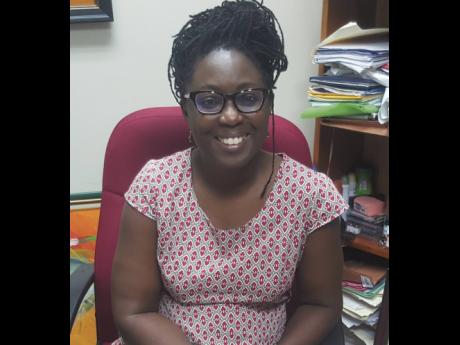
This handbook, written by Professor R. Clive Landis, chair of the task force, and Dr Anna Kasafi Perkins, ethicist and member of the task force, is part of the attempt to provide accurate and reliable information in the spirit of partnership, particularly to decision-makers, who bear different ethical burdens than the ordinary citizen, especially in the responsibility to make rules and impose policies that affect the lives of entire nations and peoples. The hope is to encourage ethical commitment and action among such persons as well as the ordinary citizen, who will also find the handbook useful.
Reproduction of Ethics Handbook
Part 2: “R-E-S-P-E-C-T” (Human Dignity)
The dignity of the human person is paramount but takes on a specific acuity during times such as these. No one loses his dignity for being infected with a virus; no family should be threatened with being chased out of a community for having a relative test positive; no corpse should be desecrated, even that of someone who has died from COVID-19 (correct hygiene practices should be employed in handling and disposal). Stigmatising and discrimination based on fear and insufficient knowledge needs to be addressed frontally and urgently, and if necessary, punished. Yet, the history of epidemics – remember HIV? – has shown that these public-health emergencies lead to stigma and discrimination against certain groups and individuals. With COVID-19, this stigma initially began with persons of a particular nationality. Now, the stigma and discrimination have been extended to infected persons, front-line medical staff, and persons suspected of being infected. Acts of stigma and discrimination can affect health-seeking behaviours and may increase the spread of the virus while accruing mental-health consequences to many citizens.
INSTITUTIONAL DISCRIMINATION
At the same time, there are biases that are implicit in the set-up of our institutions such as our hospitals and schools. Personnel who work in public bodies are often little different from the rest of the society and so function with personal and institutionally shaped biases toward persons based on characteristics of race, ethnicity, class, sexual orientation, gender, and age. Categories of vulnerable persons such as religious minorities, sex workers, persons living with HIV/AIDs, and migrants may face bias and discrimination when accessing services. These biases are implicit but get magnified in times of stress and distress. There is the need for the training and preparation of public servants to be sensitised around matters such as implicit bias, which may exacerbate the mistreatment of certain citizens as is often demonstrated in the provision of differing levels of service or care. It is ironic that healthcare workers may themselves be the victims of discrimination as well as being potential purveyors of discrimination.
In order to maintain their dignity, particular attention needs to be given to the following vulnerable groups: a) persons suspected of infection; b) persons living with/recovering from/recovered from COVID-19 and their families; c) communities in quarantine; d) special groups such as healthcare workers, the elderly, the disabled, persons with underlying issues, etc; e) persons living with HIV and AIDS; f) the dead.
WOMEN, IN PARTICULAR
There is a particular group of vulnerable people whose experiences, rights, and health need to be given specific attention as governments draft responses to the pandemic – women, especially poor and marginalised women. Poor women are at greater risk from the virus due to lack of or poor information, resources, and health and social services. In particular, women’s role as caregivers, both within their own households and those of others, places them at greater risk of infection and exacerbates the impact of COVID-19 on their lives, and consequently, on the lives of their families. Healthcare workers are peculiarly challenged. They are at higher risk of catching the virus, especially in the face of inadequate PPE and protocols; they have an ethical responsibility to treat patients but are required to treat patients in circumstances where their own lives are at risk.
International standards of care in emergencies should be implemented so that a priority set of life-saving and essential services, including obstetric, prenatal, and postnatal care; contraceptive information and services, including emergency contraception; and post-abortion care and post-rape care can be maintained. The case in Jamaica of Jodian Fearon, the pregnant woman who died after being refused medical attention, for fear on the part of medical staff that they would catch the virus, highlights the peculiar vulnerability of women and the need for priority to be given to obstetric care. Miss Fearon did not have COVID-19.
In addition, concerns have been raised about the sexual profiling of migrant working women during the pandemic. Kamala Kempadoo recounts that in Barbados, the very first person to be detained for breaking the curfew was a Jamaican woman. Kempadoo describes her as “an easy target – young, a woman, alone, walking the street at night, poor and far from home - the typical image of the ‘loose woman,’ and thus automatically deemed irresponsible, illegal, and punishable”. Migrant women in some parts of the Caribbean have often been victimised by such sexual profiling, but this takes on particular weight when public order and pandemic issues collide.
CONSIDER:
Case: To Wear or Not to Wear? How effective is a face mask against COVID-19?
There is much debate on this in scientific circles. Perceptions of wearing a mask have changed over the life of the pandemic. At the start, persons wearing masks were stigmatised – cashiers refused to serve them, people avoided them. Now, it is not only much more acceptable, but appearing in public requires the wearing of masks. Some shops and banks will simply not allow you in unless you are wearing a mask. Interestingly, with mask-wearing now being viewed with less suspicion, criminals are cashing in, carrying out their unlawful activities under the cover of the anonymity provided by the mask. At the same time, the irony is further compounded by the stark reality of politicians and bureaucrats giving press conferences not wearing masks, engaging in social distancing or sanitising – even when these press conferences are on reducing the spread of COVID-19!
Case: ‘Fraid to Catch it. COVID-19 is a respiratory illness that displays flu-like symptoms.
Most people who have it will not suffer any severe and lasting effects. Still, it is highly contagious, and even asymptomatic carriers can spread it. There is a heightened fear among citizens about catching it, and many incorrectly see it as an automatic death sentence. So stories are told of persons on public transportation being abused and shunned for simply sneezing or coughing even as an allergic response to cigarette smoke, which is illegal in many jurisdictions. Some have been thrown out of the vehicle before reaching their destination. Similarly, some funeral homes are refusing to take the bodies of those suspected of dying of COVID-19, to make matters worse, and the family members of the deceased are sometimes threatened by the community. Contact tracing is, therefore, made more difficult as persons refuse to cooperate for fear of severe repercussions.
No one loses his or her humanity for being suspected of being infected, or being infected, for that matter. Fear of catching the virus should not lead us to mistreat or disrespect someone. Rather, that person should be treated with compassion. Physical distancing from anyone who is ill or displaying COVID-like signs is important but should be done respectfully. Persons who are ill should remain at home to protect others while also protecting themselves. There are protocols for treating with bodies of persons suspected or confirmed of dying from COVID-19. Policymakers and legislators have an important part in the communication around the virus. They should respectfully follow their own guidelines for reducing transmission. Where persons are involved in discrimination and direct harm to persons out of fear of catching the virus, the weight of the law may be needed to punish and provide redress.
- Ethics Amidst COVID-19: A Brief Ethics Handbook for Caribbean Policymakers and Leaders. Published by Anna Kasafi Perkins and R. Clive Landis at Smashwords. Copyright 2020 Anna Kasafi Perkins and R. Clive Landis