
Clash of the Compact Titans: Ford Territory vs Nissan X-Trail
Published:Saturday | April 4, 2026 | 10:45 PMKareem LaTouche - Automotive Coordinator


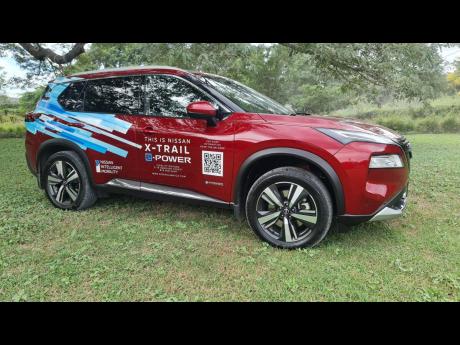
Recently, the Ford Territory made its local debut, positioning itself as a tech-forward family hauler. To see how it measures up, I pitted it against a household name: the Nissan X-Trail. While both compete in the compact SUV segment, they represent two very different philosophies of modern motoring.
A Tale of Two Legacies
The Nissan X-Trail is a veteran of Jamaican roads, with a history dating back to 2001. Now in its fourth generation, it has transitioned from the rugged, boxy explorer of the early 2000s into a sophisticated, electrified family crossover. Its evolution has been one of constant refinement, moving from a “rough-and-ready” 4x4 to a high-tech flagship.
In contrast, the Ford Territory nameplate has a split history. While originally an Australian-built legend, the model currently appearing in local showrooms represents the second generation of its global iteration. It is a product of modern global collaboration, designed to fill the gap for families who want American-style presence with urban efficiency.
Exterior Design: Sharp Lines vs Muscular Curves
The Territory makes an immediate impression with a wide, confident stance. Its hexagonal chrome grille and sleek LED headlamps provide a contemporary look that feels substantial on the road. Riding on up to 19-inch painted aluminum wheels, it carries an air of “mini-Expedition” ruggedness that appeals to those who prefer a bold aesthetic.
The X-Trail, meanwhile, balances its heritage with modern aerodynamics. The signature V-motion grille is flanked by split LED lighting, giving it a look that is both aggressive and premium. The fenders are more muscular than its predecessor’s, signaling a return to its adventurous roots, even if the overall silhouette is more streamlined than the first generation.
Interior: Sophistication and Utility
Stepping into the Ford Territory, the cabin feels remarkably upscale. The Titanium Plus trim offers a 10-position power-adjustable driver’s seat and ambient mood lighting that elevates the evening commute. A major highlight is the panoramic sunroof — arguably one of the largest in its class — which opens up the interior to Jamaica’s bright skyline.
The Nissan X-Trail counters with a focus on tactile luxury and clever storage. The model I tested featured two-toned leather with intricate stitching that provides a premium “pop.” Nissan has prioritised family logistics here. The door bins are cavernous, easily swallowing 2-litre water bottles, and the tri-zone automatic air conditioning ensures that rear passengers stay as cool as those up front.
Infotainment and Cargo
Both vehicles are digital-heavy, but their layouts differ:
Ford Territory: Features a 12-inch touchscreen with wireless smartphone integration. It also includes a unique USB port behind the rearview mirror — perfect for a dashcam without dangling wires.
Nissan X-Trail: Utilizes a 12.3-inch primary display. A standout for local drivers is the pre-loaded Jamaican map, allowing for navigation without relying on mobile data.
When it comes to hauling gear, the X-Trail offers a generous 603 litres of space (expanding to 1,583 litres with seats down). The Territory is equally practical, designed with the “modern family” in mind, though the X-Trail’s lack of a spare tire in the e-Power model is a trade-off for its hybrid battery packaging.
Driving Experience:Turbo Power vs e-Power
The mechanical heart of these SUVs reveals the biggest contrast.
The Ford Territory utilises a traditional but potent 1.8L Turbo EcoBoost engine. Producing 187 HP and 236 lb-ft of torque, it feels eager on the climb up Spur Tree Hill. The 7-speed automatic transmission is a highlight, avoiding the “rubber-band” feel of many competitors’ gearboxes and delivering a smooth, refined power delivery to the front wheels.
The Nissan X-Trail takes a futuristic path with its e-Power system. Here, a 1.5-litre engine acts solely as a generator for electric motors that actually drive the wheels. This results in the instant torque characteristic of an EV, producing 142 HP and 184 lb-ft of torque from the combustion side, but with the electric motors providing a much punchier feel from a standstill. Its All-Wheel Drive (AWD) system provides extra confidence on wet or unpaved parochial roads.
Key Specifications at a Glance:
Ford Territory (2nd Generation)
Engine: 1.8L Turbo EcoBoost
Horsepower: 187 HP
Torque: 236 lb-ft
Transmission: 7-Speed Automatic
Drivetrain: Front Wheel Drive (FWD)
Suspension: Front Assist / Multi-link
Nissan X-Trail (4th Generation)
Engine: 1.5L e-Power (Hybrid Generator)
Horsepower: 142 HP (Engine side)
Torque: 184 lb-ft (Engine side)
Transmission: Single-speed Electric Drive
Drivetrain: All-Wheel Drive (AWD)
Suspension: Front Strut / Multi-link
Handling and Safety
The Territory is tuned for comfort, with its suspension soaking up the imperfections of our local infrastructure quite well. It offers several driving modes though accessing them via the touchscreen can be a bit fiddly while driving. The X-Trail feels slightly more composed in corners thanks to its AWD system and regenerative braking (e-Pedal), which allows for “one-pedal” driving in heavy Kingston traffic. Both vehicles come packed with safety tech, including Blind Spot Monitoring and Lane Departure Warning.
Final Thoughts
Choosing between these two depends on your priority. The Ford Territory is a stylish, powerful, and value-packed entry that brings a fresh sense of American sophistication to the market. The Nissan X-Trail e-Power, however, is a technical marvel that offers incredible fuel efficiency and a more premium, versatile cabin for the eco-conscious adventurer.