
Editorial | Corruption’s falling barometer
Published:Sunday | September 29, 2019 | 12:00 AM
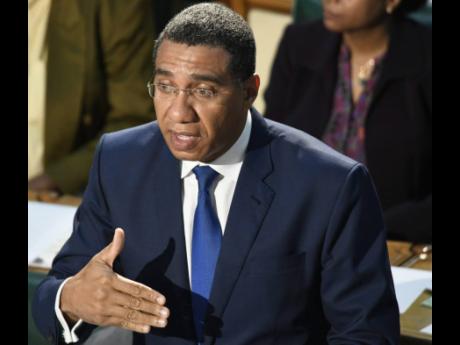
If the Holness administration is looking for a positive take from Transparency International’s latest Global Corruption Barometer, it might note the 19-percentage-point drop from two years ago – from 68 per cent to 49 per cent – in the number of Jamaicans who believe that corruption worsened during the previous 12 months. It might also note the five-percentage-point increase over the period, to 47 per cent, who say the Government is doing a good job in confronting the problem.
Prime Minister Andrew Holness, however, would be advised against being lulled into false comfort that Jamaicans are sanguine about his Government’s anti-corruption efforts, or that they have changed their minds about the enormity of the problem. Indeed, he has cause to be concerned about people’s worsening view of the political class, of which he is at the apex.
For, despite the dip, since 2017, in the proportion of people who hold the view, nearly half (49 per cent) of Jamaicans still believed that the country grew more corrupt in 2018, and five per cent more (48 per cent) now say the Government is bad at tackling the issue. Moreover, 78 per cent of Jamaicans – a proportion that has remained relatively stable over the past decade or so – believes corruption is a big problem for the country.
Further, 17 per cent say they had paid a bribe for a public service in the past year, while 18 per cent, primarily women, had themselves engaged in, or knew some who experienced, ‘sextortion’, or being pressured for sexual favours in exchange for the provision of services. Additionally, 12 per cent of persons claimed to have been offered bribes for votes.
The latter observation is important given that a significant proportion of the public believes that critical institutions of Government and governance are corrupt. For example, just over a third (34 per cent), an increase of four points from two years earlier, believe the institution of prime minister to be corrupt, although it isn’t clear whether they make a distinction between the office and the person who occupies it.
The number that has that view of parliamentarians increased seven percentage points, to 44 per cent, while the perception of corruption among bureaucrats increased from one in three (33 per cent) to nearly four in 10 (39 per cent). The police, though, have the worst image for corruption. Forty-nine per cent of citizens have this perception of them.
CORRECTIVE LEADERSHIP
Even the judiciary doesn’t escape the tarnish. Nearly a quarter (23 per cent), a five-point increase since 2017, believe it to be corrupt. Between a fifth and quarter of the population believe religious leaders, NGOs, business executives and bankers to be corrupt.
We are aware that some will insist that the perception of corruption is exaggerated. Which may be true. Whatever the proportion, there is little doubt that the problem is real and deep and isn’t being attacked with the aggression and urgency the situation demands. That isn’t the judgement only of this newspaper. It is the perspective, too, of the International Monetary Fund (IMF), which, like us, is apparently of the view that the corrective leadership must come from the Government.
In March, the IMF, in reviewing Jamaica’s macroeconomic gains of the past seven years, warned the Government of the need to “forcefully address the shortcomings in the governance of public bodies” to “reduce the scope for corruption, bolster trust in public institutions, and protect public funds”. A month later, the Fund again told the Government that “governance shortcomings should be immediately addressed”, and, in their parting advice to the administration this month, said that “more needs to be done to build trust in public institutions”.
The IMF, like the Jamaican public, has as its backdrop for these observations corruption-related scandals such as those at the Petrojam oil refinery and the Caribbean Maritime University, as well as the failure of political leaders to file integrity reports within the specified time, for which they faced little or no consequence. These failures are not new. They have crossed political administrations. Leadership by example is minimal.
The fight against corruption needs more than policy declarations. It requires a crusader at the top. Mr Holness has an opportunity to prove that he can be that man. He has yet to convince Jamaicans.