
Curtis Ward | Lessons for a true democracy: the Jamaican experience
Published:Saturday | September 12, 2020 | 12:12 AM

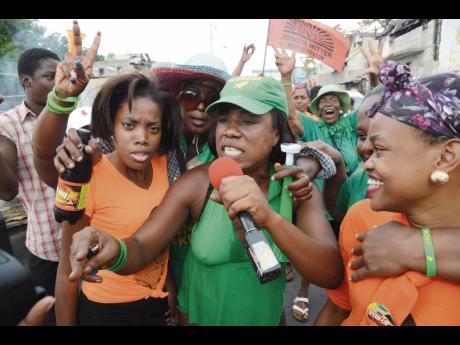
With democracy and the rule of law constantly under threat around the world, many now question the efficacy and the resilience of democratic and rule-of-law institutions in countries long held as beacons and proponents of democracy and the rule of law.
In the past three to four years, democratic and rule-of-law institutions in the United States (US) have been severely tested, with the country about to face its most definitive test on November 3, 2020. The world is watching. And, while the US engages in this struggle, small countries have been showing the way as to the true meaning and practice of democracy.
The September 3, 2020 general election in Jamaica stands as a shining example of how to conduct a national election with the utmost integrity. Jamaica’s electoral process is directly linked to the independence and integrity of the electoral institution and the mechanism for the conduct of the election. The system is beyond reproach, as borne out by all contending sides believing in the process and honouring the outcome. Congratulations to Prime Minister Andrew Holness and the Jamaica Labour Party for its resounding victory in the general election! Equally, congratulations to the people of Jamaica and Dr Peter Phillips, leader of the People’s National Party, for accepting, without hesitation, the outcome of the election!
Notably, a free and fair electoral system can be guaranteed only when people of integrity and non-partisanship are in charge of the process; when the electors are free to vote for the candidate or political party of their choice; and when the people’s access to the polls is facilitated in the exercise of their franchise. I offer one caveat: the interests of the people must not be superseded, or undermined, by the power of financiers of political campaigns. In other words, the interests of a few large financial contributors must not take precedence over the collective interests of the people; nor should the money of a privileged few be used as a means to influence the outcome of an election.
SMOOTH TRANSFER OF POWER
In holding Jamaica up to the rest of the world as meeting and exceeding perhaps the single most important step as a democratic nation, we should be mindful that democracy is not complete and the democratic process does not end with the casting of the ballots or the transfer of government to the victor. This is only the beginning. With the smooth transfer of power and change of government, or confirmation of continuity in office of the incumbent, comes responsibilities which sustain the foundations of true democracy.
Democracy thrives and flourishes in an environment in which there is strict adherence to good governance and to the rule of law by the governing political party when it assumes the reign of government. Democracy takes hold when equity is assured across all spectrums of society; when basic human rights and basic human dignity are guaranteed to all the citizens; when the marginalised and underserved are not only provided with opportunities and equal access to education and social upward mobility, but are given the requisite capacities to take advantage of such opportunities; when the government prioritises these responsibilities and does not shift the burden on to NGOs; when lifting people out of poverty is a priority for the government; and when human security takes precedence over political expediency.
The size of a government’s parliamentary majority must not give rise to the temptation to govern with imperial hubris or an autocratic style of leadership and governance. The larger the margins of victory, the greater the responsibility to serve the people.
ENVY OF MOST COUNTRIES
The Jamaica electoral system, the machinery and the conduct of the electoral process, is the envy of most countries, and is an example for all CARICOM states, the entire Caribbean, Latin America, and the Americas, generally. Although it is not yet perfect, no electoral process anywhere is perfect. Importantly, Jamaica’s electoral machinery is not politicised or controlled by any political party.
But it wasn’t always like this. For several election cycles, Jamaica as a nascent democratic nation experienced an imperfect electoral system, which at times led to the questioning of election results. Yet, transition from one elected government to the next within the legal time frame has always been the norm. There was a period when political violence threatened Jamaica’s electoral process; and this happened most severely in Jamaica’s short history leading up to the 1980 election. There was also a period when interference in Jamaica’s electoral process from outside, including promoting and facilitating violence in the election process, posed significant challenges. However, Jamaica prevailed, and the current electoral system provides assurance to the Jamaican people that it can be relied on.
Over time, we have learnt that outside interference in the electoral processes of countries is not exclusive to the elections of small powerless countries. We now know of the outside influences in the 2016 presidential election in the United States; and we are aware of the ongoing attempts to interfere in the US presidential election of 2020. Because no country is immune from outside interference, the integrity of each country’s electoral process must be able to neutralise the maliciousness of outside influences.
REFORM IS A CONTINUING PROCESS
The entire country, tired of the many challenges to Jamaica’s electoral process, supported the electoral reforms carried out by P.J. Patterson’s government during his three terms in office. The opposition party, the private sector, civil society, and the people welcomed the reforms, thus enhancing Jamaica’s democracy. However, reform is a continuing process.
There are other reforms yet to be introduced and perfected, including imposing greater controls over the influence of a few through financial contributions to political campaigns; holding to account those who illegally use money to influence votes; ending the facilitation of political tribalism; and designating a fixed date for the holding of Jamaica’s elections, rather than the prime minister deciding when it’s advantageous to his party to call an election. These measures provide a level playing field for the opposition party, and should be seen as next steps. No doubt, there are others that could further improve the system.
I reiterate, Jamaica’s electoral system is not perfect, and vigilance in promoting and protecting democracy and the rule of law must remain atop the agenda. Democratic freedoms are significantly enhanced by a free press – a major pillar of democratic freedoms; and the right to peaceful assembly and protest must be protected within the framework of the rule of law. Undoubtedly, Jamaica, a small country with limited resources, can be proud of the example it provides to the rest of the world in guaranteeing these freedoms.
Curtis Ward is the former ambassador and deputy permanent representative of Jamaica to the United Nations with special responsibility for Security Council affairs. He also served as expert adviser to the UN Security Council Counter-Terrorism Committee. Email feedback to attycward@gmail.com.