
Peter Espeut | A dry-land police force
Published:Friday | January 29, 2021 | 12:22 AM
“Wh’appen, Bredda Peter?”
I was eating a meal of curry conch in a small waterfront restaurant in Les Cayes on the south coast of Haiti when I heard my name called by a Jamaican fisherman I knew from my work on Jamaica’s south coast.
“What are you doing here?” he asked me. I did not ask him what he was doing there. Clearly, there is significant boat traffic between Jamaica’s south coast and Haiti (which is off Jamaica’s north coast).
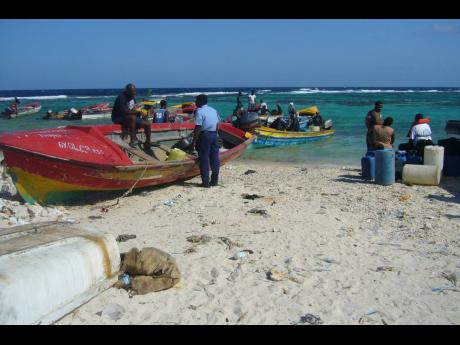
Lengthy portions of Jamaica’s south coast are fringed with mangroves, healthy habitat for juvenile fish, birds, crabs, crocodiles and other creatures. These and the wide shallow shelf along Jamaica’s south coast are a fecund fishery, and their proximity to the Pedro Banks and Cays makes the whole area important for the capture and marketing of fish. Daily boat traffic between Jamaica’s south coast and the banks is significant, and offers many opportunities for smuggling and illegal trading.
South Coast Only Lightly Policed
Nevertheless, the south coast of Jamaica is only lightly policed. Between Kingston and Alligator Pond only Old Harbour Bay has a police station; and even though it is designated to have marine policing capabilities, it is often (usually?) without a working boat, and so patrols are impossible. There is no other marine police station on Jamaica’s south coast, even in name only.
In 2006, I conducted the first census of the residents of the Pedro Cays as well as a survey of life and conditions there; I found that several undocumented aliens had taken up residence, ostensibly engaged in fishing activities.
The Jamaica Constabulary Force (JCF) and the Jamaica Defence Force Coast Guard (JDF-CG) had a joint post on the Pedro Cays, but the JCF soon withdrew; I suppose they found living in those marginal conditions too difficult; the JCF do not train their members for that. Can the JDF Coast Guardsmen (who have a different mandate) be expected to substitute for a police presence in that part of civilian Jamaica?
Not even at Rocky Point in Clarendon, one of Jamaica’s largest fish landing sites (and the nearest point to the Pedro Cays), is there any kind of police station. Residents have to travel four miles inland to Lionel Town to make reports and complaints. Clearly, successive governments have a policy of keeping their distance from what goes on at Rocky Point and on the Pedro Cays.
I do not believe that we can consider the JCF guilty of making even a token effort to police Jamaica’s southern waters.
The coast between Hellshire and McCarry Bay falls within the Portland Bight Protected Area (PBPA); the NGO which I headed had natural resource management authority for the PBPA, and so I am intimately familiar with the area. The extensive and exquisitely beautiful mangrove wetlands contain miles of natural channels navigable by canoes, which could hide tons of contraband, including illegal migrants. Serious policing of Jamaica’s south coast cannot be done from the land. Successive Jamaican governments will know why they have created a dry-land JCF unable to police our coastline.
The excuse offered as to why heavily armed policemen were unable to guard overnight the aircraft which came down near Rocky Point in Clarendon was that the area was unsafe. Was it the crocodiles that the brave policemen were afraid of? The local young men who scrapped the plane had no such fear.
I hope that sometime in this 21st century the Marine Division of the JCF will be resourced and trained to police Jamaica’s marine space.
RIP, KEN ALLEN
It was Ken Allen – then editor-in-chief of The Gleaner – who in February 1992 offered me the opportunity to be a weekly columnist in this newspaper. Later, after his retirement, he returned under contract as the opinion editor, and personally edited my columns for years thereafter.
Ken passed away this week, and I wish to pay tribute to him as a consummate journalist and gentleman. He has made Cornwall College, The Gleaner, and Jamaica proud. Rest in peace, Brother Ken!
Peter Espeut is an environmentalist and a natural resource manager. Send feedback to columns@gleanerjm.com