
Elizabeth Morgan | Antigua and Barbuda and free movement in CARICOM
Published:Wednesday | January 11, 2023 | 12:15 AM
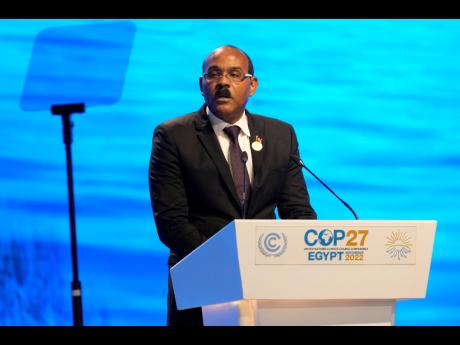
I found the recent reporting on the waiving of work permit fees for nationals of CARICOM countries and the Dominican Republic in Antigua and Barbuda quite interesting.
A general election will be held in Antigua and Barbuda on January 18. The government is currently formed by Gaston Browne’s Antigua and Barbuda Labour Party (ABLP), which won 14 of the 17 parliamentary seats in the general election of June 13, 2014.
It was reported on December 26, 2022, that Harold Lovell, the leader of the United Progressive Party (UPP), had announced that if his party were to form the next government, they would institute a more competent, compassionate and equitable immigration system. Under a ‘One Caribbean’ Programme, among other things, work permit fees would be waived for CARICOM nationals. This would be applicable to nationals of the Dominican Republic as well. Lovell was proposing advancing the implementation of the CARICOM Single Market and Economy (CSME), and regional integration in general.
The One Caribbean policy left me wondering whether Mr Lovell was seeing the Dominican Republic incorporated into the regional integration process. Lovell’s proposal was reported in the Jamaica Observer and The Gleaner, with The Gleaner’s Editorial of January 6 declaring, ‘Lovell Should Opt for Free Movement’.
On January 7, a breaking news report out of Antigua and Barbuda informed that Gaston Browne’s Government, consistent with its obligations under Article 45 and specific paragraphs of Article 46 of the CARICOM Treaty (Revised Treaty of Chaguaramas), has decided to eliminate work permit requirements for CARICOM nationals and nationals of the Dominican Republic, effective January 1. It seems Prime Minister Browne played a trump card against his opposition with this announcement.
DOMINICAN REPUBLIC
On the Dominican Republic, let me remind you that this country is not a member of the Caribbean Community (CARICOM). It was proposed some years ago but did not come to fruition. They are also not a Commonwealth member. This is a domestic immigration matter for Antigua and Barbuda arising from historical relations with the Dominican Republic. From what I have read, in the 1920s, many people from Antigua and Barbuda went to work in the Dominican Republic and remained there.
Following Antigua and Barbuda’s independence in 1981, descendants from this diaspora started to return. Thus, Antigua and Barbuda has a significant population (could be more than 10,000) who were born in the Dominican Republic and may be able to seek citizenship based on ancestry.
It is a fact that Antigua and Barbuda, with a population of about 93, 000, has a large percentage of people who are foreign-born. Perhaps the largest percentage in the CARICOM region. Their 2011 census indicates that about 30 per cent of the population is foreign-born. Those from the Commonwealth member states can vote after a period of residence. So, there are political implications.
Most of these foreign-born are from the Dominican Republic and countries in CARICOM (Guyana, Jamaica, and other Eastern Caribbean islands). The Organization of Eastern Caribbean States (OECS) has implemented its own integration process under the Treaty of Basseterre, which is more advanced than CARICOM. It has its own free movement system in which Antigua and Barbuda is participating. So, the decision on work permit fees really applies to nationals of Jamaica and Guyana now resident and employed in Antigua and Barbuda. For decades, Jamaicans and Guyanese have been seeking work in Antigua and Barbuda.
POSITION ON CSME FREE MOVEMENT OF SKILLED WORKERS
We have to recognise that this work permit waiver, in my view, does not represent Antigua and Barbuda’s full position on the CSME and free movement of CARICOM nationals, with the exception of those from the OECS. This decision refers to Article 45 (Movement of Community Nationals) committing to the goal of free movement, and Article 46 (Movement of Skilled Community Nationals); paragraph 2, referring to establishing appropriate legislation, administration and procedures; and paragraph 3, which accords movement, but subject to conditions as the public interest may require.
Antigua and Barbuda has resisted fully implementing Article 46 (1) which, as a first step, accords free movement to specific categories of skilled community nationals – initially, university graduates, media workers, sportspersons, artistes and musicians, and later, holders of associate degrees, artisans and household domestic workers.
The Antigua and Barbuda Government has sought permanent exemptions on the movement of nurses and teachers, and had time-bound exemptions on household domestics.
In 2018, CARICOM Heads of Government agreed to add new categories under Article 46 (1). These are agricultural workers, beauty service practitioners, barbers, and security guards. Antigua and Barbuda again sought exemption from implementation of free movement for agricultural workers and security guards.
This led to the Caribbean Court of Justice (CCJ) being requested to advise on whether Antigua and Barbuda and St Kitts and Nevis could opt out of CARICOM decisions under RTC Article 27.4 without implications for participation of their nationals. In 2020, the CCJ ruled that Antigua and Barbuda and St Kitts and Nevis could opt out of this free movement decision as related to other nationals.
Thus, I am not particularly excited about this decision to waive work permit fees for CARICOM nationals. This relates specifically to CARICOM nationals currently living and working in Antigua and Barbuda. This seems to be a political manoeuvre in the lead-up to a general election.
This proposal would have to be considered in the CARICOM Council for Trade and Economic Development (COTED) to see whether it signals any significant change in Antigua and Barbuda’s position on free movement of skilled nationals under the CSME. The next COTED meeting is likely to be around April and a new Government (ABLP or UPP) will be in place.
Elizabeth Morgan is a specialist in international trade policy and international politics. Email feedback to columns@gleanerjm.com.