
Editorial | A legacy built by trust
Published:Thursday | March 2, 2023 | 8:04 AM
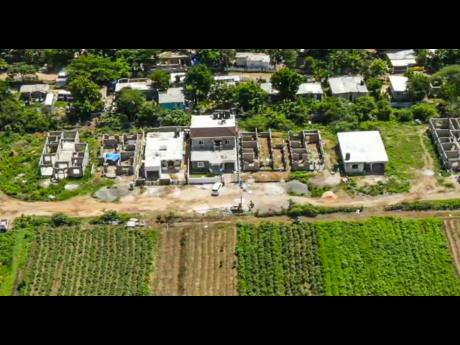

Given the aspiration of Jamaicans for land and home ownership, it seems paradoxical that a group of residents of Clifton, St Catherine, did not just grab the titles to lots offered by the Government.
Yet it happened recently, forcing the Holness administration to, as this newspaper reported, abandon a plan to hand out 50 land titles to qualified families. The irony is seemingly deepened by the fact that the residents’ decision was because they wanted all agreed beneficiaries to receive their titles at the same time. Such an action, on the face of it, is contrary to Jamaica’s reputation as a low-trust society, where people do not regularly act in concert in pursuance of community or common interests. Except that, as the Clifton case and another one at Innswood Estate involving the same government agency show, Jamaicans distrust officialdom far more than each other.
As he focuses on post-premiership legacy – which he has suggested is now a priority – Prime Minister Andrew Holness ought to invest significant political capital into changing this.
That is harder to achieve than building hard infrastructure or high-rise buildings or physical monuments, but success will make doing things easier.
People trust their government if they perceive it to be transparent and honest, taking decisions in the public interest rather than for personal gain. And there is a strong correlation between countries with low levels of corruption and strong and sustained economic growth and social stability, including low levels of crimes.
INITIAL AGREEMENT
Clifton is part of the sprawling Bernard Lodge Estate, which was once a major sugar plantation. It was in the spotlight late last year when several half-built homes outside the boundaries of Clifton were demolished by the Government’s Sugar Company Jamaica Holdings (SCJH) because they were constructed without permission. The builders ‘bought’ the land from people claiming to have the authority to sell.
The original Clifton, too, is an informal settlement, one of hundreds across the island where a third of Jamaicans live. In 2015, a former administration began the process of regularising the area. Certificates of possession for land were given to more than 100 families. Now, 50 of the formal titles are ready for distribution, which the Government hoped to do. Objectors insist that all should be delivered.
“We don’t trust them,” one resident told The Gleaner. “We want all of us to get our title at the same time. One for all and all for one. Nothing less.”
They fear, despite its insistence to the contrary, that the Government might abandon the scheme and eventually push those without titles off the land in favour of real estate developers.
At Innswood Estate, families of former employees live in homes that were built by the SCJH’s predecessor to replace barracks-style workers’ accommodations. In these homes, the SCJH still pays electricity bills, but wants to end the arrangement by having each property install its own electricity meter. The residents fear that as being a set-up for removal from the property. Some invoked the 2021 relocation of families from another area on the estate to elsewhere in St Catherine, to make way for a real estate development. The homes of a handful of people who did not move, despite their initial agreement, were demolished.
“We cannot trust the SCJH,” said a resident. “We see it happen before with the people who live (d) up the hill.”
SOCIAL DISTRUST
This distrust isn’t only of the SCJH. Surveys consistently show that Jamaicans have little trust in the institutions of the State. Around half the country distrust the police and more than four in 10 feel similarly about the legislature.
Indeed, the 2020 biennial survey on democracy in the Americas by Vanderbilt University’s LAPOP research laboratory found that 55 per cent of Jamaicans believe all politicians are corrupt. These perceptions do not just happen; usually they are based on behaviours that raise questions about the integrity of public officials.
Social distrust undermines democracy and the processes that give it legitimacy, including elections.
Indeed, the LAPOP survey showed that only 35 per cent of Jamaicans believed that votes in the island’s elections are always correctly counted. Sixty-seven per cent said they sometimes were.
Worryingly, only 57 per cent of adults declared support for democracy, and only 45 per cent were satisfied with how it worked in Jamaica.
In fact, 46 per cent would tolerate a military coup to combat corruption, and 55 per cent would accept a strongman leader who bent the rules if that leader maintained their freedom of expression and generally made things work.
Notably, less than a third of Jamaicans (32 per cent) believe that their basic rights are protected.
Happily, Jamaica’s institutions of democracy are intact and function reasonably well. Although apathetically low numbers now vote in elections, power is transferred peacefully. But the critical foundations upon which these institutions rely – people’s trust – are decidedly wobbly.
Prime Minister Holness should work hard to rebuild that trust, starting with robust efforts to eliminate corruption. Success, in this regard, would be a great legacy.