
Editorial | Reconsider jury duty exemptions
Published:Sunday | April 16, 2023 | 1:06 AM
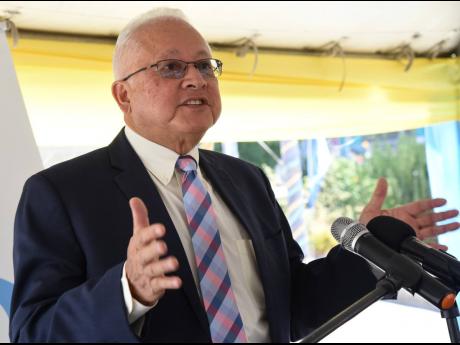
It is surprising that Delroy Chuck, the justice minister, is resistant to amending the law to narrow the pool of people exempt from jury duty.
He apparently believes that the crisis of courts being unable to find sufficient jurors can be solved by offering a few bobs more to those who are required by law to turn up when called. They currently get a stipend of J$2,000 (around US$13) a day for sitting on cases. Any adjustment, however, will make only a marginal difference in encouraging prospective jurors to attend court.
The solution to this long-standing problem requires a strong dose of civic education, especially about the justice system and the citizen’s role in it, as well as creative thinking of the stakeholders for its effective transformation. But there are also the low-hanging fruits to be picked – like reducing large swathes of people that the law exempts as jurors.
A measure of the crisis in the unavailability of jurors and its impact on the island’s courts was highlighted at last week’s opening of the Easter session of the circuit court for the parish of St Catherine. That there were sufficient jurors present for cases to start was a significant development, to be commented on by the presiding judge, Bertram Morrison. At the start of the previous Hilary session in January, only a single juror was present.
“The jury system is crucial to the administration of justice, so we are thankful that there is an adequate supply of jurors to administer justice,” Justice Morrison said.
WASN’T UNIQUE
What happened in St Catherine in January wasn’t unique to that parish. During the same session, Paula Llewellyn, the director of public prosecutions, complained that in several parishes a good turnout was 10 jurors, even though hundreds were called.
An even starker example of the disregard for jury summonses is data for last year’s Michaelmas term for the Supreme Court in Kingston, where the majority of cases are tried. The authorities dispatched 4,500 summonses to jurors. A mere 127, or 2.8 per cent, attended court. That is, 97.2 per cent of prospective jurors snubbed the court.
In Jamaica, jury lists are culled from the voters’ register and people registered for tax purposes. However, a wide range of professions are exempt.
No one 70 or over has to serve, removing more than 180,000 people from the pool, no matter their state of health or cognitive abilities.
The law also exempts ministers of religion, medical doctors, dentists, veterinary surgeons, nurses, midwives, pharmacists, public servants, school teachers and university and college lecturers. And this isn’t the entirety of the exempt list, or of the ways to avoid serving on juries.
What it means, though, is that tens of thousands of people are sequestered from the systems. For example, there are around 100,000 employed in the central government and 25,000 teachers in the primary and high school system.
BLANKET EXEMPTION
Mr Chuck believes that it is right that they have this blanket exemption, saying of teachers, for instance, that if one had jury duty for three weeks, a whole class of students might be deprived of lessons over that time. Which, of course, is an illogic.
While recognising the shortage of some professional skills in Jamaica, including specialist teachers, it isn’t beyond the capacity of managers to provide temporary cover during absences.
In any event, there are arrangements in the Jury Act for people who are summoned for jury duty to apply for special exemptions.
More importantly – even as the serious consideration is given to the greater use of trials by judges only – is that deeply embedded concept in justice of being judged by one’s peers. That idea isn’t of this very narrow definition of ‘one’s peers’ that excludes broad categories of citizens.
Rather, the concept of peers suggests the wide citizenry, from among whom are empanelled impartial juries, rather than groups representing specific social class or special interests – whether for or against the persons who are on trial.
The current law limits this larger construct of ‘one’s peers’, to the detriment of the concept of justice that it underpin. That conceptual weakness is exacerbated by the increasing reluctance of citizens to be part of the process.
Clearly, people are reminded of the civic responsibilities and why participating in the process is ultimately to their own good. And the law has to be enforced against people who flout their obligations. But doing these things doesn’t obviate the good sense of expanding the pool from which jurors are chosen.
Mr Chuck must therefore reconsider his position.
In addition to making a submission to the Cabinet about increasing the stipend paid to jurors, he should also propose amendments to Schedule A of the Jury Act to drastically whittle down the categories of people who are automatically exempt from service. At the same he must initiate a broader formal discussion on reforming how trials are held, including the place of bench trials within the system.