
Basil Jarrett | Embrace adversity: It teaches manhood
Published:Thursday | September 14, 2023 | 12:07 AM
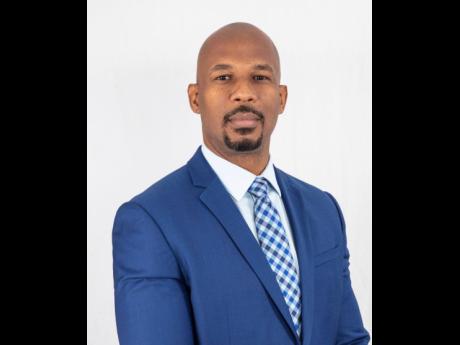

I DIDN’T grow up with much. But to say I grew up poor would be an exaggeration. During my primary-school years, I think it’s fair to say that my family had just enough. The fridge may not have been stacked from top to bottom with bottles of soda, leftover KFC and a wide assortment of deli sandwich meats, but there was never a night when we went to bed hungry, or wondered where the next meal was coming from.
Life was simple then. We woke up, we swept the yard, we went to school. We came home, swept the yard (again), ate dinner and went to bed, only to rinse and repeat the next day. I think I can safely say that I never felt poverty or hunger growing up, and sharing a room and two small beds with my three brothers was as natural as wearing hand-me-downs. Perhaps this last one didn’t bother me much as being the eldest, I was always at the head of the queue.
It was not until high school that it dawned on me that maybe I was from the land of the have-nots. The cosmopolitan nature of Jamaica’s best high school meant that I was now surrounded by boys from different backgrounds and walks of life. ;Puggy’ was from Waterhouse, Alvan came from Mona, Powe lived just below Half-Way Tree and ‘Country’ came from, well, Mountain View. We became friends, visited each other’s homes and grew up together.
THE ORIGIN OF AMBITION
It was during this period that I discovered that not everyone fought their way to school on a minibus each morning. Neither did everyone perform the ritual of washing their uniform shirts after school each day, and hanging it behind the fridge to dry by next morning. Not everyone had to sweep the yard, clean up behind the dogs nor get on their hands and knees to shine the house floor. Some of my friends had this marvellous invention called a helper, and when you had one of those, you didn’t do any of these things.
And that’s when I started to want more. Why can’t I have five suits of uniform to wear to school each day? Why do I have to polish the terrazzo tiles on Saturday mornings? And for heaven’s sake, why couldn’t I have a helper?
But unbeknown to me, something important was taking place in those formative years. Something that would not only shape who I am as a person, but also my understanding of what it means to be a man and to have purpose in life.
A CRISIS OF MANHOOD
You see, as I grew up, I had no appreciation for what life lessons I was being taught during those hard times. I swore then that I would get a good education and get a good job, so that I wouldn’t have to subject my own children to such hardships. But alas, the folly of youth.
Today, there is a quiet but profound crisis unfolding in many middle to upper-income households. It’s a crisis that doesn’t make headlines, but it’s one that is shaping our society in profound ways, and contributing to what I call the loss of masculine identity in the Jamaican male.
Largely, this crisis is the result of the dearth of male role models, leaving young boys to navigate the treacherous path to manhood on their own. But in many ways too, it is caused by men who have not realised that sparing our boys from the hardships we experienced growing up, is actually doing them a disservice and contributing to a roller coaster ride of poverty.
STRONG MEN MAKE EASY TIMES
In its simplest form, here’s how it works. A young man grows up experiencing hardship and adversity from an early age. He grows to dislike his life and makes a determined effort to not have his children experience those same things. He works hard and develops discipline and a strong work ethic. He’s ambitious and dedicated and manages to pull himself up by his own bootstraps. Eventually, the young man makes it out of his environment and does his very best to ensure that his kids never go hungry, never have to fight their way onto a minibus, and never have to share a bed with their little brother who still wets the bed, by the way. His children grow up in a life of luxury. They get dropped to school in the mornings and are picked up in the afternoons. They have the latest clothes, shoes, phones, tablets, video games and Dunce bags. They want for nothing.
EASY TIMES MAKE WEAK MEN
The young man feels accomplished having succeeded in providing a good life for his children. After all, the measure of any man is his ability to provide for his family. But then, something interesting happens. Devoid of any discomfort, any need, his sons grow to be lax. Lazy. Entitled. Spoilt. They are soft, needy and undisciplined. They have no idea what it means to sacrifice or to do without. They don’t know how to wash or iron their clothes, or which bus runs to Half-Way Tree. In an attempt to strip his children of any form of hardship, he has unwittingly stripped them of the very things that it takes to make a man, a man in Jamaica today.
They have difficulty finding or holding down a job, unless of course it’s in the family business, and ultimately end up recreating the same hard life conditions for their own families later on.
You see, hard work and sacrifice is the bedrock of manhood. It is the cornerstone of success, and instilling a strong work ethic, especially in young boys, is paramount. As parents who struggled but ultimately made it, we must search for ways to instil in our boys the value of diligence, perseverance, and dedication.
A young boy who learns the value of hard work early on is more likely to become a man who is driven to achieve his goals. These hardships teach young boys to make responsible choices, to control their impulses, and to persevere through adversity.
Those accursed Saturday mornings taught me responsibility, teamwork, and an appreciation for the effort that goes into maintaining a home. I learned that being a man means contributing to the well-being of the family and running a functional home.
Look. I get it. Life can be rough. But that rough life can also build resilience and show that pain and adversity is an inevitable part of the journey to manhood. We fail our boys if we do not prepare them for the challenges they will inevitably face. By instilling values like hard work, discipline, responsibility, and resilience, adversity empowers our young boys to become strong, ambitious, and high-achieving men who contribute positively to our nation’s future. Ultimately, that makes hardship far more useful than it gets credit for.
Major Basil Jarrett is a communications strategist and CEO of Artemis Consulting, a communications consulting firm specialising in crisis communications and reputation management. Follow him on Twitter, Instagram, Threads @IamBasilJarrett and linkedin.com/in/basiljarrett. Send feedback to columns@gleanerjm.com