
Peter Espeut | Our failing education system
Published:Friday | January 26, 2024 | 12:06 AM
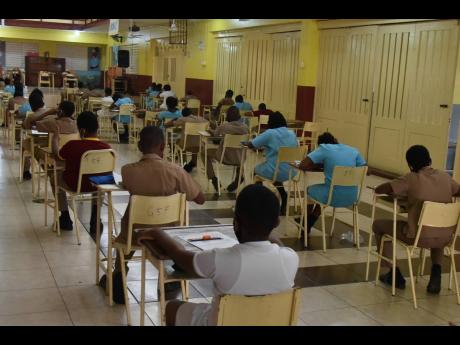
Former Minister of Education Ruel Reid is to be congratulated for having Jamaica evaluated under PISA – The Programme for International Student Assessment – conducted by the OECD (the Organisation for Economic Cooperation and Development). Another minister might have avoided involving Jamaica in an assessment in which we would likely do poorly, but it is better to know your weaknesses, all the better to address them; isn’t it?
That would have been the thinking behind contracting Harvard Professor Orlando Patterson to assess the quality of Jamaica’s education system.
Both the PISA (2022) and the Patterson Report (2021) weighed Jamaica’s education system on the balance, and found it wanting; and they should be read together.
The 2022 OECD Programme for International Student Assessment investigated the knowledge and skills of 15-year-old students in mathematics, reading and science in 81 participating countries. The tests explore how well students can solve complex problems, think critically and communicate effectively. This gives insights into how well education systems are preparing students for real-life challenges and future success. By comparing results internationally, and the education policies and philosophies which underpin them, policymakers and educators should be able to improve their country’s educational performance.
In theory!
SCORED LESS
Jamaican students scored less than the OECD average in mathematics, reading and science, both relative to other countries and in absolute terms.
Performance was graded in six levels, where level 1 is wholly unsatisfactory. A smaller proportion of students in Jamaica, than on average across OECD countries, were top performers (Level 5 or 6) in at least one subject. At the same time a smaller proportion of students than on average achieved a minimum level of proficiency (Level 2 or higher) in all three subjects. Which means that a higher proportion of Jamaican 15-year-olds performed unsatisfactorily than on average across OECD countries.
In Jamaica, the performance of 71 per cent of students in mathematics was wholly unsatisfactory (Level 1); 26 per cent of students attained at least Level 2 proficiency in mathematics, significantly less than on average across OECD countries (OECD average: 69 per cent). Over 85 per cent of students in Singapore, Macao (China), Japan, Hong Kong (China), Chinese Taipei and Estonia (in descending order of that share) performed at Level 2 or above.
Almost no students in Jamaica were top performers in mathematics, meaning that they attained Level 5 or 6 in the PISA mathematics test (OECD average: 9 per cent). Six Asian countries had the largest shares of students who did so: Singapore (41 per cent), Chinese Taipei (32 per cent), Macao (China) (29 per cent), Hong Kong (China) (27 per cent), Japan (23 per cent) and Korea (23 per cent). At these levels, students can model complex situations mathematically, and can select, compare and evaluate appropriate problem-solving strategies for dealing with them. Only in 16 out of 81 countries participating in PISA 2022 did more than 10 per cent of students attain Level 5 or 6 proficiency.
In Jamaica, the performance of 50 per cent of students in reading was wholly unsatisfactory (Level 1); some 50 per cent of students in Jamaica attained Level 2 or higher in reading (OECD average: 74 per cent). At a minimum, these students can identify the main idea in a text of moderate length, find information based on explicit, though sometimes complex criteria, and can reflect on the purpose and form of texts when explicitly directed to do so. The share of 15-year-old students who attained minimum levels of proficiency in reading (Level 2 or higher) varied from 89 per cent in Singapore to 8 per cent in Cambodia.
In Jamaica, one per cent of students scored at Level 5 or higher in reading (OECD average: seven per cent). These students can comprehend lengthy texts, deal with concepts that are abstract or counterintuitive, and establish distinctions between fact and opinion, based on implicit cues pertaining to the content or source of the information.
In Jamaica, the performance of 55 per cent of students in science was wholly unsatisfactory (Level 1); some 45 per cent of students in Jamaica attained Level 2 or higher in science (OECD average: 76 per cent). At a minimum, these students can recognise the correct explanation for familiar scientific phenomena and can use such knowledge to identify, in simple cases, whether a conclusion is valid based on the data provided.
In Jamaica, one per cent of students were top performers in science, meaning that they were proficient at Level 5 or 6 (OECD average: seven per cent). These students can creatively and autonomously apply their knowledge of and about science to a wide variety of situations, including unfamiliar ones.
ASSESSMENT OF TEACHERS
I would like to see an assessment of Jamaican teachers of mathematics, reading and science, compared to their counterparts in other countries. I remember a study done many years ago by the School of Education at UWI which reported a low incidence of proficiency in mathematics among persons being trained as teachers. If primary school teachers are poor at mathematics, how can their students be expected to do any better? I hope the situation has improved since then!
In Jamaica, girls outperformed boys in mathematics by 13 score points and in reading by 35 score points. Globally, in mathematics, boys outperformed girls in 40 countries, while girls outperformed boys in another 17 countries; and no significant difference was found in the remaining 24. In reading, girls, on average, scored above boys in all but two countries that participated in PISA 2022 (79 out of 81).
In Jamaica, the share of low performers is similar among boys (77 per cent) and girls (71 per cent) in mathematics; in reading, however, the share is larger among boys (43 per cent of girls and 59 per cent of boys scored below Level 2 in reading). When it comes to top performers, the share is similar among boys (1 per cent) and girls (1 per cent) in reading.
Jamaican 15-year-olds are not genetically educationally sub-normal; this low performance is because of our sub-standard education system, crafted by our sub-standard politicians.
We can be world-beaters in the sprints, and in our cultural offerings; (and in our ability to kill each other, if the truth be told). But in terms of mathematics, reading and science we are well below par.
But we have known the weaknesses of Jamaica’s education system for decades, and have done little to change it. The 1994 Rae Davis Report on Education Transformation – thirty years old this year – was largely ignored, and so far all we have from the three-year-old Patterson Report are catchy meaningless jingles: “T-R-E-N-D! Chen!” The Patterson Report has not even been tabled in Parliament. This damning PISA Report will fare no better.
Peter Espeut is a sociologist and development scientist. Send feedback to columns@gleanerjm.com