
Lance Neita | Walking until midnight to find my vote
Published:Thursday | August 28, 2025 | 12:07 AM

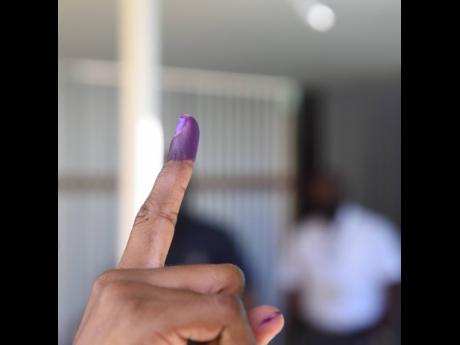
The likely turnout of just over 50 per cent of Jamaica’s voting population on September 3, as indicated by a recent RJRGLEANER Don Anderson poll, is encouraging, even if it is not where we would want it to be.
As Don Anderson himself conjectured, such a turnout would be a shot in the arm to the democratic process, as a 50 per cent draw would bring a halt to the downward trending poll numbers of the last two general elections.
The 2020 figure was 37.85 per cent, representing a sharp downward trend from 2016 when the turnout was 48.4 per cent, sliding from 2011’s 53.17 per cent.
None of these percentages give us reason for hope or self-respect. Jamaica has exhibited a vigorous and intense interest in election campaigns, only to stay away from the polling station in a display of increasing apathy that’s both dangerous and irresponsible.
Declining voter turnout signals the deep problems democracies are facing today. Lower turnout suggests that fewer citizens consider elections the main instrument for tolerating political parties’ control over decision-making.
Mark you, lower participation does not necessarily mean that we are becoming less active in politics. It’s just that we are seeing people turning to other channels to message their ultimatums, in particular, street protests, social media, call shows, and the like.
Nevertheless voter turnout remains one of the crucial indicators of how citizens participate in governance. Abraham Lincoln’s “democracy is government for the people, by the people, and of the people” holds true. If we as individuals don’t participate in the election process, then, how can we claim any right to support or to criticise, to reinstate or to replace, to approve or disapprove?
NATIONAL EDUCATION EFFORT NEEDED
Voter turnout is an important indicator of how seriously we take the governance of our country.
A high turnout is in most cases a sign of the vitality of democracy, but neither the politicians, the state, or the electoral office are doing enough to send electors to the polls.
Instead, the focus is on more curry goat, bus rides, T-shirts, and large crowds. By now, the campaigner should realise that he or she is most likely in for a rude awakening when the results show that, despite the tumult and the shouting, the cheers and the free drinks, the food and the caravans, the road to Gordon House has been found wanting, because, at the end of the day, the diehard and the rent-a-crowd voters just did not vote.
The society cannot lay the blame or the responsibility solely on the politician or the electoral office.
There needs to be a comprehensive, cohesive, concentrated national education effort to drag the voter to the polls.
It’s not enough to accept that people feel betrayed by their politicians and parties and are therefore not willing to make the effort to go out and vote.
We need to change this culture of malaise and adapt to recent developments in voting intensification.
The redesign of various types of voting arrangements can have an impact on voter turnout. These could include mail-in voting, elections on rest days (Saturdays) when going to work would not be an excuse, and, get this, compulsory voting. Compulsory voting has been proving effective in countries like Australia (91 per cent 2019), Belgium (88.4 per cent in 2019), Sweden (87.2 per cent in 2018), Brazil (79.7 per cent in 2018). Worth consideration.
Ask ourselves the question, what is it about the attractiveness of the campaign meetings and parades that bring out thousands, and why can’t that excitement be carried over into election day?
Are people afraid to go out on election day? Afraid of violence, harm, derision? Afraid to mix, the ‘hoity toity’ unwilling to mix with the man in the street?
The powers need to make the process more accessible and the voting experience more pleasant.
GET BACK TO HIGH PERCENTAGES
At my regular polling station, the officers are always courteous once you get inside, but getting there is another matter. It’s along a narrow road, double parking all the way, and getting there a bother. Plus the hangers-on down the road in their party colours, outside the perimetre, but intimidating and looking on suspiciously as they mentally identify your voting preference.
Jazz up your polling stations, keep them clean and sanitised from intimidation, and ensure that the area is for voting only.
We need to get back to high percentages. It’s no comfort that global voting has declined. Our young people, the youth who are not voting, may be astonished and even challenged to hear that voter turnout in Jamaica has been as high as 86.10 per cent, recorded in 1980.
The 1980 figure is barely ahead of the 83.3 per cent in 1997 followed by the 1967 turnout of 81.46 per cent.
In 1962, the year of Independence, 72.29 per cent of the electorate thronged the polls because they had a clear choice, they had a sense of destiny, and no one wanted to be left out.
Youngsters should be motivated to not want to be left out.
Our first general election in 1944 saw a 55.15 per cent turnout. On Election Day, December 12, many voters could not read, but, as late Mico College Principal J.J. Mills remembers in his autobiography, “... it was these humble and unlearned who overwhelmed the polling on that historic day”.
He recalled noticing two elderly ladies walking around the Mico College station in the morning, and again saw them walking around the building in the mid-afternoon.
When asked, they replied that, from 7 a.m., they had visited all the eight stations on the college grounds trying to find their names, without any luck. “They then volunteered the resolve that, if they walked ‘til midnight, they were going to vote”.
We keep our index fingers crossed for a high turnout, come September 3.
Send feedback to columns@gleanerjm.com or lanceneita@hotmail.com