
The Classics
Governor outlines expectations of new health facility
Published:Friday | May 5, 2023 | 5:45 AM
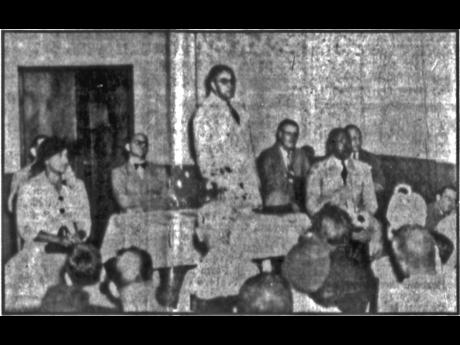
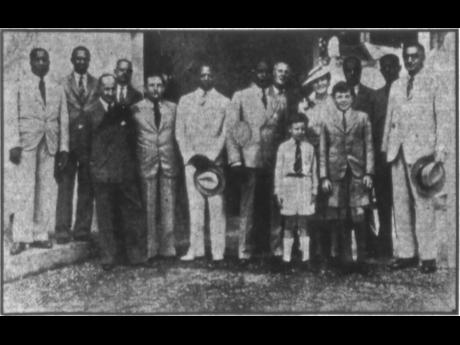
Governor Richards was quite pleased to be in Jamaica for the historic opening of the Port Antonio Hospital. While he celebrated the work done by all parties involved, and shared his appreciation for the state-of-the-art building and equipment, he strongly spoke of the purpose of the hospital and what it meant to the community and, by extension, the region.
Publication May 4, 1943
Finest Hospital In BWI,
At Port Antonio, opened by governor on Monday, May 3, 1943
His Excellency, at imposing ceremony, stresses it is more important to prevent than cure disease
“A centre of healing set on a hill” to use the Hon. P. Martin Cooper’s happy phrase – the new, modern £60,000 Port Antonio hospital, was opened on Monday afternoon, May 3, 1943. His Excellency the Governor, Sir Arthur Richards, performed the opening ceremony, delivering a speech on medical policy that keynoted the function.
A tribute to the energy and foresight of Portland’s member in the Legislative Council, the Hon. H.E. Allan, OBE, the new hospital is declared to be one of the finest in the British West Indies. First class in every detail, it is a monument to official interest in the welfare of suffering Jamaican humanity.
Appropriately, mention was made of the part the governor played in seeing the hospital, a lifelong dream of Portland’s member, become an reality, through His Excellency’s interest in the project, his visit to the site, his support in council all were gratefully related by Mr Allan whose “big day” it was.
Elected members of the council, whose support made the vote for the hospital a large sum for Jamaica go through, rallied around their popular colleague to make the day a historic one, as Mr Allan declared it. Coming from all over the island, they gathered at Kingston Railway Station to go over diesel coach and Kalama-zoo, and make a real jolly outing of it.
His Excellency, who was in the parish from Sunday, attended accompanied by Lady Richards and their children, Masters Fraser and Michael.
Rain, which unfortunately marred the function, prevented the gathering of Portlanders from being larger, but it made up in enthusiasm what it lacked in numbers. Held indoors at the last minute, it was a prelude to an avid inspection of the institution which saw one and all trouping through the various wards and departments inspecting the up-to-date equipment and facilities.
PRESENT AT CEREMONY
In the absence of the custos of the parish, the Hon. T.C. Geddes (who could not come on account of illness), the Hon. F.V. Grosett, leading Portland lawyers and nominated member of the Legislative Council, was chairman for the function. On the platform with him were the Governor, Lady Richards, the Hon Mr Allan and Mrs Allan, Hon P. Martin Cooper, director of Public Works; Hon Major T.J. Hallinan, director of Medical Services, and Mr E.R. Abendana, chairman of the Portland Parochial Board.
Among those in the representative gathering were: Sir Rupert Briercliffe, Mrs Hallinan, Hon. T.R. Williams, Mrs Grosett, Hon E.V. Allen, R. Olivier Terrier, O. E. Anderson, E.E.A. Campbell, E.A. McNeil, A.B. Lowe, M.H. Segre, C.A. Reid, J.W. Maxwell, Messrs, Roy McNeill, W.T. Lawrence, E.M. Sinclair, J.F. Parkinson, B.M. Clark, H.R. Fox, J.B. Sutherland, Dr and Mrs L. St. C. Ferguson, Mrs Anderson, Mrs McNeill, Mrs Maxwell, Dr and Mrs T.B. Sinclair, Messrs. E.H. Bravo, R.H. Small, Herbert Plant, H.O. Rosseau, Ken Abendana, Vin Abendana, Dr C.H. Farquharson, Dr Mavis Sutherland, Dr and Mrs Amos Foster, Dr E.D. Phillips, Mr H.E. Reddick, Rev. W.J. Thompson, Messrs. P.H. Gale, T.A. Howell, J.N. Vassell, S.L. Geddes, C.M. Smatt, Allan Jacobs, J. Khouri, T. Turnbull, S.L. Hillary, C.A. Broderick, D.O. Spence, E.D. Kieffer, Inspector Langdon and Sergt-Major…R. C. Beckford, Mrs Vassell, Mrs Allan Jacobs.
MEMBER FOR PARISH
Mr Allan gave a wealth of historical facts concerning the decision for the building of the hospital which began with the labours of Major Hallinan with a committee of elected members in working out a plan for improving the hospitalisation of the island.
Commenting on the statement made by some persons that the new hospital was too good, Mr Allan said he had had the pleasure of seeing the Royal Infirmary at Edinburgh, the famous St Thomas’ Hospital in London and the equally famous Johns Hopkins Hospital in the United States of America, where he saw people of every class and race, and some of the finest equipment eyes could behold, and nothing was spared to do the best for the community because it was for the improving of fallen humanity. He stood there proud that day to know that in the British West Indies, Jamaica was taking the lead in setting the standard in that direction, and he was still more proud that that standard was being set in the parish he had the honour to represent.
Paying tribute to the help of the Governor in the carrying through of the venture, Mr Allan recalled that His Excellency came to Jamaica when chaos and unrest resigned supreme, providing a test for his should take immediate steps to amend the Fish Protection Law in order that the pollution of rivers and watercourses may be discontinued.”
Mr Thomas said he knew that Government was investigating the fish industry with emphasis on the causes of fish destruction, but the question of the pollution of rivers was such a serious one that Government should amend the Law at once to prohibit the deposit of dunder and other industrial waste in streams, instead of waiting until the whole field of investigation is covered.
He declares that he has seen on more than one occasion considerable destruction of fish life in the Rio Cobre Canal itself, and that opened another question. That canal system was an important source of water supply not only for animals but for human consumption, and although the Public Health Law had been amended to prohibit dunder and other industrial waste being allowed to run into rivers, the law was not being obeyed. “It must be included, he insisted strength, and he was glad that today the island had a better understanding of his interest in the country.
“The time is coming when the truth will be told of your real work for this country,” Mr Allan continued. “And I know there are many who will stand with me to tell it to the world. I feel certain that when Your Excellency leaves Jamaica, he can write in his book of memoirs “I came, I saw, I conquered.”
Concluding, Mr Allan specially mentioned the work done by the Director of Public Works, the Director of Medical Services, Mr T.A.D. Smith, the Resident Supervisor, and the general manager of the Railways. “To the community, I say: We need your cooperation; this is a work for suffering humanity. Mistakes will be made, They are made everywhere, but stand by the staff; give them every help you can for they will be faced with many difficulties, and where you see ahead of them, help them, and I know they will appreciate it.
The Hon Martin Cooper, director of Public Works, gave a description of the building which cost £60,000.
GOVERNOR’S SPEECH
His Excellency, addressing the gathering, said:
Mr Chairman, Ladies and Gentlemen. During the course of a long public life, I have had many public duties of his nature to perform, but I doubt whether any have been quite so easy, or have required so little explanation as the one for which we have journeyed to Port Antonio today. These buildings admit to little criticism even though they have been erected by the Public Works Department (laughter). They are finely designed and well executed and they stand on a beautiful site, commanding one of the most beautiful views in Jamaica. I congratulate all of those who have striven to make it possible. Today the dream comes true. We have listened to Mr Allan’s description of how it all came about, while the Director of Public Works has told us of the difficulties which his Department has had to face and has, as you see, successfully surmounted. Why not then open the building at once and allow you to confirm with closer inspection the favourable impression that first sight creates?
Well, as you know ladies and gentlemen, I like to take unsuitable public occasions for preaching propaganda of my own. I have so little occasion and opportunity for indulging in propaganda that I propose to detain you for two or three minutes while I say one or two things about medical policy.
I want you to pause with me one moment and to reflect on the principles which should govern policy in the medical field in order that the greatest possible benefits to the people may accrue from the funds available. The Colonial Office Medical Advisory Committee has recently emphasised the act that medical questions cannot be divorced from the social and economic questions cannot be divorced from the social and economic questions with which they are linked up, and that all these problems must be considered as a whole. The necessity is recognized of an intimate collaboration between medical workers and educational, agricultural and veterinary staff because medical issues are closely related to daily life and social and economic outlook. As the committee points out, it follows, that medical activities should.
FORM AN INTEGRAL PART
Of a general plan for social welfare, based on the ascertained needs of the community and so constructed as to give proper weight to the requirements of both urban and rural areas.
I have this opportunity for publicizing the policy approved by the Secretary of State, because I think there is some danger in Jamaica of allowing ourselves to be dazzled by imposing new buildings, such as these we are opening today. The new hospitalization policy was initiated by my predecessor in office and has been warmly supported by me. Heaven knows there are hospitals still all over which cry out for rebuilding, enlargement and renovation. But that is only one aspect of the problem, and I am anxious about the problem, and I am anxious to keep it in proper perspective. The preventative aspect of medicine should receive the greatest possible emphasis. While fully recognising the need of curing and alleviating disease and the value of hospitals in meeting this need and in securing the confidence of the population, it is necessary to bear in mind that the patients admitted to hospitals constitute but a very small proportion of the people who are suffering from disease or its effects, and that, had their environment and ways of living been better, many of these patients need never have been admitted to hospital. So speak the advisers of the Secretary of State. We want to help in the maintenance of fitness and to eliminate preventable disease by raising the standard of health, and by controlling the transmission of disease. In time such a policy would lead to a reduction in the number of cases requiring hospitalization. Only by raising.
EDUCATIONAL STANDARDS
And particularly the educational standards of women and girls can we hope to secure a full measure of improvement in social welfare. Schoolteachers instructed and guided by medical officers should be the main channel for the communication of health education to children, and when the child leaves school there is a great need for the care and training of the adolescent to fit him or her for taking up the responsibilities of adult life. To effect any permanent results we have to teach people how to improve their home environment and conditions.
We have here what is said to be the best hospital of its kind in the West Indies. We are justifiably proud of it. But I am anxious not to be blinded by its beauty. The hospital, however efficient, touches but the fringe of a big problem a connected series of problems calling for the united efforts of us all. It is better to eliminate the causes which lead to the hospital than to cure people only to send them back to conditions which in themselves are conductive to disease. In other words we must tackle the problem at both ends. Meanwhile, having tempered our pride in this new building with such reflections, I have great pleasure, ladies and gentlemen, in declaring open the new Port Antonio Hospital. (Applause).
A vote of thanks to His Excellency and Lady Richards was proposed by Mr. E.R. Abendana and seconded by Mr. Allan, thus ended a pleasant function.
For feedback: contact the Editorial Department at onlinefeedback@gleanerjm.com.