
Staffing crisis among factors blamed for dead babies
Published:Thursday | October 27, 2022 | 12:12 AM
To access this article in full please login or register today
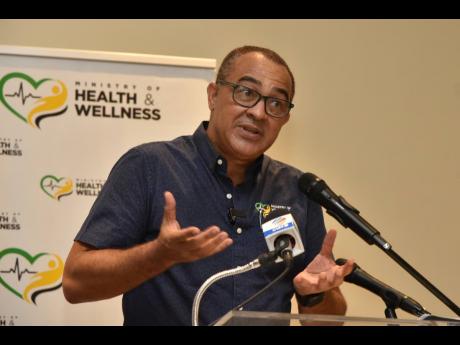
A spike in the deaths of newborns linked to a bacterial outbreak at Jamaica’s chief maternity hospital has been partly blamed on a staffing crisis at neonatal units. A health ministry review has also attributed the increase to equipment challenges...
A spike in the deaths of newborns linked to a bacterial outbreak at Jamaica’s chief maternity hospital has been partly blamed on a staffing crisis at neonatal units.
A health ministry review has also attributed the increase to equipment challenges and overcrowding leading into the so-called crop season, where births exceed the general monthly average. Daily average births rose from 28 in July and August to 42 in September, a ministry census showed.
The admissions were made Wednesday by Health and Wellness Minister Dr Christopher Tufton, who revealed that the activation of a response team had suppressed the mortality rate, which peaked with nine deaths in July. The July deaths represented a mortality rate of 43 per cent from a total of 21 infections – seven from Klebsiella pneumoniae and two from Acinetobacter.
Jamaica’s staff-to-patient ratio in neonatal units is around 1:7 – a far cry from the best-practice bar of 1:2, the health minister said in a Gleaner interview Wednesday.
Tufton has described the human resource capacity crisis as a “substantial problem” , which he expects to be corroborated by a pending report by the Pan American Health Organization (PAHO), which has been part of the monitoring process.
Attrition has been a major concern for the island’s healthcare sector, which haemorrhages workers to wealthier countries paying salaries up to 300 per cent higher.
Over the last three months, the South East Regional Health Authority lost 119 medical, administrative and technical staff, ranging from junior doctors, nurses, midwives, dental surgeons, to paramedics. Forty-seven registered nurses resigned in a three-month period, including 25 in August alone.
No data was immediately available on resignations from neonatal units.
Since the July peak in mortality from Klebsiella pneumoniae and Acinetobacter, deaths have fallen. Two related deaths were recorded at Victoria Jubilee in August, two in September, and one so far in October.
But, overall, Klebsiella infections inched up from 16 in July to 18 in August, and 23 in September. Two new Acinetobacter cases emerged between August and September.
Approximately 400 to 500 babies are born at Victoria Jubilee per month.
The response to the bacterial outbreak included deployment, in September, of experts from PAHO who also visited Bustamante Hospital for Children and Spanish Town Hospital. Tufton said that the probe did not unearth adverse findings at either hospital.
“They were careful to try to address the problem as soon as possible, but the contamination would have affected most in the period leading up to the discovery. Special precaution was taken to eliminate the problem, or certainly manage the process, but a big part of it is the [staff-to-patient] ratio,” Tufton told The Gleaner.
DID NOT WANT TO CAUSE PANIC
Pressed on why the ministry had not disclosed the spike in deaths, the minister said that he did not want to spark panic.
Tufton said he did not have an “elevated sense of concern” because the deaths “dropped substantially” in August, suggesting that healthcare officials were getting a handle on the situation.
“There was no intention to hide anything. I know the danger of trying to hide things,” he added.
Two memoranda of understanding with the Hartford Health System and the University of Miami are key to forging a joint course line, which will include the enlistment of trainers to boost domestic capacity.
“I am not taking away from the dilemma with mothers in distress and babies in distress, but it is a consequence of the realities we face and we have to double our efforts to do the best we can,” Tufton said.
Klebsiella pneumoniae infections are not uncommon in the local health sector, but the deaths of newborns resonate deeply in Jamaican society, sometimes with political consequences.
In 2015, then Health Minister Dr Fenton Ferguson was relieved of the portfolio by then Prime Minister Portia Simpson Miller because of public backlash over the deaths of 18 babies linked to a bacterial outbreak.
Tufton himself came under scrutiny in 2016 for a surge in cases in the first year of the two-term Holness administration.