
Earth Today | A cry for fairness, solidarity to address the climate crisis
Published:Thursday | August 5, 2021 | 12:29 AM
DEVELOPING COUNTRIES have laid out what for many is a solid case for ‘solidarity, fairness and prosperity’ in the response to a changing climate, ahead of the upcoming Glasgow talks set for November.
The ‘case’ is reflected in the recent position paper titled COP26: Delivering the Paris Agreement, where developing countries call for urgent attention to emissions reduction, adaptation, finance, loss and damage, and implementation protocols at the negotiations to support their resilience efforts.
Those items, they have insisted, require concerted action at the negotiations, known officially as the Conference of the Parties to the United Nations (UN) Framework Convention on Climate Change, now in its 26th year (COP26).
“COP26 presents a unique opportunity to enact an effective response to climate change. Unprecedented demand for action from the world’s citizens, the growing threat from climate change impacts, the changing economics of clean energy, recent political developments in key countries, and the need to rebuild from the COVID-19 pandemic combine to make this a time of both maximum need and maximum opportunity,” the paper said.
“COP26 must, above all, be a summit of delivery – the point at which governments that signed the Paris Agreement six years ago are due to deliver on promises made across all elements of a fair, equitable and robust response to climate change. The needs of nations most acutely threatened by climate change lie at the heart of the Paris Agreement and, indeed, of the UN climate convention: morally and practically, there can be no successful outcome at COP26 that does not deliver for the most vulnerable across the full range of issues,” it added.
Cooperation and commitment
Ultimately, if there is cooperation and a commitment to common but differentiated responsibility, everyone benefits, according to the position paper, which has as its subtitle A five-point plan for solidarity, fairness and prosperity.
“‘Solidarity’ because dealing with the climate, nature and COVID-19 crises will be far easier if nations cooperate and the developed world shows solidarity with the developing. ‘Fairness’ is a central principle of the UN climate convention and the Paris Agreement, but has not so far been delivered; that needs to change. And ‘prosperity’ because acting together to solve these crises will generate prosperity for all,” it explained.
“The poorest nations have as much to gain from a swift transition to clean energy as the richest; the difference is that the poorest need assistance to make the transition, particularly with their economies ravaged by COVID-19 and, increasingly, by climate change impacts against which they also need security,” added the paper.
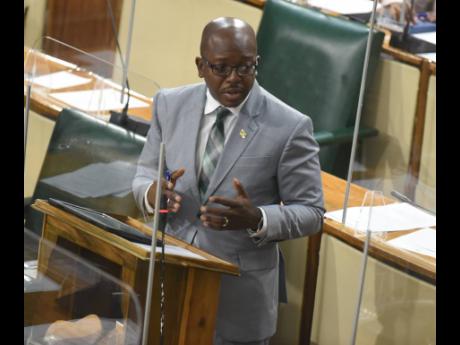
It has endorsed by developing country leaders, including the head of the Alliance of Small Island States, Ambassador Diann Black-Layne, and Jamaica’s Minister of Housing, Urban Renewal, Environment, and Climate Change Pearnel Charles Jr. They are in addition to other government leaders and UN negotiating blocs that reportedly comprise more than half the nations of the world.
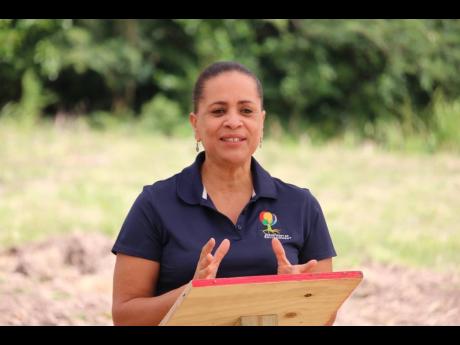
Private Sector Organisation of Jamaica representative Eleanor Jones has noted her own support for the paper.
“I endorse the five-point plan and believe strongly that the focus on adaptation is critical for us in Jamaica, as well as for other small island developing states (SIDS) and least developed countries. We look forward to the outcome of COP26, where there are many champions for climate resilience among the vulnerable,” she said.
The focus on adaptation and finance, Jones noted, are especially valid.
“Adaptation is absolutely necessary and particular attention needs to be paid to building robust health systems, including water security and sanitation; strengthening food systems through sustainable, climate-resilient agriculture; protecting biodiversity and ecosystem health. It is important to be reminded that all aspects of human health, well-being and livelihoods depend on goods and services provided by ecosystems. Of further note is the fact that changes to the natural environment increase the risk of disease,” she said.
“Access to financing is critical for adaptation and for health systems, as well as ecosystem management,” Jones added.
The changing climate is fuelled by the continued warming of the planet due to human actions, notably the consumption of fossil fuels, such as coal and oil, which produce greenhouse gas emissions. Impacts include more extreme weather events – from droughts to intense hurricanes, the likes of which have devastated islands of the Caribbean over recent years; rising sea levels and the associated threat to freshwater resources; as well as livelihood losses in areas such as tourism, fisheries and agriculture.