
Let us celebrate our heroes in a new and different way
Published:Sunday | October 16, 2022 | 12:08 AM
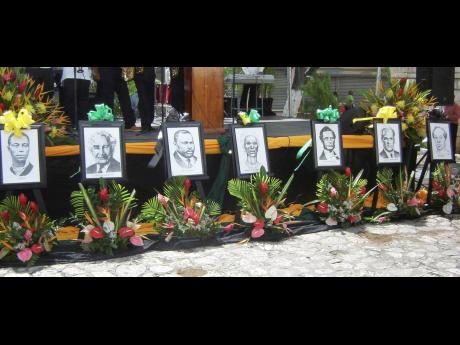


National Heroes Day 2022 will, like others in the past, see the usual patriotic fervour characterised by national colours, local song and music, and good food.
This will include mannish water, roast breadfruit, ackee and salt fish, jerked chicken and pork, stewed peas and curried goat, and that good stuff we like to have. Call it Jamaican thanksgiving.
It is indeed a wonderful thing for us to sensitise awareness of our people who have served for a better Jamaica, sometimes paying the ultimate price. Celebration and gratitude are most fitting for times such as this. Schools will therefore do the usual concerts at this time of year as we celebrate our national heroes.
May we move our approach to celebrating our heroes in a new and different way? Let us include teaching our children how to do advocacy. Teach them how to write a letter to an organisation, government office, member of parliament, etcetera, regarding a current issue of concern. Teach them how to apply for permission to stage a public demonstration within the law. Teach them how to do an access to information request (ATI). Teach children how to come together as a group and represent a particular concern.
Imagine if private-sector organisations and schools partnered to encourage children to be critical thinkers, positive advocates for justice, and agents of the change we want to see in our society. Imagine sponsorship for panel discussions, debates, letter-writing competitions - all regarding community concerns being submitted to the powers that be.
HISTORY OF LANDLESSNESS
Many in the Church have today gone silent on the work of justice. It might be instructive to look again at Paul Bogle and George William Gordon, who were both Baptist deacons. They clearly understood that the work of justice was inseparable from the work of evangelism. They would not have served the expectations of the status quo.
These men worked effectively together. They did not stop to argue about who was brown and who was of a darker hue. In fact, biracial Gordon, who owned land and was a man of means, worked well with the less fortunate Bogle. They united in the cause for justice.
Today, many Christians in Jamaica are divided on the grounds of political biases versus coming together for the cause of justice.
The issue in Clifton has presented us with a painful metaphor for a troubled and challenged nation. A national concern identifies the problem of illegal activity associated with gangs. The history of landlessness sounds its omnipresent call. Once again, we are reminded that we need some creative approach to how the landless may be facilitated in practical terms to acquire land or housing legally.
To be clear, without urban planning and renewal we will continue to see the explosion of informal settlements into which access is challenged! It is in the best interest of all Jamaica that poor, hungry, dispossessed Jamaicans are legally facilitated to own a piece of land now.
I believe that deacons Paul Bogle and George William Gordon would have united in calling for answers to questions such as: who is responsible for selling lands in Clifton? How long ago did the Government became aware of this issue? Who will be the heroes for landless Jamaicans? Who will uphold law and order for the sake of Jamaica? Are there other ‘Clifton locations’ in Jamaica currently? If so, where are they? And how are they being addressed?
Jamaica’s shelter problem is inseparable from its crime problem, which is inseparable from its poverty problem, which is inseparable from its history, which is now inseparable from a management problem in areas of urban planning, poverty alleviation, and corruption. We are all in this together. Like Paul Bogle and George William Gordon, regardless of our hue and class, we must unite for one and all.
CELEBRATE IDENTITY
Maybe the silence of many in the Church today is an indication that the death penalty does silence many who might have spoken up for justice. You may recall that Paul Bogle was hanged on October 24, 1865, at the request of the United Kingdom. George William Gordon was sentenced by the United Kingdom to the death penalty on October 21, 1865. The Morant Bay fight for justice saw the silencing of voices for justice!
Who do we most resemble today? Advocates in union with Bogle and Gordon? Or pretentious bourgeoisie in sync with the status quo? The struggling proletariat, or the confident, corrupt, silencers of justice? Religious and political leaders should beware of their attempts to discredit human-rights actors.
Our national heroes used their faith as opportunities to call and act for justice. We will continue to salute Paul Bogle, George William Gordon, Samuel Sharpe, Nanny of the Maroons, Marcus Mosiah Garvey, Alexander Bustamante and Norman Washington Manley. However, we should seek to emulate them and teach our children to do more than concerts and colours. Like Bob Marley and Louise Bennett-Coverley (though originally unpopular), we, too, will dare to be different in the quest to celebrate identity and speak with the voice of the people!
The church and mosque and temple and synagogue, and those without religion, must work together for a better Jamaica, where all are affirmed as equal stakeholders, worthy of being heard at the table of justice. May this time of celebration of our national heroes be reflective, thoughtful, and even inspiring as we anticipate a Jamaican republic and an emboldened journey towards reparatory justice.
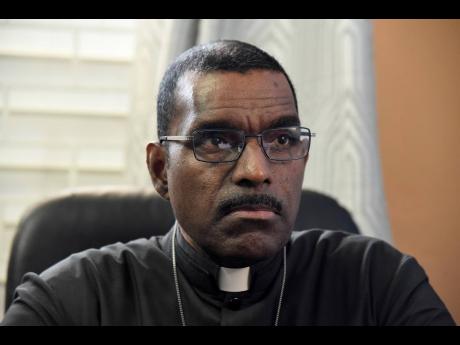
Fr. Sean Major-Campbell JP, is an Anglican priest and advocate for human rights. Send feedback to columns@gleanerjm.com and seanmajorcampbell@yahoo.com.