
Conversations on gender
Exploring love, relationships in the Bible
Published:Sunday | November 13, 2022 | 12:07 AM
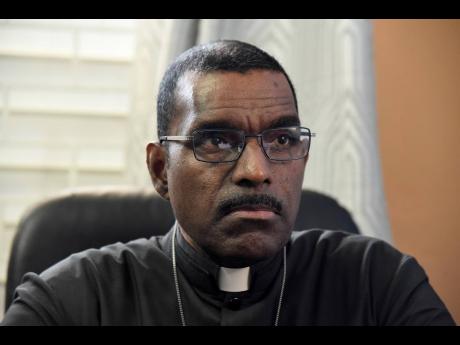

One of the most challenging areas of conversation for many Jamaicans is that of gender and sexual diversity. This is so because of how limited we were socialised and educated re matters of human sexuality. In fact, there has been very little effort in education concerning human sexuality.
For starters, religion has been used to silence a necessary conversation around these matters. Guidance counsellors know that it is insufficient to just teach about egg, sperm, menstruation, pregnancy, and abstinence. They also know that they have and see students who are at various points on the various continuums re gender diversity, sexual orientation, and so on. It is true that they also know that they are not expected to do more in this area of study than the curriculum allows.
NAME CALLING
Name-calling has not helped. People have been described as homophobic, when they genuinely did not understand much of what is examined in more nuanced ways in the social sciences. Many religious folks have not had a chance to question and explore the use of certain concepts that we use today versus how they may have been understood in the biblical world. For example, today we understand that the rape of a woman is a violation of the woman. However, in Old Testament contexts, the rape of a woman was a violation against the man who owned or was over her, whether father, brother, husband and so on.
A movie currently showing is that of Woman King. A passive character that many might see but miss, is the depiction of a eunuch, since in ancient traditions eunuchs were valued for their service to royalty. While we do not talk much about the Ethiopian eunuch in the Acts of the Apostles, he is one of the first converts to Christianity. By the way, eunuchs were often marginalised since it was known that they sometimes had sexual relations with men. Again, we are not socialised to pause and make these observations.
When looked at through the lenses of human rights, the Bible might at times present with offensive presentations while not expressing disgust with the matter. A good example of ancient practices in the world of the Bible which we would abhor include the acceptable practice for a 13-year-old girl to be married to a 40-year-old man; or an adult male to have sexual relations with a teen male.
The story of Ruth and Naomi is one of the most significant books of the Bible, celebrating a same-gender loving relationship. Again, it is easy to miss some realities informing the truth about two widows who knew only too well that their status was very much akin to that of orphans. Without the safety net of a man’s authority and financial independence, they were doomed to poverty and its attendant consequences.
The book of Ruth uses very deep biblical expressions for the love between Ruth and Naomi, while making it clear that Ruth’s approach to Boaz was simply based on her mother-in-law’s instruction. Not love. In the biblical world, marriage was not about who was in love with whom. It was about doing societal norms and having children. Naomi knew that if Ruth was financially covered, this covering would extend to her too. Ruth even had a son for Boaz, who noticed (wink, wink) that it was the women who named him?
The biblical text provides us with opportunities to explore what happened in same-gender loving contexts. While there is no account of any romance between Boaz and Ruth in Chapter 3 of the Book (New International Version), there is clear evidence of Naomi’s plan, directions, and Ruth’s respectful obedience to her. Naomi is deliberate about the need to find a home (3:1) and tells Ruth (see 3:9) that Boaz is a family member that is a guardian redeemer. Naomi is using the legal language in line with the tradition of levirate marriage where a family member had an obligation to see to a relative in difficulty. In fact, the text has Boaz saying, “ Although it is true that I am a guardian-redeemer of our family, there is another who is more closely related than I. Stay here for the night, and in the morning if he wants to do his duty as your guardian-redeemer, good; let him redeem you. But if he is not willing, as surely as the Lord lives I will do it. Lie here until morning.” (Ruth 3:12-13)
Ruth takes this business marriage so seriously, that it is not surprising that we read in 3:9, “ Who are you?” he asked. “I am your servant Ruth,” she said. “Spread the corner of your garment over me, since you are a guardian-redeemer of our family.”
In Chapter 4, Boaz buys the land which by the way comes with Ruth as part of the possessions. Business is business! And so, Boaz declares in verse 10, “ I have also acquired Ruth the Moabite, Mahlon’s widow, as my wife, in order to maintain the name of the dead with his property, so that his name will not disappear from among his family or from his hometown. Today you are witnesses!” Maybe you are reading something like this for the first time since Bible study contexts largely talk about how Ruth and Naomi loved each other and stay with the poetry of Ruth 1:16-17.
The text observes something that should be rather interesting if treated with contemporary interpretation. In 4:17, “ The women living there said, ‘Naomi has a son!’And they named him Obed. He was the father of Jesse, the father of David.” Just process this for a moment. Naomi who could no longer bear children has a son! In modern times, a surrogate mother or a sperm donor may indeed assist with providing a child for someone who is unable to do so. The women understand well their prophecy over Naomi, “He will renew your life and sustain you in your old age. For your daughter-in-law, who loves you and who is better to you than seven sons, has given him birth.”
The same-gender loving women are now secure. The Bible celebrates their love. Through Ruth, a foreign woman, Naomi, is blessed, protected, and secured for her old age. Through Ruth, a foreign woman, Obed, the grandfather of David, is produced.
ANCESTRAL LINEAGE
Ruth, a great-grandmother of David, is not only one after whom a book of the Bible is named. She also stands in the ancestral lineage of Jesus the Christ, who would bring the new covenant! Matthew who wrote for a Jewish audience, even mentions Ruth in the genealogy of Jesus the Christ! Space does not allow for us to explore the women mentioned in Matthew’s genealogy. Many readers of Family and Religion might squirm today about associating with the potential sexual concerns regarding them!
That even Canaanite women, Rahab and Tamar, are mentioned in the genealogy of Jesus, should inspire us to be more sensitive to foreign women who seek refuge in various territories where their vulnerability is significant. May we come to a deeper awareness around the issues concerning women who exercise bodily autonomy, and women who are robbed of sexual and bodily autonomy, and yes – women who live in same-gender loving contexts.
- Fr Sean Major-Campbell is an Anglican priest, and advocate for human rights. Send feedback to columns@gleanerjm.com and seanmajorcampbell@yahoo.com