
Earth Today | Running out of time
AOSIS chair urges global support for SIDS development
Published:Thursday | February 1, 2024 | 12:07 AM
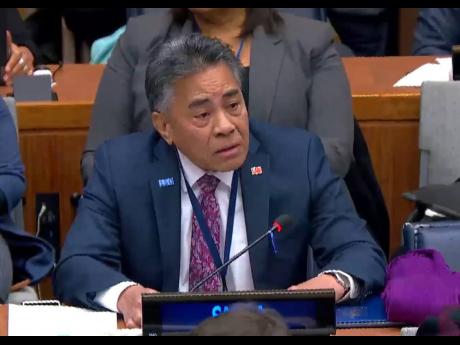
CARIBBEAN AND other small island developing states (SIDS) have urged the support of the international community in the creation of a strong plan of action – one that delivers on sustainable development, in the face of the triple planetary crisis of climate change, pollution and nature loss.
The call has come through the Alliance of Small Island Developing States (AOSIS), which represents the interests of the 39 small island and low-lying coastal developing states in international climate change, sustainable development negotiations and processes.
“AOSIS advocates for a new and more responsive UN for SIDS. This will be essential to deliver a robust 10-year outcome,” said AOSIS Chair Ambassador Pa’olelei Luteru of Samoa, referencing the upcoming fourth International Conference on SIDS (SIDS4), set for May 27-30 in Antigua and Barbuda.
“SIDS’ survivability of the people, natural environments, and overall sustainable development is under threat. The development challenges we are facing are far outpacing our ability to respond. We are seemingly going from one event to another, without the time or ability to recover and regrow. We are running out of time and running out of space to manoeuvre,” he added.
Luteru was participating in the first session of the Preparatory Committee Meeting for SIDS4, held in New York last month.
Caribbean and other SIDS are among those most vulnerable to climate change impacts, including extreme droughts and hurricanes, the likes of which have devastated sections of the Caribbean as elsewhere over recent years.
Climate change also presents significant challenges for public health and livelihoods in SIDS, many of which have economies that are already under significant strain.
The 2023 report of the Lancet ‘Countdown on health and climate change: the imperative for a health-centred response in a world facing irreversible harms’, has revealed, for example, that the global land area affected by extreme drought increased from 18 per cent in 1951-60 to 47 per cent in 2013-22, jeopardising water security, sanitation, and food production”.
At the same time, the report noted,“ the economic losses associated with global heating increasingly harm livelihoods, limit resilience, and restrict the funds available to tackle climate change”.
“Economic losses from extreme weather events increased by 23 per cent between 2010-14 and 2018-22, amounting to US$264 billion in 2022 alone, whereas heat exposure led to global potential income losses worth $863 billion,” it said.
“Labour capacity loss resulting from heat exposure affected low and medium Human Development Index countries the most, exacerbating global inequities, with potential income losses equivalent to 6.1 per cent and 3.8 per cent of their gross domestic product, respectively,” the report explained further.
Meanwhile, in a news release dated January 26, AOSIS said that “vulnerable countries continue to face significant challenges to their sustainable development, worsened by impacts from climate change and issues such as food-price volatility, and external financial shocks”.
“In recognition of their unique vulnerabilities to external shocks and stressors, the international community designated SIDS a special case for environment and development, but after thirty years of this recognition and targeted action the situation remains unchanged,” the release noted.
The intention now is to have the new programme of action – which is to come from SIDS4 – set out a comprehensive development agenda for SIDS over the next decade.
“Drawing on the outcomes of regional and interregional preparatory meetings, it will define SIDS’ development priorities and the support required from the international community to make the SIDS-led, SIDS-focused agenda achievable,” the AOSIS release noted.