
Use traffic fines to fund road safety education campaign, says Phillips
Published:Thursday | June 6, 2024 | 12:06 AMCarl Gilchrist/Gleaner Writer
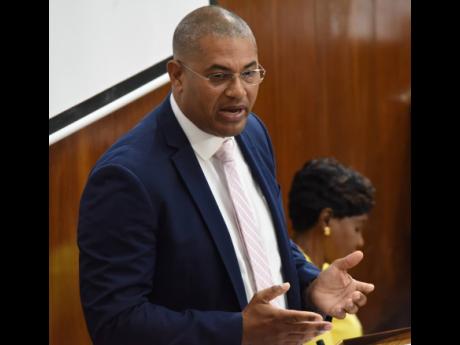
OPPOSITION SPOKESPERSON on Transport and Mining and Member of Parliament for Manchester North Western, Mikael Phillips, has suggested a meaningful way for Government to fund a much-needed education campaign to address the issue of road traffic crashes.
Using his contribution to the sectoral debate in Parliament on Tuesday, Phillips said: “We recommend, madam speaker, that a percentage of the annual revenue from traffic fines go towards funding the Road Safety Unit and the National Road Safety Council’s (NRSC) public education campaign. Urgent action is needed,” Phillips stressed.
The value of traffic fines collected is unclear but drastic increases in fines were announced in 2023.
Phillips disclosed that the Pan American Health Organization (PAHO) has been collaborating with the NRSC to implement the United Nations (UN)-funded Road Safety project in Jamaica and used the opportunity to suggest that the project should incorporate several factors.
These include infrastructure improvement, comprehensive data collection and analysis, among others.
“Enhancing roadways is paramount to reducing the impact of vehicles and ensuring safe operations,” Phillips said adding that special attention must be paid to children, the elderly and persons with disabilities.
According to information on the UN website, the project is to support Jamaican authorities to promote more responsible use of roadways, improve access to post-crash care and reduce road crashes in Jamaica.
“This project aims to respond to the unacceptably increasingly high number of people dying or suffering from severe non-fatal RTI (many of them with long-term disability) in Jamaica each year, which affects mostly the poor and other vulnerable road users and generates important associated social and economic costs for the country,” the UN states.
The project implementation date is January 1, 2023 to January 1, 2026. The budget is US$400,000.
Figures from the National Road Safety Council show that in 2022 there were 488 traffic deaths in Jamaica with the figure declining to 425 in 2023.
Up to May 13 this year, there were 155 deaths, which represents a three per cent decline compared to last year.
Jamaica’s high road fatality figures place the country at the top of the list when it comes to road fatalities in the region of the Americas.
Following a study of 2021 figures, the World Health Organization (WHO) revealed that Jamaica’s annual road fatality rate was 18 per 100,000 population, which was above the average of the Americas, that stood at 14.1 per 100,000 population.
Phillips said that as the 11th leading cause of premature deaths in Jamaica, road traffic crashes present a significant challenge.
He credited Sir John Golding with spearheading representation that saw the establishment of the NRSC in 1993, but he said the entity has been starved of funding for public education as Government subvention does not cover this. He said the National Health Fund financed an education programme for a decade but this ended in 2020.
The Opposition spokesperson said innovative and engaging public campaigns and programmes are needed in order to capture the attention of the public to instil lasting behavioural change, as a means to address the fatality figures.
He said utilising multimedia platforms, interactive workshops, and community outreach were ways to achieve greater awareness and compliance with road safety regulations.