
Schools flock to Taste of Ja Medicinal Herb Garden
Published:Thursday | June 13, 2024 | 12:05 AMCarl Gilchrist/Gleaner Writer


TOILING THROUGHOUT the COVID-19 lockdown to transform their Taste of Jamaica Authentic Tour into Taste of Jamaica Medicinal Herb Garden and Farm is now paying off handsomely for St Ann couple, Lascelles and Elizabeth Broderick.
Located near Hinds Town, St Ann, the farm was established mainly to tap into the lucrative tourism market, but it is now being targeted in a big way by schools across Jamaica as they prepare their students for agriculture-related subjects.
Schools were part of the plan from start, Elizabeth said, but admits the response has been even better than anticipated.
Teachers are delighted that such a farm now exists as it now forms part of their learning and teaching experience, from primary to tertiary levels.
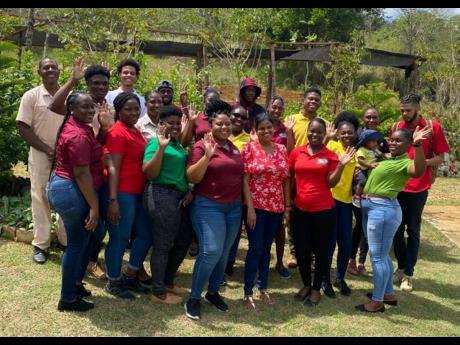
Lecturer at the College of Agriculture, Science and Education (CASE), Sukkasini Thissaverasingan, recently took a group of bachelor of science students from the Portland-based college on a tour of Taste of Jamaica, and said the students benefited greatly from the experience.
“The bachelor of science students from the College of Agriculture, Science and Education visit the Taste of Jamaica Farm and Garden Tour when they have registered for the course, medicinal horticulture,” she explained.
“The tour showcases most of Jamaica’s indigenous floral and fauna, displaying over 50 species of medicinal herbs, and teaches the students about the medicinal benefits and uses of each plant. The students have benefited greatly from the tour,” Thissaverasingan said.
LOCAL PLANTS
The 50 species mentioned by the lecturer include plants such as ram goat regular, guinea hen, dog blood, blue vervain, broadleaf plantain, neem, pennyroyal, medina, search mi heart, pepper elder, periwinkle, John Charles, woman piaba, duppy gun, devil’s horsewhip, hyssop, yesterday-today-and-tomorrow, tuna, aloe vera, among others.
Well-known flowers such as Joseph’s coat, croton, and hibiscus are also there and are part of the throng of plants with medicinal value.
There are several crops on the property, including pineapple, corn, bean, banana, yam, coffee, cocoa, potato, peas, and orange.
Elizabeth has described Taste of Jamaica as a “self-sufficient” farm with the aim of teaching people about the herbs we have in Jamaica and their uses.
Another class that visited the farm recently was the grade five group from Ewarton Primary School in St Catherine.
“Taste of Jamaica Farm caught our attention when we were searching for a location to visit on our grade five educational tour. It seemed to be the perfect destination because they practise organic farming, and we had just started ‘Ways of Growing Food’, a topic in our grade five curriculum,” said grade five teacher Miss Christie.
TREE-PLANTING EXERCISE
The students were introduced to the wide variety of medicinal plants on the farm, and told their scientific and common names and their various uses. They were also introduced to the use of animal manure in organic farming, among other educational topics. A practical component to the tour saw students planting several local plants, including soursop.
They were later treated to a scrumptious lunch of jerk chicken and festivals, served with freshly made, sugar-free fruit juices.
“Our visit to the Taste of Jamaica Farm turned out to be an excellent trip which offered our students a wealth of information about our Jamaica medicinal plants and an authentic farming experience, which will remain with them for a very long time,” the teacher concluded.
Elizabeth said Taste of Jamaica is targeting Jamaicans in general, through schools, church groups, families, and organisations, to discover the benefits of Jamaican medicinal herbs and organic farming.
According to her, “Our educational tours provide an immersive experience, teaching visitors about the cultivation and uses of various herbs that are essential for health and wellness.
“The unique experience not only educates, but also highlights the importance of sustainable farming practices,” she added.