
Celebration of football, music, unity
Published:Friday | June 11, 2010 | 12:00 AM


JOHANNESBURG (AP):
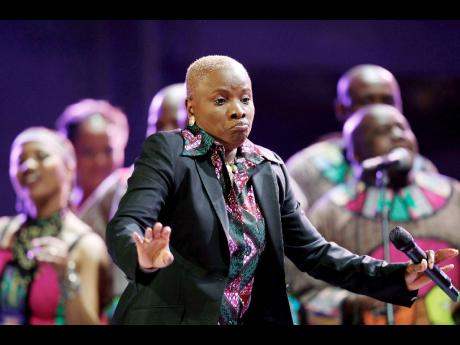
The world came to Soweto yesterday for a celebration of football, music and unity on the eve of Africa's first World Cup, with a concert featuring international headliners Shakira, the Black Eyed Peas and Alicia Keys.
Warm-up acts played for hours before the internationally televised portion of the concert began at 8 p.m. with a frenzy of flag waving, drumming and African-inspired dancing.
Veteran South African trumpeter Hugh Masekela took the stage with Grazin' in the Grass, a No. 1 international hit in 1968. He was quickly joined by a new South African star, Lira, who covered the late Miriam Makeba's Pata Pata, another worldwide hit that originated in South Africa.
The Black Eyed Peas were next with a slick medley of their hits, then it was back to Africa, with the blind duo Amadou & Mariam of Mali and their sinuous, driving sound.
The turbaned group Tinariwen brought the sounds of Mali's desert nomads to the mix. Colombian rocker's Juanes, in a multicoloured warm-up jacket, debuted his newest single, Yerbatero, to cheers from the crowd.
An exuberant Archbishop Desmond Tutu, in full South African green-and-yellow fan regalia, was treated like a rock star as he led the crowd in cheers for Nelson Mandela. Mandela is credited with sealing South Africa's bid to host the World Cup.
Tutu also acknowledged the fans from around the world who have come to South Africa for football's premier event.
"We welcome you all. For Africa is the cradle of humanity, so we welcome you home," he said.
About a third of the seats at Soweto's 40,000-seat Orlando stadium were blocked off for the stage and backstage. Most of what was left were filled, as was a dance floor on the pitch.
The monthlong tournament the concert celebrates begins today at the main Soccer City stadium just outside Soweto, with host South Africa taking on Mexico. Organisers called the concert and the first game triumphs after years of questions about whether a world-class event could be staged in a nation saddled with poverty and crime and still riven by the legacy of apartheid.
"This is a showcase," concertgoer Nana Masithela said as she entered Orlando yesterday. "We are showcasing ourselves, to say, 'Blacks can do it'!"
Sepp Blatter, head of world football governing body FIFA, had pushed to bring the World Cup to Africa. He made a brief appearance during the concert to speak about 1GOAL, a campaign to improve education in impoverished countries. South African President Jacob Zuma, who took the stage with Blatter, thanked South Africans for the welcome they have given World Cup fans, and called on them "to show the warmness for the whole duration of the tournament."
Orlando, the venue for yesterday's concert, got a three-year, $43-million renovation as part of a nationwide building spree in preparation for the World Cup.
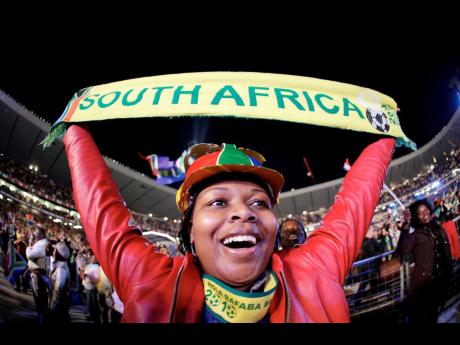
South Africans of all races filled Orlando, parading in the yellow and green of their national team, or draping themselves in their flag. Football fans from other countries also sported their colours.
Concertgoer Tumi Mohafa said the mix of races in the renovated stadium in an area where blacks once were confined is a sign of how far South Africa has come from apartheid, which ended in 1994.
Mohafa says: "We're a rainbow nation."