
IOC envisages sport betting watchdog
Published:Friday | June 25, 2010 | 12:00 AM
LAUSANNE, Switzerland (AP):
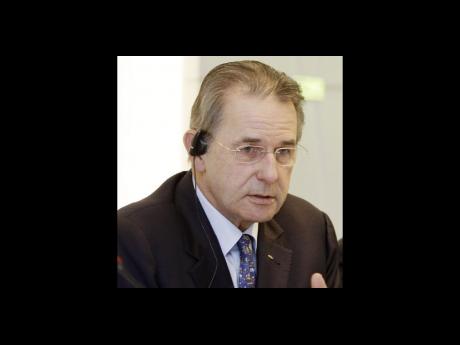
Sports federations will need to join the fight against match-fixing and other betting scams if they want to belong to the Olympic movement, IOC president Jacques Rogge said yesterday.
The International Olympic Committee first called together sports bodies, betting companies and law enforcement agencies three years ago to hammer out a strategy against betting fraud, but so far the measures proposed have been voluntary and each federation can decide how to implement them.
At an IOC-hosted seminar in Lausanne, Switzerland, federations and national Olympic committees agreed a list of "recommendations" including banning athletes and officials from betting on their competitions.
However, Rogge said that in the long term he expects to see the creation of a global watchdog to oversee sports betting, modelled along the lines of the World Anti-Doping Agency (WADA).
And membership likely won't be optional.
"I can see very clearly that fighting irregular betting and match-fixing is something that will be required from the federations for them to belong to the Olympic movement," Rogge told The Associated Press in an interview.
Number one threat
While doping is still the number one threat to the integrity of sport, billion-dollar betting scams run by criminal gangs and unlicensed gambling outfits - mostly in Asia and the Caribbean - are a growing concern, he said.
IOC found no evidence of results fixing during the Beijing and Vancouver Olympics. "But we should not be naive," said Rogge. "This is not going to last forever."
World football's governing body, FIFA, already monitors matches through a subsidiary called EWS, or Early Warning System. Football has been particularly hard hit by match-fixing allegations, with German prosecutors last year opening the biggest European probe ever into suspected sports betting scams involving some 200 matches in at least 12 countries.
IOC set up its own body, International Sports Monitoring (ISM), though Rogge insisted ISM should not be seen as a rival to FIFA's system.
EWS "found themselves chasing too many goals," necessitating the creation of a dedicated monitoring body for the Olympics, he said.
Rogge said he believes a WADA-style global body is a natural consequence in the medium to long term.
"I see something like that being feasible and desirable in a couple of years," he said.
Sports betting has become a lucrative source of funds for federations. Many national sports bodies receive support from state-run lotteries, while private betting companies contribute large sums through sponsorship of teams and sports events.
"Betting companies should also contribute to the development of sport like the lotteries do," said Rogge. "That is also something that we are discussing," he said, adding that one proposal would be for contributions to become proportionate to the amount of money bet on particular sports.