
Signs of the times
Published:Sunday | September 26, 2010 | 12:00 AM


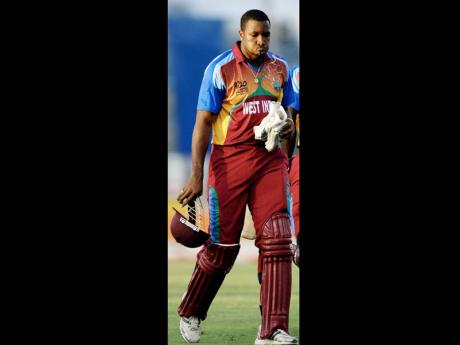
ON THE BOUNDARY with Tony Becca
The news that two of the cricketers offered a retainer contract by the West Indies Cricket Board (WICB) - Dwayne Bravo and Kieron Pollard - have refused it and that Chris Gayle has asked the Board for more time, should not surprise anyone.
Lest we forget, Bravo was the man who was reported in an Indian newspaper some months ago to have said that the West Indies is number three on his list of importance, behind Trinidad and Tobago and Mumbai Indians; and Pollard was the man, it was reported, who once told the Board's representative not to contact him in the future but to deal with his manager.
Pollard also refused an invitation to tour England with the West Indies 'A' team recently because he would be representing Somerset at the time.
More importantly, captain Gayle, the man who a few years ago did not represent Jamaica in a regional final because he was busy elsewhere, was the man, the captain, who turned up on the eve of a Test match in England. He is the man who was quoted as saying in a newspaper article during the series that he preferred limited-overs cricket to Test cricket. And he is the man who said that he did not really want the captaincy of the West Indies but was asked, was encouraged, to take it by the president of the Board.
As one who grew up in the age when patriotism was the creed, when the anthem and the flag were important, and when cricket was considered the master link between the islands and where West Indies cricket, even more the University of the West Indies, was considered the greatest West Indian institution of them all, the news that Bravo and Pollard had refused to sign the contract touched me deeply.
Sacrilegious
To put anything before representing the West Indies seemed sacrilegious.
That, however, was coming from my heart. When my head got involved, it was a different story.
This is not 1930, or 1940, or even 1950 where cricketers, good cricketers in the West Indies were mostly poor.
This is 2010, West Indies cricketers, at least those at the Test level and even though they are not as good as those in previous years, are now relatively independent financially. Some of them are big names around the world, they are marketable, they can earn more than the West Indies can afford to pay them and like many of their countrymen and women, like doctors, lawyers and other professionals in the region, they are not afraid to ply their trade overseas.
And why should they? Why should they, in this day and age, deny themselves the opportunity to make some money?
Should they, as happened to many of the stars of yesterday, leave themselves at the mercy of the politicians to find something for them to do at age 40, at age 50, or at age 60?
Times have changed and may be now is the time for cricket, and especially so West Indies cricket, to change and follow a sport like football.
In football and apart from the World Cup, the club is the thing.
Footballers can play wherever they want and whenever they want to, FIFA, the governing body for football, has a window for international football, and when the time comes for national representation, the countries call up from anywhere those players who they want to represent them.
There is no suggestion of the players being labelled as traitors because they decide to ply their trade overseas. There is hardly any ill feeling if a country decides not to select a player and with necessities like education, health and housing on the table, governments of poor countries do not feel obliged to spend a lot of the people's money on sports - on elite sports.
According to the WICB, players like Ramnaresh Sarwan, Narsingh Deonarine, Travis Dowlin, Jerome Taylor and Denesh Ramdin who were not offered retainer contracts, are eligible for selection. That seems fine.
Bravo and Pollard, however, have refused the retainer contract and although they say they are still available to represent the West Indies, even though that is good to hear, there is one question for the Board: having refused the contracts, are they eligible?
According to the Board, that is a good question and needs looking into.
Nothing to look into
Based on the published criteria for selection, however, there is nothing to look into, certainly not if the players do not make themselves available to represent their respective countries in the regional tournaments.
The criteria for selection states, among other things, that "the quality of regional tournaments is enhanced by the participation of the best players from the region and therefore it is imperative that they make themselves available for selection for the duration of the tournament/competition/series ... ".
It also states: "The player is expected to have achieved and maintain a standard of physical and medical fitness required for international cricket," and "the player is expected to perform at and demonstrate a level of consistency that is required for international cricket."
It also says that "the basis for selection will be performance at the regional level, through representation of territorial teams", and that "the player must demonstrate a commit-ment to West Indies cricket".
Times have changed and although the lack of money is a problem, even though it cannot finance first-class cricket and therefore cannot really remunerate first-class cricketers, that is what West Indies cricket needs to look at.
Cricket is cricket, football is football, and one does not have to follow the other.
In football, however, Dwight Yorke and Shaka Hislop, for example, played in the English league and still represented Trinidad and Tobago. Ricardo Gardner and Ricardo Fuller play in the English league and still represent Jamaica. Elsewhere, Brazilians like Maicon, Kaka and Robinho, Argentinans like Carlos Tevez, Maxi Rodriquez and Lionel Messi, Spaniards like Fernando Torres, Cesc Fabregas and David Silva, Russians like Andrey Arshavin and Roman Pavlyuchenko, and Africans like Samuel Eto'o, Didier Drogba, and Michael Essien play in foreign leagues and still represent their respective countries.
Sensible rules needed
The WICB has a right to set rules in its bid to administer the game properly and in the interest of the people.
Good management, however, sets rules that make sense and in professional sports, any rule that restricts the movement of players or limit their ability to earn just does not seem right.
There is no doubt about it: others will follow Bravo and Pollard as sure as night follows day and based on the criteria for selection, it will be difficult for them to be eligible for selection.
The West Indies, strapped for good players as it is, certainly cannot afford an exodus.
For too long, the Board has turned a blind eye on fitness and the players' attitude towards fitness. Apart from under-performing, for too long, the Board has been forced to pay out money to unfit players who were selected for tours and who broke down just days into the tour. And the Board was right in not offering retainer contracts to Sarwan, Ramdin, Taylor, Deonarine and Dowlin.
In this day and age, however, and although the players have a choice, to lose players who want to earn more in order to provide for their old age seems unreasonable, totally unreasonable.
I am not a betting man but I am willing to wager a dollar that any cricketer - and especially so in the West Indies - who has the choice to make, will undoubtedly take up his bat, or his ball and travel.
It is as simple as that.