
Clarke extends sprint dominance
Published:Thursday | October 27, 2011 | 12:00 AM
Hubert Lawrence, Gleaner Writer
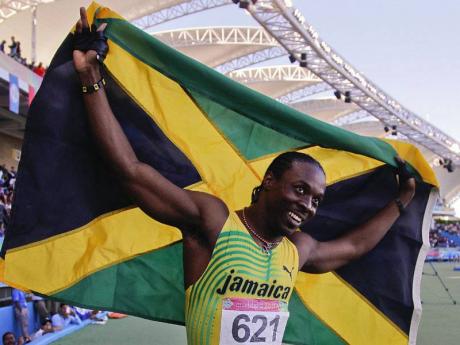
When Lerone Clarke edged to victory in the 100m at the Pan Ameri-can Games, it was more than just a personal milestone.
His narrow win over Kim Collins of St Kitts and Nevis added to the Commonwealth Games title he won last year and makes him only the second Jamaican to win both, after the legendary Don Quarrie. He did more than that. By winning in Guadalajara, Lerone extended Jamaica's dominance of men's sprinting.
Yohan Blake and Usain Bolt won the 100 and 200 at the Daegu World Championships. Bolt blew our minds with world-record sprint doubles at the 2008 Olympics and in the 2009 World Championships. To sweeten the deal, Jamaica's 4x100 metre team has won the Olympics and the last two World Championships, with world record in the biggest races.
Late-season peaking
Jamaica rules the 100m in the junior ranks too. Dexter Lee has won the event at the last two World Junior Championships and Odail Todd is the 2011 World Youth Champion.
It seems like light years ago when Clarke missed the finals of the 100m at the 2011 Nationals, lost in a field that made him the slowest of nine active Jamaican sprinters with lifetime bests under 10 seconds. Even if you remove Steve Mullings, that kind of depth is still staggering.
Clarke himself is becoming a master of late-season peaking. Last year's Commonwealth Games were held in October, just like these Pan Am Games. In the sprint-friendly high altitude and thin air of Guadalajara, Mexico, the little man came within touching distance of his personal best of 9.99 seconds with a winning time of 10.01.
Jamaica's dominance is manifested in another way. Asafa Powell leads the world by far in the production of sub-10 second 100 metre races. The 2007 and 2009 world bronze medal winner has 74. The retired American Maurice Greene is next with 53.
The tall man from Trelawny has 24.
There is one area where Jamaica's men are not on top in sprinting. Usain is third on the production list of sub-20 second times in the 200. That list is headed by 1993 World Champion Frank Fredericks of Namibia, who broke the barrier 24 times. American Michael Johnson did it in 23 races, led by his monumental run of 19.32 seconds to win Olympic gold ahead of Fredericks in 1996.
Bolt has run faster than Fredericks' best of 19.68 seconds on eight occasions.
Bolt ran under 20 seconds twice in 2011 to increase his total to 22. Had the weather cooperated in Stockholm, he might have been at 23 by now. In that meet, he ran 20.03 into an annoying headwind.
He might score the sub-20 equaliser in the 2012 Nationals where his rivals will include Blake, who ran a super time of 19.26 seconds in Brussels, Nickel Ashmeade, who did 19.91 in that same Brussels race, and Rasheed Dwyer, the World University Games 200 champion.
The depth means that fans are in for a treat at the Nationals next year. With no defending champions' wild card, everyone must face the starter. The only escape would be for athletes ranking in the top three in the world if they were certified unfit by the JAAA.
Though he is now Common-wealth and Pan Am champion, Lerone must know that making the Olympic team won't be easy. The fourth-fastest 100 metre man of all time is a Jamaican too - Nesta Carter. He was a Daegu finalist and, like Bolt and 2003 Pan Am cham-pion Michael Frater, is a member of two gold medal/world record 4x100m teams. Throw in World University Games winner Jacques Harvey, Ashmeade, Lee and maybe 2010 Penn Relays 100 winner Kimari Roach, and you have one race track fans will drool over.
So, even as we celebrate Lerone's victory, it's hard not to look forward with bated breath to the future. With sprint depth like Jamaica has now, the Nationals will be a hot ticket.
Hubert Lawrence has covered athletics since 1987.