
Opening Pandora's box
Published:Sunday | August 5, 2012 | 12:00 AM
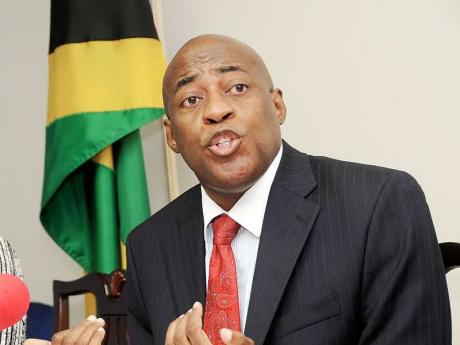
Clive Mullings, Guest Columnist
The case brought by Citizens United to Reduce Electricity Rates and Citizens Action for Securing Cheaper and Better Supply of Energy against the attorney general representing the Government of Jamaica, the Jamaica Public Service Company (JPS) and the Office of Utilities Regulation (OUR) has been hailed as a landmark decision against a monopoly in the electricity sector.
The judgment of Justice Bryan Sykes is, in my view, of the highest quality and is comprehensive in its treatment of statutory interpretation and aspects of public law. It is in the interpretation of Section 3 of The Electric Lighting Act that the decision of the court must be assessed, that is, whether the minister of energy and mining has the power to grant an all-island licence EXCLUSIVELY to one entity to transmit electricity to the entire island of Jamaica.
MERITS OF A MONOPOLY
It does not pronounce upon the merits of a monopoly in the electricity sector. In fact, the case countenances a de facto monopoly in that His Lordship indicates that the minister has the power to grant an all-island licence to one entity. What he cannot do is include a term which prevents the genuine consideration of other applications for the transmission of electricity, this so because the Electric Lighting Act does not give the minister exclusive power.
Indeed, in the case of National Transport Cooperative Society (NTCS) v The Attorney General of Jamaica (2009) UKPC 48 cited by the claimants, the relevant legislation said that the minister may grant "to any person an exclusive licence on such conditions ... to provide public passenger services within and without the Corporate Area". His Lordship said, at page 6 of his judgment:
"The problem arose because the minister unwittingly ended up granting two licences to operate within the Corporate Area. The result was that there were two licences in respect of the Corporate Area in a context where the legislation said that the licence granted in the Corporate Area must be EXCLUSIVE (My emphasis). Unsurprisingly, Brooks J, The Court of Appeal of Jamaica, and the Judicial Committee of the Privy Council held that the minister had breached the relevant legislation. The consequence was that the terms of the licence between NTCS and the Government were unenforceable, despite the fact that the NTCS had acted upon the licence for years."
It is my view that by parity of reasoning, if the Electric Lighting Act gave no such exclusive power when the Government of Jamaica sold the JPS All Island Electric Licence in 2001 to Mirant for approximately US$200 million on the basis of exclusivity, the minister would have acted ultra vires the Electric Lighting Act and, therefore, the Government and people of Jamaica could be mulct in damages.
This clearly presents a conundrum to the Government in more than one respect. Apart from the issue of damages, what does this portend for the LNG project which, if it is to be viable, requires a certain amount of offtake from the JPS and the bauxite companies? The JPS has won the bid to supply 360 megawatts of electricity, which represents almost half of Jamaica's generating capacity, and it is estimated to cost in the region of US$600 million. Jamaica must change its fuel type from oil if we are to survive and to meet increased energy demands. What, therefore, are the timelines for this, given the court's decision?
Electricity prices are not merely set by supply and demand. Technical considerations set by the OUR also come into play, such as heat rates, as they affect efficiency and technical and non-technical losses which occur over transmission and distribution lines. The electricity sector requires very deep pockets and capital outlay, and banks and financial institutions must be assured that these loans can be repaid. Put all of this in the context of a global recession and the implications become even more stark.
The view has been expressed that the current minister of energy, who happened to be the same minister who gave the exclusivity to Mirant, now has a window of opportunity to carry out his declared opposition to the monopoly on the transmission and distribution infrastructure. I beg to disagree.
What this decision has done is to give leverage to JPS, which can plausibly argue that the minister sold what he had no power to sell; that is, an exclusive licence. In so far as the court has not struck down the entire licence, but only the offending exclusivity clause, may leave some room for the Government to manoeuvre by amending the law to grant exclusivity in order to escape a claim for damages. But that would be a hefty political price, both for the Government and the minister.
Then again, the Court of Appeal or the Privy Council could overturn the decision of Justice Sykes, though, in my humble view, that is unlikely. So don't pop the corks just yet, as this may very well be a Pyrrhic victory which has opened up a veritable Pandora's box.
Clive Mullings is an attorney-at-law and former minister of energy. Email feedback to columns@gleanerjm.com and clivemullingslaw@yahoo.com.