
Mission Impossible: Finding the best 50 Jamaican songs since Independence
Published:Sunday | August 5, 2012 | 12:00 AM

The number 50 is one that is very much in use nowadays, having obvious connections with Jamaica's Golden Jubilee celebrations. In this regard, much has been written and said about various 50s - like 50 great Jamaicans or 50 great Jamaican female vocalists, and so on.
Compiling lists of such individuals may not be as arduous a task as attempting to compile one on the 50 best Jamaican recordings since Independence. Attempting such an exercise could prove a very interesting but difficult manoeuvre, bearing in mind the multitude of great recordings that poured out of Jamaica's busy recording studios in the last five decades. No other country of comparable size can boast a catalogue that huge. It has impacted, not only Jamaica, but the United Kingdom, the United States, Japan, parts of Europe and South America.
The stage for that five-decade blast was set from as early as 1958 when Wilfred 'Jackie' Edwards, Laurel Aitken, emerging producer Chris Blackwell and the incomparable Caribs band, combined to produce hits like Tell Me Darling, Whenever There's Moonlight, Boogie In My Bones, and Little Sheila.
The difficulty of compiling an acceptable hit list of the best 50 songs since Independence is further compounded by the myriad of musical tastes among Jamaicans, in addition to the many changes the music has gone through.
Despite that, there are still certain recordings that cannot be overlooked.
Bob Marley's 1976 anthemic One Love, for instance, voted the song of the 20th century by a leading American magazine, would most certainly find its place on any compiler's top-50 list. It drew some of its lyrics from the Impressions' early 1960s hit, People Get Ready, and was first recorded in the ska mould about 1964 by the original Wailers (Bob Marley, Peter Tosh, and Bunny Wailer), for producer Clement Dodd. The song's credentials are undeniable. It became the Jamaica Tourist Board's unofficial anthem. The lyrics and the feeling the song evokes cut deep into the consciousness of the Jamaican people. Join that with a melody that had loyal crowds transformed into accompanying choirs whenever it was performed, and then you begin to get my drift.
Bob Andy legendary song
Another song which evoked this choir-like accompaniment from audiences, and one that would certainly appear on any compiler's list of 50 best songs since Independence, is Bob Andy's 1966 anthem I've Got To Go Back Home. Perhaps the first call for repatriation in Jamaican music, it has always been a perennial favourite among Jamaicans.
Frederick 'Toots' Hibberts' 5446 Was My Number has perhaps been accorded more musical commendations than any other record in Jamaica's music history. In his book, The Heart Of Rock and Soul, international music critic Dave Marsh places 5446 among the top-two reggae songs of all time and numbered it in his top-100 popular songs of the rock era.
5446 hit
A symposium on the 100 best Jamaican songs (1957-2007), conducted by the Department of Government, University of the West Indies, saw 5446 placing third behind Bob Marley's One Love and the Folks brothers Oh Carolina. Subsequent compilations, in response to invitations by various government entities, have not put 5446 out of the top five. Written by Toots during his incarceration at the Tamarind Farm Prison, it was a No.1 hit in Jamaica during 1968.
Just a few months before his incarceration, Toots had won the inaugural Festival Song competition, using a wonderfully haunting rhythm to create Bam Bam, which many consider the best festival song ever and a yardstick by which all others should be judged. A timeless, indefatigable piece of music with obvious African flavours, it has, over the years, become the most played festival song and should be on any list of 50 best recordings since Independence, whether based on popularity or record sales.
Desmond Dekker's Israelites, recorded in Jamaica in 1968, was a moderate hit, but when a remixed version hit the British charts in April of 1969, it went straight to the No.1 spot. It also topped the charts in Canada, Sweden, West Germany and Holland, while climbing to No. 9 in America, the only Jamaican record to have done this. If ever there was a Jamaican recording to have laid claim to creating the greatest international impact, it must be Israelites.
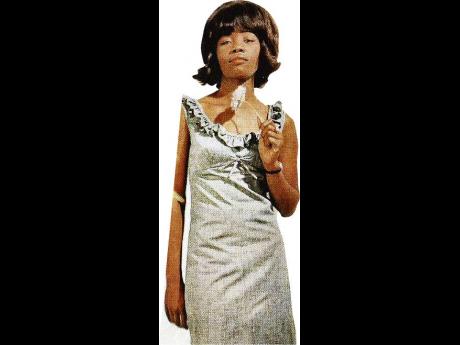
For all its flamboyance, Israelites wasn't the only Jamaican recording to top the British charts. Ken Boothe did it with Everything I Own, Dave and Ansel Collins with Double Barrel, and probably the best known to Jamaicans, Millie Small's My Boy Lollipop. The first Jamaican recording to create an international impact, Small's tune literally placed Jamaica on the international music map and opened the floodgates for other Jamaican artistes. What further credentials does a record need for it to qualify for a top-50 status?
Carry go bring come
Backtracking to 1964, we see Justin Hinds and the Dominos' Carry Go Bring Come, hitting the No.1 spot and staying there for over a month in 1964. Their warning to gossip mongers -
This carry go bring come my dear, bring misery
You're going from home to home, making disturbances,
It's time you stop doing those things, you old Jezebel
- seemed to have grabbed the attention of the populace. This, coupled with the wonderful music arrangements, made it a firm favourite.
Coming from the same mould, Simmer Down by the Wailers, quite uncharacteristically sounded a message to the unruly youths to "Simmer down, control your temper, simmer down or the battle will be hotter". Rhythmically and melodically, there was hardly any ska song that could surpass it, and even four decades later, its vibration can still be felt.
On its release in early 1964, it went straight to No.1 and quickly sold some 70,000 copies, making it another firm favourite for top-50 honours.
Bob Marley came to prominence with Simmer Down, and his contribution to reggae music since that has been endless. That contribution filtered down through the years with perhaps his greatest moment - Redemption Song (1980), which is described as 'achingly beautiful' by Kevin O'Brien Chang in his book, Reggae Routes. "Its introspective, acoustic simplicity almost seems to prophesy his premature death. It has become something of a standard all over the world, sung by everyone from school children to anti-nuclear protesters," Chang pointed out.