
Uncertainty looms as France announces troop pull-out
Published:Friday | February 18, 2022 | 12:09 AM
BAMAKO, Mali (AP):
France’s announcement Thursday that it will withdraw its troops from Mali was anticipated by many in this West African nation where Malians have protested the presence of soldiers from the former colonial power. But politicians and experts worry the French pull-out will result in a security vacuum that will embolden jihadi groups to increase their power.
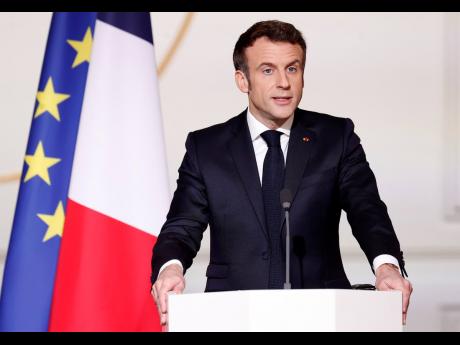
“Today it’s the terrorist groups who are happy with this announcement,” said Amadou Koita, former Cabinet minister in the government of former President Ibrahim Boubacar Keita. He told AP he heard with regret French President Emmanuel Macron’s announcement Thursday that France will withdraw its military from Mali within six months. France has troops in two military operations in Mali – Barkane and Takuba.
“We wanted our country to continue to benefit from the military support of France and Europe, and to make Mali a barrier against terrorism,” he said. “We hope that this announcement does not mean an abandonment of Mali by its partners and we hope that Mali will continue to benefit from cooperation with the entire international community.”
Mali’s security now lies in the hands of its own forces, Mali’s former Prime Minister Moussa Mara said.
“I take note of this announcement of the departure of Barkhane and Takuba and it is now up to us Malians to organise ourselves and make efforts to take charge of our defence and our security,” he said.
Experts, however, note that Mali’s security forces will be challenged to reorganise effectively in the six months’ timeline of the evacuation announced by Macron.
French troops will leave their bases in Gossi, in Mali’s central Gourma zone, in the north in Gao and in the east in Menaka.
“It’s a short period to give the Malian army time to reorganise on the ground. This scenario can lead the country to a new reoccupation of areas as in 2012 by jihadist groups,” said Ibrahim Maiga, a researcher at the Institute for Security Studies.