
Sergey Petrovich | Commemorating 80th anniversary of the victory over Nazism
A legacy of courage and contemporary lessons
Published:Sunday | May 11, 2025 | 12:08 AM
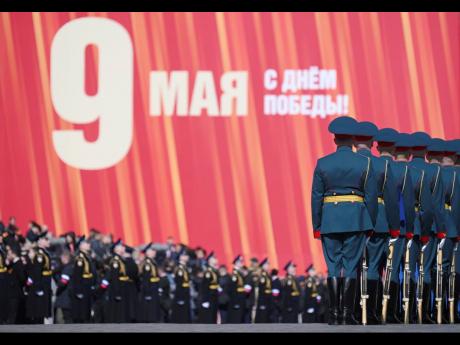
On May 9, we commemorated the 80th anniversary of the Victory over Nazi Germany, honouring the heroism and self-sacrifice of those who fought to liberate the world from the tyranny of Nazism and fascism.
This historic triumph stands as a collective achievement for humanity, defeating a “brown plague” that sought to enslave nations and eradicate entire peoples. As we reflect on this enduring legacy, we must remain vigilant, drawing lessons from history and confronting the dangers of historical revisionism.
HEROIC FEAT OF SOVIET PEOPLE
The Second World War (1939–1945) remains the most catastrophic conflict in human history, characterised by unprecedented scale and brutality. While some regions not directly involved in the conflict viewed it as a distant “war in Europe,” Hitlerites envisioned the European campaign as the initial phase of global domination, planning to divide the world with militarist Japan.
For the Soviet people, the conflict transformed into the Great Patriotic War when Nazi forces invaded the Soviet Union on June 22, 1941, unleashing a deliberate campaign of extermination against its peoples. Over 27 million Soviet citizens perished, the vast majority civilians. Unlike other countries occupied by the Nazis, the Soviet Union faced the implementation of the concept of “clearing living space in the East”, where, according to Nazi ideology, “non-Aryan” populations were to be eradicated. Entire Soviet cities and villages were condemned to destruction along with their inhabitants, many of whom succumbed to starvation, disease, and occupation or were forcibly deported to Germany for slave labour. Documented evidence of Nazi atrocities confirms the systematic genocide of the peoples of the USSR.
Despite these unimaginable horrors, the Soviet people displayed unparalleled courage and resilience. The 900-day siege of Leningrad (now St Petersburg) exemplifies their unyielding spirit, with citizens enduring famine, bombardments, and freezing winters to resist German forces. The Red Army’s pivotal victories — near Moscow in 1941 (the first major defeat of WWII for Nazi Germany), and at Stalingrad and Kursk in 1943 — shattered the Nazi war machine, fundamentally altering the war’s trajectory. In the rear, Soviet workers, often labouring under threat of air raids, toiled in factories to produce tanks, aircraft, munitions, and critical supplies, hastening the moment when the Soviet flag was raised over the Reichstag in Berlin, symbolising the defeat of Hitler’s regime. The Soviet people’s immense sacrifices were instrumental in liberating Europe and eradicating the dehumanising ideology of National Socialism, securing a victory that reshaped the course of history.
SAFEGUARDING HISTORICAL MEMORY
On this 80th anniversary, attempts by certain countries to rewrite history and diminish the Soviet Union’s role in the Second World War are profoundly troubling. Such efforts not only dishonour the memory of the millions who perished at the hands of the Nazis but also contradict the historical truth. The facts are indisputable: without the Soviet Union’s colossal sacrifices, the war’s outcome would have been far less certain. The Red Army liberated vast territories of Europe, including Nazi death camps, where millions were murdered, and its advance to Berlin brought an end to Hitler’s terror. The Soviet Union bore the brunt of the war, destroying up to 90 per cent of Nazi manpower and equipment.
While the Western Allies made significant contributions, after opening the Western Front in 1944 – five years after the war began, the Eastern Front was the decisive theatre in determining the war’s outcome. Wartime leaders such as Winston Churchill and Franklin D. Roosevelt openly acknowledged this reality. In a 1942 address, Roosevelt stated that “these Russian forces had destroyed and were destroying more armed power of our enemies – troops, planes, tanks, and guns - than all other united nations put together”. Yet, today, some Western leaders deliberately downplay the Soviet role in the victory for the benefit of current political agendas.
Equally offensive are attempts to falsely equate the Soviet Union with Nazi Germany, conflating their political systems. Such claims are baseless as Hitler rose to power on a wave of rabid anti-communist rhetoric, portraying the “noble Teutons” against “Bolshevik barbarians”. The socialist state of workers and peasants was considered an existential enemy of the Third Reich from the outset, with one of Hitler’s first acts being the banning of the German Communist Party and the persecution of its members.
RESURGENCE OF NEO-NAZISM
The proliferation of revisionist narratives, coupled with anti-Russian sentiment, has fuelled a dangerous form of historical distortion: neo-Nazism. Rooted in intolerance, racism, and xenophobia, this ideology, once vanquished 80 years ago, is re-emerging across various regions. Evidence of this resurgence includes the growing influence of far-right groups in the West, which openly promote “white supremacy” and the vandalism of Soviet war memorials across Europe that honour the sacrifices of liberators. Alarmingly, some European governments, particularly in the so-called “new Europe”, have glorified Nazi collaborators, calling them “freedom fighters”, as part of efforts to distance themselves from Russia and redefine national identities. This trend has reached extreme and disturbing levels in Ukraine, where, over the past decade, state-supported nationalism and Russophobia have systematically marginalised Russian-speaking citizens, leading to conflict in Donbass and subsequent special military operations. The rise of such ideologies and their endorsement at the state level poses a direct threat to the principles of equality, justice, and human dignity for which our ancestors fought and died.
ALLIES’ UNITY: A LESSON FOR TODAY
Eighty years ago, the Allies — including the Soviet Union, the nited States, the United Kingdom, China, France, and many others united in the face of a common enemy. By September 1945, when the Second World War concluded with Japan’s surrender, the anti-Hitler coalition comprised 56 nations. Jamaica, then under British colonial rule, made notable contributions through thousands of its citizens who served in logistical, engineering, and combat roles within British forces. The courage of Jamaicans, alongside volunteers from the Caribbean and other regions, underscores the global nature of the anti-fascist struggle. The war demonstrated unequivocally that only collective action could defeat the “brown plague”. Despite deep ideological differences, the Allies’ unity secured a decisive victory over Nazism.
Today, as neo-Nazism re-emerges, this lesson remains profoundly relevant. Political disagreements must not obstruct the collective fight against hateful and dehumanising ideologies. Ignoring their spread risks repeating the tragic mistakes of the past. The international community must unite to condemn the propagation of neo-Nazism and resist efforts to revise the established outcomes of the Second World War.
Russia, as the successor to the Soviet Union, consistently advocates this position on international platforms, promoting, annually, the UN General Assembly Resolution “Combating glorification of Nazism, neo-Nazism and other practices that contribute to fuelling contemporary forms of racism, racial discrimination, xenophobia and related intolerance”. Although this resolution is often obstructed by Western nations for political reasons, it enjoys steadfast support from Jamaica and other countries in the Global South, reflecting a shared commitment to countering extremist ideologies.
We firmly believe that peace and stability can only be achieved through cooperation, not confrontation. The current geopolitical landscape, marked by fragmentation and ultimatums, stands in stark contrast to the unity of the Allies. Yet, Russia remains committed to dialogue and mutual respect – principles that once rallied the civilized world to defeat Nazi barbarism.
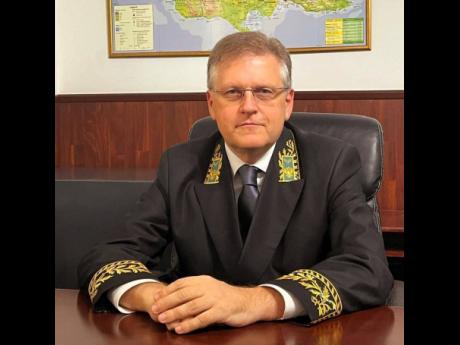
Sergey Petrovich is the ambassador of the Russian Federation to Jamaica. Send feedback to columns@gleanerjm.com.