
PM pledges cushion for COVID-19 fallout
Published:Wednesday | March 11, 2020 | 12:27 AMChristopher Serju andNickoy Wilson/Gleaner Writers
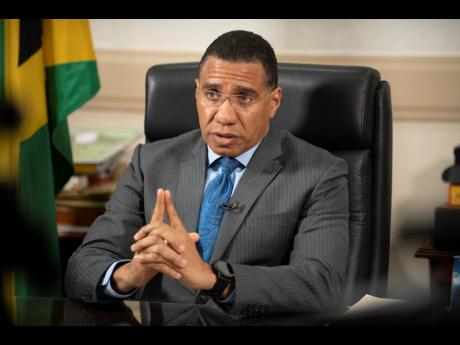
Prime Minister Andrew Holness has said that the Government is exploring ways to cushion several industries that will experience fallout from the worldwide outbreak of the novel coronavirus that has so far claimed over 4,200 lives.
The announcement of Jamaica’s first case of the virus yesterday made the reality more grim.
“The COVID-19 global outbreak has already started to affect the world economy by disrupting travel and supply chains. Jamaica’s economy is very much integrated into the world economy, particularly through tourism. We have already started to contemplate ways to support sectors of the economy should there be a prolonged period of economic fallout,” Holness said, while making a statement at the Office of the Prime Minister in St Andrew, hours after the first imported case of COVID-19 was confirmed in the island.
Holness on Monday night had warned that Jamaica’s growing food import bill must be seen as a call to action to anchor the country’s economic fortunes against external shocks such as the threat of disruption in global trade posed by the virus, accurately termed SARS-CoV-2.
Delivering the keynote address at the 20th anniversary celebrations of the Progressive Grocers Jamaica supermarket chain at The Jamaica Pegasus hotel, Holness drew attention to the country’s climbing import bill. For the period January to November 2019, it was valued at US$5.9 billion, an increase of 3.9 per cent over the US$5.68 billion for the corresponding period in 2018.
“It’s always a good sign when you’re seeing your imports grow, especially if it is growing for raw material for capital goods, but it is also growing for food,” the prime minister noted.
He disclosed that the imports for the broad category of food for the period under review was US$942 million, 13 per cent higher than recorded in 2018, primarily attributed to increased inflows of cereals, cereal preparations, miscellaneous edible products, as well as dairy products and eggs.
“I am not here saying that we must not import. The nature of our economy is such that we have to import but … we must be strategic in our imports. We don’t need to import everything, especially when we can produce it right here,” the prime minister implored his audience, before going on to make a cryptic comment.
“I have noticed the patriotic stance taken by the Progressive Grocers Group on not just one occasion and I know that you continue to maintain that very patriotic stance. I am using very diplomatic language, but I am certain that those who are in the trade will understand what I am saying and, of course, we don’t want to cause any controversy in the region,” he added.
The good news, according to the prime minister, was that the message of producing locally was taking root. Many businesses engaged in the distributive and import trade were now tapping opportunities in agriculture in order to achieve sustainable import substitution. He promised that a number of investment projects in the pipeline would transform the economic landscape of Jamaica.
“Disruption in the global system is inevitable, and disruptions, in fact, will become more frequent,” Holness said.
“As a part of our resiliency strategy, we must ensure that we have certain productive capacity locally, and agriculture is one area in which we must have a reserve capacity to feed ourselves should there ever be a case where there is a disruption in the global supply chain.”