
POISONING SEASON
Doctors, expert warn parents to protect children
Published:Monday | June 3, 2024 | 12:11 AMCorey Robinson/Senior Staff Reporter
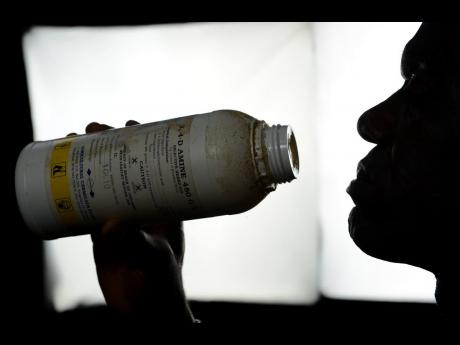
In many cases they turn up at the Bustamante Children’s Hospital’s Accident and Emergency section in pain, with difficulty breathing, or vomiting, as the poisons make their way through their nimble systems - all the time their parents close in tow, panicking, and choking with guilt.
It’s a rush against time as doctors figure out the type of substance ingested, and execute the best treatment. Usually, it’s one of the common agents - household bleach heading the list. Then there are degreasers, detergents, hair relaxers, acetone, kerosene, and, in the most severe cases, caustic soda and pesticides. There are also other cases of children ingesting medication.
Most of the children are under six years old and luckily there have been no deaths in the last two years, the island’s primary public health facility for children reported last week. Still, from 2019 to 2023, at least 932 children have been referred to the social work department for caustic ingestion/poisonings - a figure that could be lower if parents took better care in protecting their children, representatives said last week.
Most of the cases occurred at home, while only one case occurred at school. In that instance, the product was brought from home and consumed at school, the hospital noted. Now, as the summer holidays approach, much like during the COVID-19-induced school break, hospital staff tighten their scrubs in anticipation of peak poison season.
“Accidental poisoning is one of the public health crises that is plaguing Jamaica, disrupting population health and the health system,” warned Sherika Whitelocke-Ballingsingh, poison information coordinator at the Caribbean Poison Information Network (CARPIN), located at the University of Technology, Jamaica.
“Children continue to be most affected, along with vulnerable populations such as farmers and specific industry workers who come in contact with chemicals because of their livelihood,” continued the poison prevention expert.
“Protecting children from poisons cannot be overemphasised through careful storage of chemicals out of children’s reach and storing chemicals in their original or labelled containers.
“Special care and supervision are needed, especially for the upcoming summer period when children will be home for the holidays,” continued Whitelock-Ballingsingh, whose comments come on the heels of Poison Prevention Week, May 26-31, under the theme ‘Poison Connections – Linking Each Facet of Society”.
‘Disconnect among sectors’
CARPIN spent last week bridging “a disconnect among sectors in strengthening systems of protection” with dialogues with stakeholders surrounding surveillance systems in place to monitor poisonous exposure, its laboratory capacities to conduct testing of substances, reviewing policies to protect children, consumers’ rights to know, and food toxins.
It is estimated that 80 per cent of confirmed poison cases in Jamaica involve children, but The Gleaner was unable to ascertain the number of parents prosecuted for negligence, or the number of Jamaicans prosecuted on allegations of intentional poisoning. Parents of children living in farming communities are particularly cautioned, however.
Last week, the children’s hospital outlined an elaborate system of investigation involving parents who turn up at hospital with children who have been poisoned.
“If negligence is suspected, the caregivers are advised where they are negligent. The caregiver/parents are educated as to how to avoid this going forward. They are also advised of immediate consequences to the patient, potential complications and the current treatment plan,” it said.
“Depending on the clinical state of the patient, or concerns regarding the safety of the child, he/she will be admitted for care and protection,” outlined the hospital, adding that all cases are referred to the social work department, which will involve the Child Protection and Family Services Agency (CPFSA).
Chemical labels
In the meantime, Whitelock-Ballingsingh is urging chemical sellers to ensure that all of their products have precautionary information on their labels, “categorically showing the different types of toxic effect on health and environment”.
She added, “Chemical retailers who package small items from bulk products should have harmonised labels for products of the same types to prevent miscommunication of information for consumers.
“The major issue is that the chemical retail industry has still not been regularised. There is no standard way of packaging, labelling and distribution of chemicals in Jamaica. Anyone can just take any container into a chemical shop.”
Whitelock-Ballingsingh noted that often children end up drinking the agents thinking they are juice.
Last week, ear, nose, and throat specialists at the children’s hospital explained last week that alkaline substances like caustic soda cause the worst injuries and are associated with longer hospital stays. Children may also have long-term complications such as difficulty swallowing due to narrowing of the throat and gullet due to burns.
“Severe cases may require placement of a tube in the windpipe to help breathing. Volatile agents such as kerosene can cause injury to the lungs,” one consultant noted, adding that vomiting in some cases complicates the situation.
Children suspected of being poisoned should be taken to the hospital immediately.
Common poisonous household chemicals
*Bleach
*Degreasers & detergents
*Hair relaxers and acetone
*Kerosene, caustic soda and pesticides
Number of patients referred to social work department, Bustamante Hospital for Children
*2019... 172
*2020... 190
*2021... 203
*2022... 176
2023.... 191
Tips for Parents
*Supervise children at all times
*Do not store chemicals in food-look-alike containers
*Store chemicals in child-proof containers
*Do not inappropriately mix chemicals and use them in the presence of children
*Lock all poisons out of the reach of children
*Do not refer to medicine or vitamins as candies to children